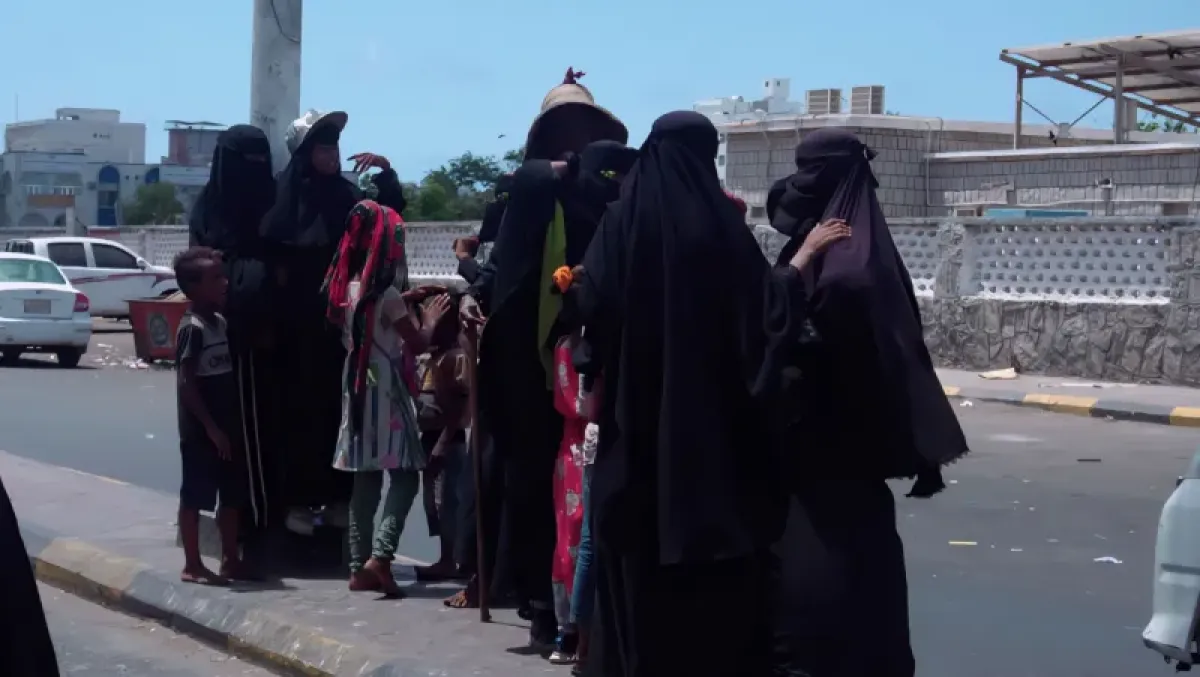
The phenomenon of begging is increasingly prevalent across Yemeni cities, particularly at traffic signals, markets, mosques, hospitals, and public facilities. What was once considered isolated cases linked to poverty and destitution has evolved into a growing social issue raising significant questions about its underlying economic, security, and social dimensions.
Years of persistent economic challenges, rising poverty and unemployment rates, declining job opportunities, and a deteriorating purchasing power for citizens have left thousands of Yemenis in dire living conditions. This has compelled some to resort to begging as a means of securing basic daily necessities. However, observers indicate that the situation has moved beyond genuine need, exhibiting more complex characteristics involving networks that exploit women, children, and the elderly for financial gain under the guise of humanitarian need.
Sociologists identify two primary facets to begging in Yemen. The first involves families who have lost their income sources due to economic conditions, conflicts, and displacement, forcing them to seek any means of survival. The second facet pertains to what is described as "professional begging," where vulnerable groups, especially children and women, are exploited in organized operations designed to elicit sympathy from the public and collect funds daily. Field observations suggest the presence of beggars who move between cities and neighborhoods according to specific schedules and plans, with certain individuals frequently appearing in strategic locations with high traffic or commercial activity, reinforcing suspicions of organized management.
Children are the most vulnerable segment of this phenomenon, with hundreds found on the streets instead of in schools, exposed to multiple risks including exploitation, violence, delinquency, and educational dropout. Educators warn that the continuation of this trend threatens to produce a generation lacking education and essential skills, exacerbating future social and economic problems. The habit of begging at an early age instills in some children a culture of dependency on alms rather than on learning, working, and productivity, negatively impacting their future societal integration.
The repercussions of begging extend beyond humanitarian concerns to encompass multifaceted social and security dimensions. The presence of beggars on main streets and in public places detracts from the civilized image of cities. Furthermore, the exploitation of children and women in these activities may be linked to other crimes such as human trafficking or illicit economic exploitation. Experts believe that the absence of accurate statistics on the number of beggars and the nature of the entities behind organized cases makes it difficult to comprehensively assess the scale of the phenomenon, although field indicators confirm its widening scope in recent years.
Specialists universally agree that addressing the issue of begging cannot be achieved through security measures alone. It necessitates a comprehensive approach starting with improving economic conditions, creating job opportunities, strengthening social protection networks, and supporting the poorest families. There is also a need to activate the role of relevant authorities in monitoring cases of organized exploitation and protecting children from dropping out of school and taking to the streets, in addition to supporting social care institutions and charitable organizations to direct aid to genuine beneficiaries in a manner that preserves their dignity and prevents the exploitation of their need.
While poverty remains the primary driver for many to resort to begging, the current scale of this phenomenon reveals a larger challenge related to the organized exploitation of the suffering of vulnerable populations. Between the genuinely needy driven to the streets by harsh circumstances and those who have turned begging into an income-generating activity, there is an urgent need for radical solutions that address the root causes and combat exploitation, thereby preserving human dignity and restoring the natural image of Yemeni streets, free from scenes of need and supplication.