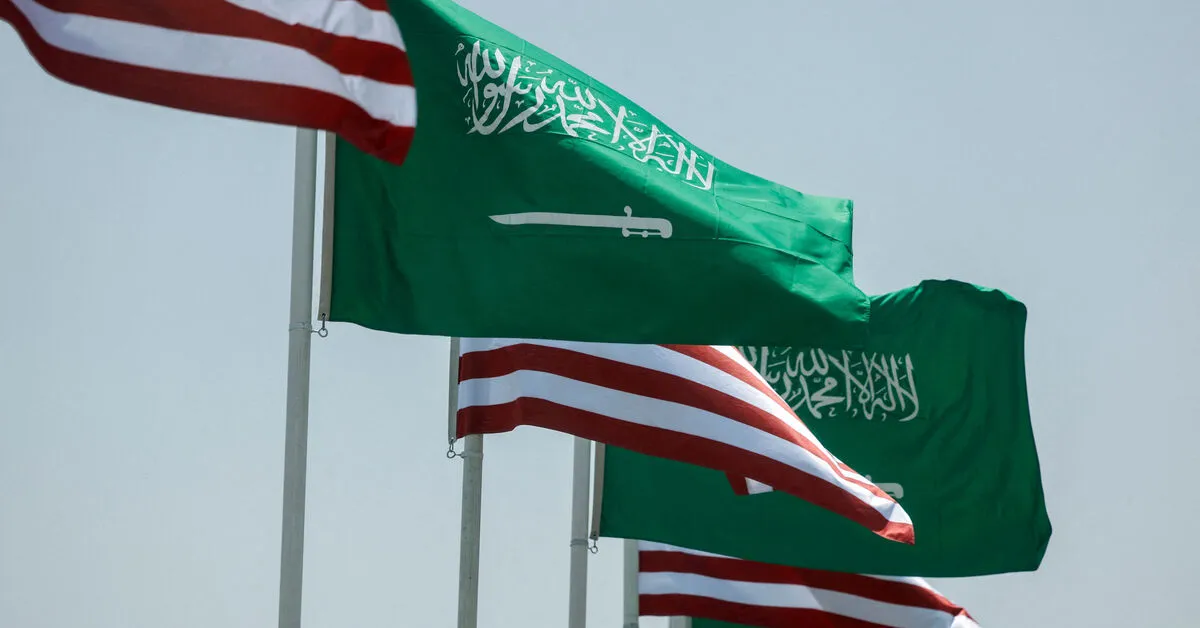
The United States and Saudi Arabia have finalized an agreement concerning civil nuclear power, enabling the Kingdom to utilize American technology for constructing nuclear reactors and enriching uranium.
This accord, known as a 123 Agreement, was signed by U.S. Secretary of Energy Chris Wright and his Saudi counterpart, Prince Abdulaziz bin Salman, alongside a bilateral safeguards agreement. The U.S. Energy Department announced the deal on Wednesday, confirming it allows for uranium enrichment and nuclear waste reprocessing by Saudi Arabia.
Negotiations for a civil nuclear pact with Saudi Arabia have been ongoing for several years, spanning both the Trump and Biden administrations. However, the current agreement notably omits an Additional Protocol, which would permit intrusive snap inspections by the International Atomic Energy Agency. This differs from a similar deal secured by the United Arab Emirates with the U.S. in 2009, which included provisions for the UAE to forgo uranium enrichment and reprocessing.
The U.S. administration asserts that the agreement adheres to stringent nonproliferation commitments outlined in the U.S. Atomic Energy Act. Saudi Arabia has previously indicated that should a partnership with the U.S. not materialize, it could pursue cooperation with China or Russia, nations with differing proliferation standards.
The agreement is now subject to review by Congress. It will take effect unless both chambers pass a resolution of disapproval within 90 session days, though overriding a potential presidential veto would require a two-thirds majority in both houses.
Concerns have been voiced by several Democratic lawmakers regarding the potential for the deal to escalate an arms race in the Middle East. Senator Edward Markey, a Democrat, criticized the agreement, stating, "They are allowing Saudi Arabia, a belligerent and authoritarian nation, to develop nuclear weapons technologies while starting a war with Iran under the guise of preventing an Iranian nuclear bomb. This deal would make us all less safe." Saudi Crown Prince Mohammed bin Salman has consistently maintained that the Kingdom does not intend to develop nuclear weapons but would consider it if Iran were to do so.