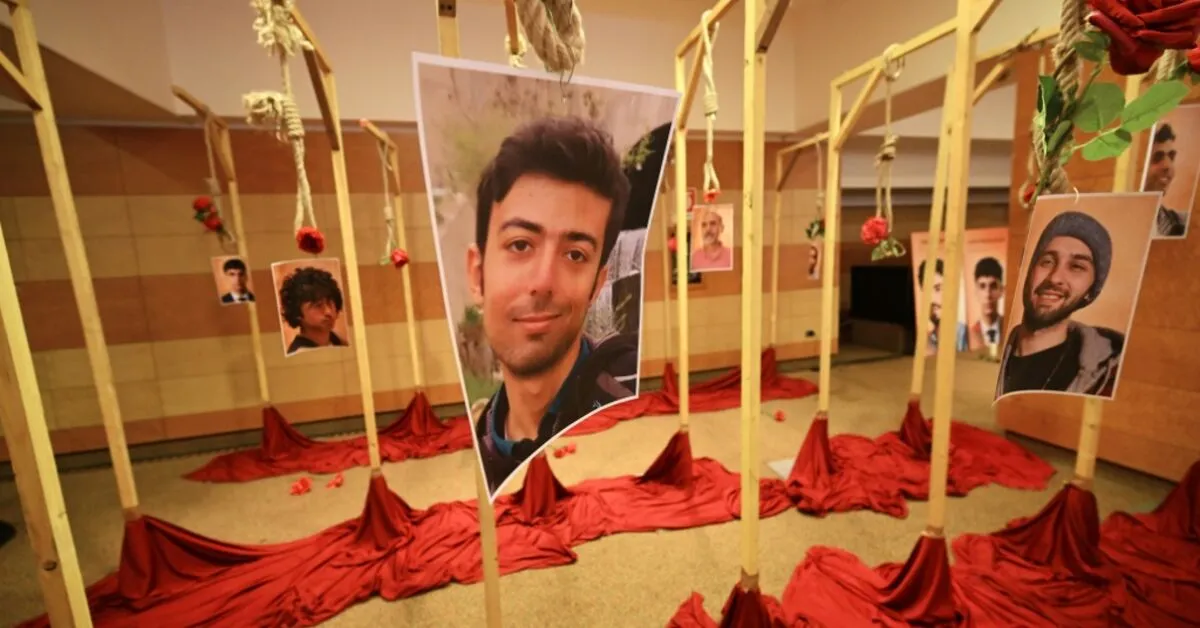
Iran has significantly increased its execution rate, particularly for political prisoners, in the wake of escalating regional conflict and internal political upheaval. Human rights organizations report a surge in hangings of individuals accused of political offenses, including protesters and members of banned organizations, as authorities appear to be using the volatile geopolitical climate to suppress dissent and instill fear.
The family of Vahid Baniamerian, an academic sentenced to death along with five others for alleged membership in the People's Mujahedin Organization of Iran (MEK), learned of his impending execution through state media reports, highlighting a lack of due process and warning. Baniamerian and the other defendants have since been executed. This case is emblematic of a broader trend, with dozens of political prisoners reportedly executed since the commencement of hostilities involving Iran, Israel, and the United States. Activists suggest these actions are intended to preempt societal unrest reminiscent of earlier protests.
The political landscape in Iran is further complicated by the recent death of Supreme Leader Ali Khamenei and the succession of his son, Mojtaba, whose public presence remains limited. With a fragile ceasefire now broken, rights groups express grave concern that the Iranian government will further exploit the situation to intensify the execution of political prisoners. Mahmood Amiry-Moghaddam, director of Iran Human Rights (IHR), stated, "With the breakdown of the ceasefire and the resumption of the war, we are deeply concerned that the authorities will exploit the situation to intensify the execution of political prisoners."
IHR estimates that hundreds of political prisoners and protesters are currently facing capital charges, with approximately 100 already sentenced to death. This includes over 70 individuals awaiting execution in Dastgert Prison in Isfahan. The organization advocates for an immediate moratorium on executions to be a central component of any international dialogue with Iran. Since the beginning of the recent conflict, IHR reports 24 executions linked to January protests and two from earlier movements. An additional 13 individuals were executed for alleged ties to groups like the MEK, and 10 for espionage accusations.
While these politically motivated executions garner attention, they represent a fraction of the total. According to IHR, over 400 individuals have been executed in Iran this year alone, primarily on charges related to drug offenses or murder. Inmates at Ghezel Hesar prison in Karaj have staged a sit-in protest against the high number of drug-related executions, with prisoners citing dire economic circumstances as a catalyst for their actions and questioning the severity of punishments for initial mistakes.
Last year, Iran executed over 2,150 people, second only to China, according to Amnesty International. Baniamerian's relative described him as a kind and responsible individual who encouraged fellow inmates in his final days. Smuggled audio and video messages revealed his efforts to maintain morale and his pride in his actions, with a message urging others not to succumb to fear and to remain proud even in the face of impending execution.