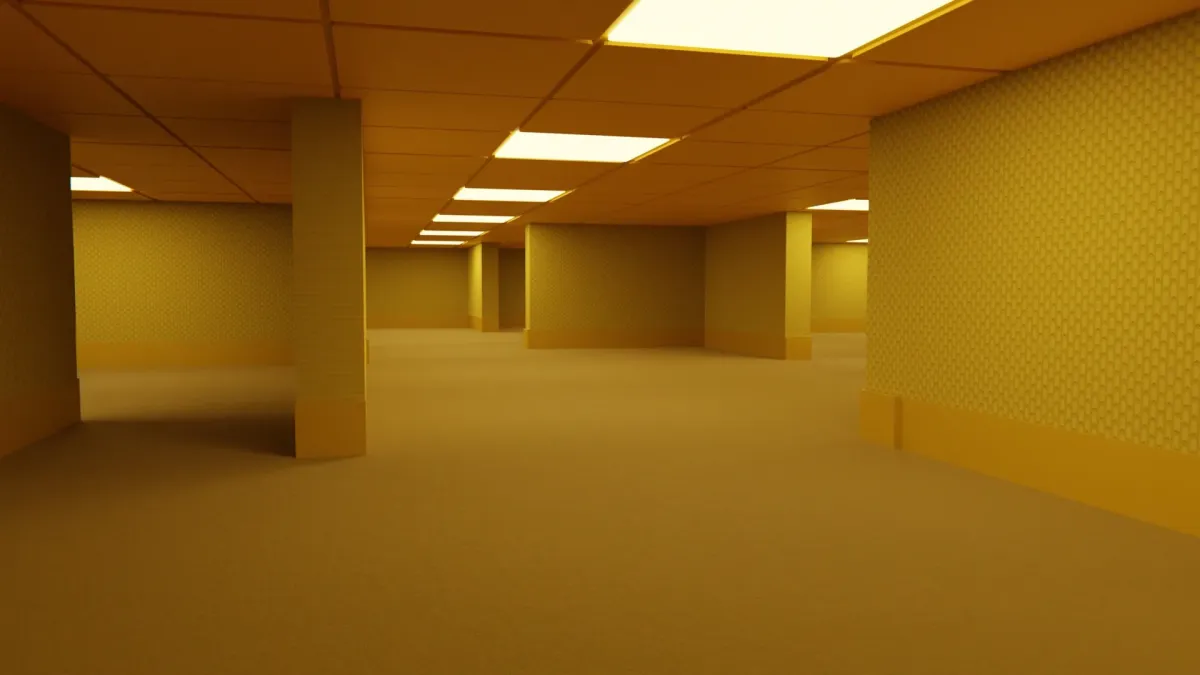
Imagine exploring a place that isn't on any map, a fictional labyrinth whispered about online as an infinite network of empty, fluorescent-lit rooms. This is the Backrooms, an internet-born concept where users can "noclip" out of reality and get trapped in a monotonous, maze-like environment with no easy escape.
Originating on 4chan in 2019, the Backrooms have exploded across platforms like Reddit, TikTok, and YouTube, with users collectively building its eerie mythology. Think endless corridors with unsettling yellow wallpaper and deserted office spaces that exist beyond our world. Filmmaker Kane Parsons really supercharged the phenomenon with his viral "found footage" videos, turning static images into an immersive horror experience and catapulting the Backrooms into mainstream horror discussions. Now, a feature-length horror thriller based on his adaptation is in the works, further cementing the Backrooms' place in pop culture.
What started as a single, claustrophobic image of yellow rooms and aged carpets has captivated millions. In a world that often feels overexposed and overexplained, the mystery of the Backrooms offers something different. The r/backrooms subreddit boasts hundreds of thousands of members, and #backrooms content on TikTok has raked in over half a million posts. Fan pages on Instagram, like @xbackroom, with hundreds of thousands of followers, keep the lore alive with edits and speculative stories.
Unlike traditional horror or ghost stories where you passively consume a narrative, the Backrooms encourages active participation. Users create maps, diary entries, survival guides, and immersive videos, essentially becoming co-creators and world-builders. Folklore scholar Michael Kinsella calls this "online legend-tripping," where the audience isn't just watching but actively contributing and collaborating.
The appeal of the Backrooms taps into a fascination with uncanny or unsettling places, similar to interest in abandoned sites or locations tied to dark historical events. However, the Backrooms stand out because they offer a collectively imagined digital space of unease and liminality, without a fixed physical location or historical tragedy. Their power lies in their lack of definitive lore or reality, allowing users to infuse them with personal meaning.
The uncanny familiarity of the Backrooms – with their dated decor, hotel-like hallways, and abandoned office vibes – stems from our recognition of modern "non-places." These are overlooked spaces we encounter daily but rarely pay attention to. The Backrooms transform the mundane into the menacing, blurring the lines between role-playing, virtual tourism, and online participation.
As the internet evolves from a simple network into a digital landscape we inhabit emotionally, the Backrooms represent a shift towards collectively imagined digital worlds becoming meaningful cultural spaces. They are places people explore, invest in emotionally, and return to, proving that virtual destinations can hold real significance, even without physical existence.