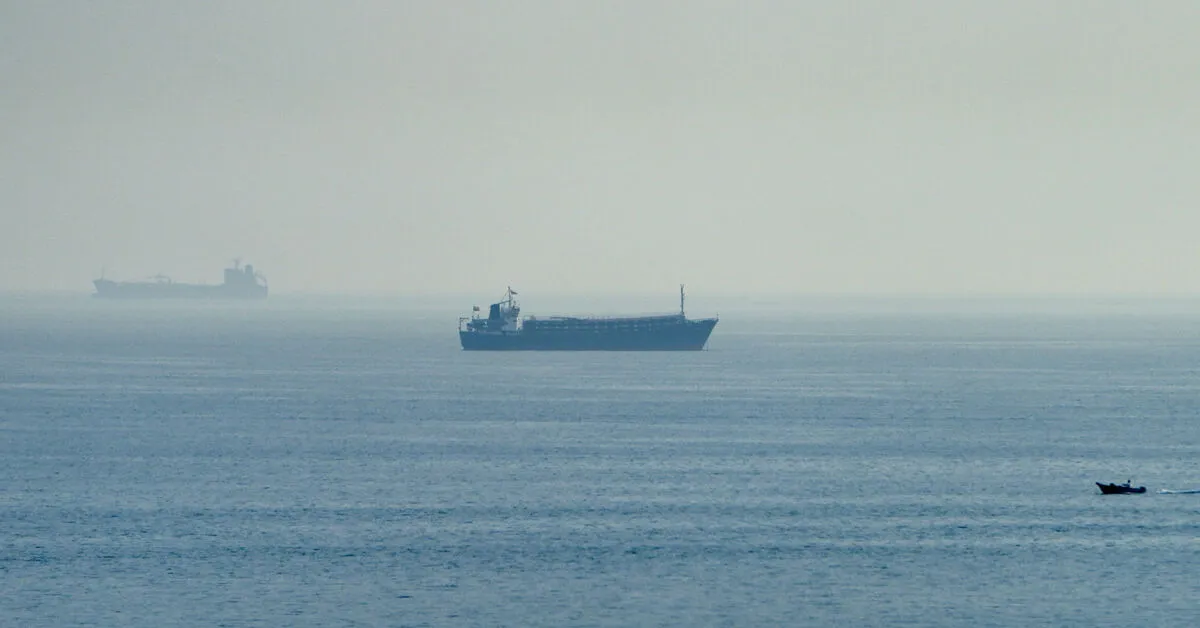
Oil prices experienced a significant increase on Friday following Iran's announcement that it had stopped two vessels attempting to exit the Strait of Hormuz, exacerbating concerns over global energy security. The development comes in the wake of a recent drone attack on ships at an Egyptian Mediterranean port earlier in the week.
Iran reported that four other tankers diverted course after its forces intervened, though these claims could not be independently verified. Shipping data from Kpler indicated that two large oil-carrying tankers loaded from the Gulf successfully transited the strait, a vital waterway through which approximately one-fifth of global energy shipments normally pass. Two additional commodity vessels also made passage, though Kpler's data does not account for vessels with transponders switched off.
The situation in the Strait of Hormuz, a narrow passage between Iran and Oman, has become increasingly tense. Iran has imposed blockades on most shipping since the commencement of a five-month conflict. Concurrently, Iran-aligned Houthi forces in Yemen have begun threatening the Bab el-Mandeb strait, located at the opposite end of the Red Sea from the Suez Canal, which serves as a third key export route for Saudi crude.
Benchmark Brent crude futures were on track for a substantial 23% rise in July, with Reuters polls of economists and analysts predicting further price increases this year. This follows a week of heightened tensions that included joint U.S.-Saudi strikes on Iranian-allied forces in Iraq. U.S. President Donald Trump commented that the military operations were progressing favorably.
An Iranian body overseeing the Strait of Hormuz stated on Friday that crossings remained impeded due to "continued aggressive actions by U.S. military forces in the region." The Persian Gulf Strait Authority indicated that transit permits would be issued gradually once stability and calm were restored. U.S. Central Command confirmed on Thursday that U.S. forces were continuing to blockade Iranian oil exports and had completed a significant series of strikes.
In a retaliatory move, Iran's army claimed to have targeted U.S. military facilities in Kuwait and Bahrain on Friday in response to earlier U.S. attacks, including an incident on Qeshm Island. Kuwait's military reported destroying attacking drones, with minor damage and no casualties. Bahrain has not yet issued a comment.
Despite these escalations, the Suez Canal and the Sumed pipeline have remained operational, providing safe northbound routes for Saudi energy exports via the Red Sea. Egypt's cabinet reported an unidentified drone caused a fire on two vessels at the port of Damietta, west of the Suez Canal, though responsibility has not been claimed. Iran has denied involvement in the Damietta strike, with Iranian Foreign Minister Abbas Araqchi suggesting vigilance against alleged Israeli plots.
In response to recent Houthi attacks on shipping, London's marine insurance market has expanded its "high risk" zone in the Red Sea. Saudi Arabia has proposed a multinational maritime defence coalition to safeguard shipping and energy routes in the region. Data indicates a growing volume of Saudi oil and other shipping being diverted north through the Red Sea, resulting in longer voyages for Asian customers.