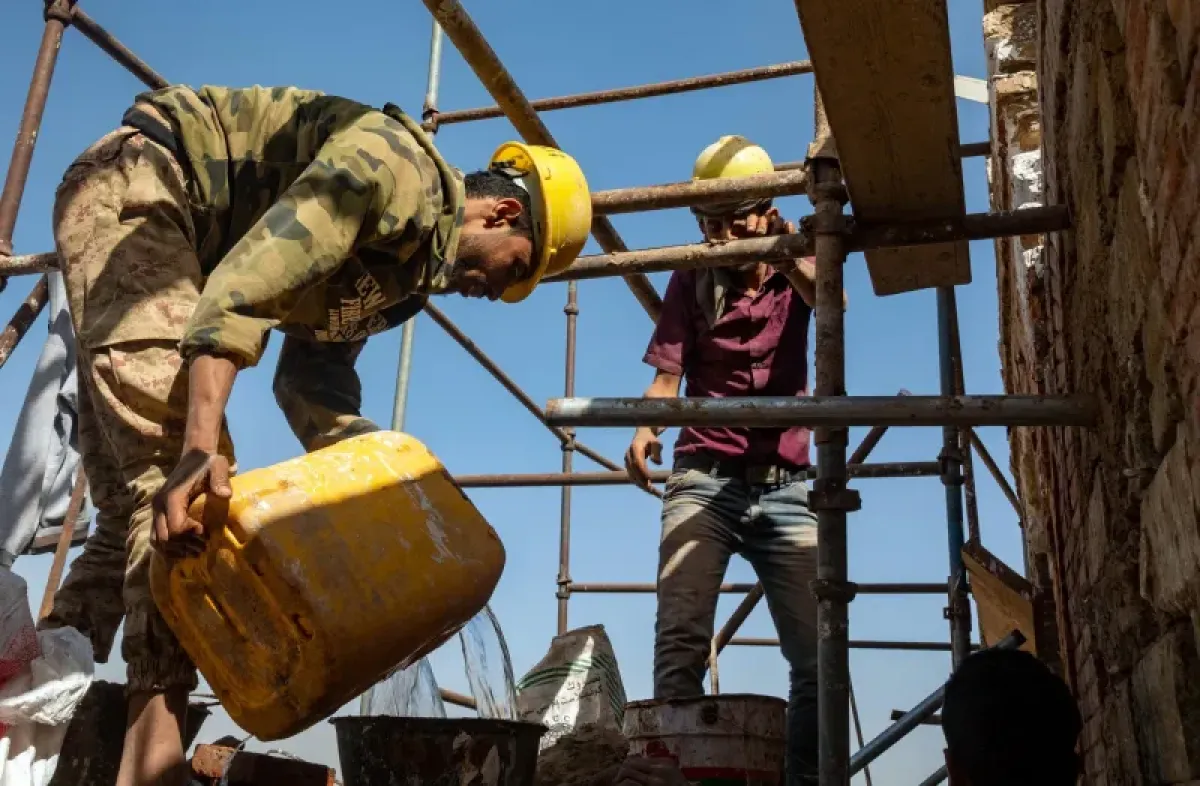
New levies imposed by the Houthi militia on cement have led to a significant price increase in areas under their control, threatening the viability of the construction sector. These recent taxes, the second such measure this year, have driven up the cost of cement, exacerbating economic hardship in the region.
The price of cement sourced from liberated areas has reportedly risen by approximately 20% in Houthi-controlled markets following the imposition of new duties. This surge has pushed the price of a cement bag to between 4,500 and 4,700 Yemeni riyals, compared to 3,700 to 4,000 riyals just last week. The tax increases, implemented on Wednesday, August 26th, were enacted by the Houthi administration under the guise of customs fees and sales taxes.
Official documents indicate that the Houthi-affiliated Tax and Customs Authority has issued directives to increase customs duties on ready-mix cement by 20% and sales tax by 10%, effective immediately. Furthermore, the directives outline plans for further increases starting October 1st, with customs duties rising to 30% and sales tax to 15%.
A portion of these newly imposed fees, equivalent to 50% of the customs duties and sales taxes, is designated for "protecting and supporting local products." The Houthi authorities have justified these increases by claiming that domestic cement production has achieved full self-sufficiency. However, the practical application of these measures appears to target cement originating from liberated areas, which constitute a substantial portion of the market in Houthi-controlled territories, especially after the cessation of production at two major northern cement factories, Omran and Bajil.
The disruption at the Omran and Bajil cement factories, attributed to Israeli strikes last year during reciprocal escalations between Israel and the Houthi militia, has been subsequently used by the group as a pretext to levy higher taxes on cement from liberated regions. Previously, in January, the Houthi militia had already imposed a 50% increase in customs duties on imported cement, purportedly to fund the rehabilitation of these factories.
Experts are raising concerns about the long-term repercussions of the Houthi militia's persistent imposition of taxes on cement. This practice, viewed as a manifestation of the militia's separatist approach by treating products from liberated areas as foreign imports, is expected to severely impact the construction sector, a critical source of employment for thousands in the militia-controlled regions. The escalating construction costs due to these taxes are projected to lead to a decline in building projects for both individuals and companies, potentially exacerbating unemployment in an area already facing severe commercial, economic, and humanitarian challenges stemming from the militia's policies.