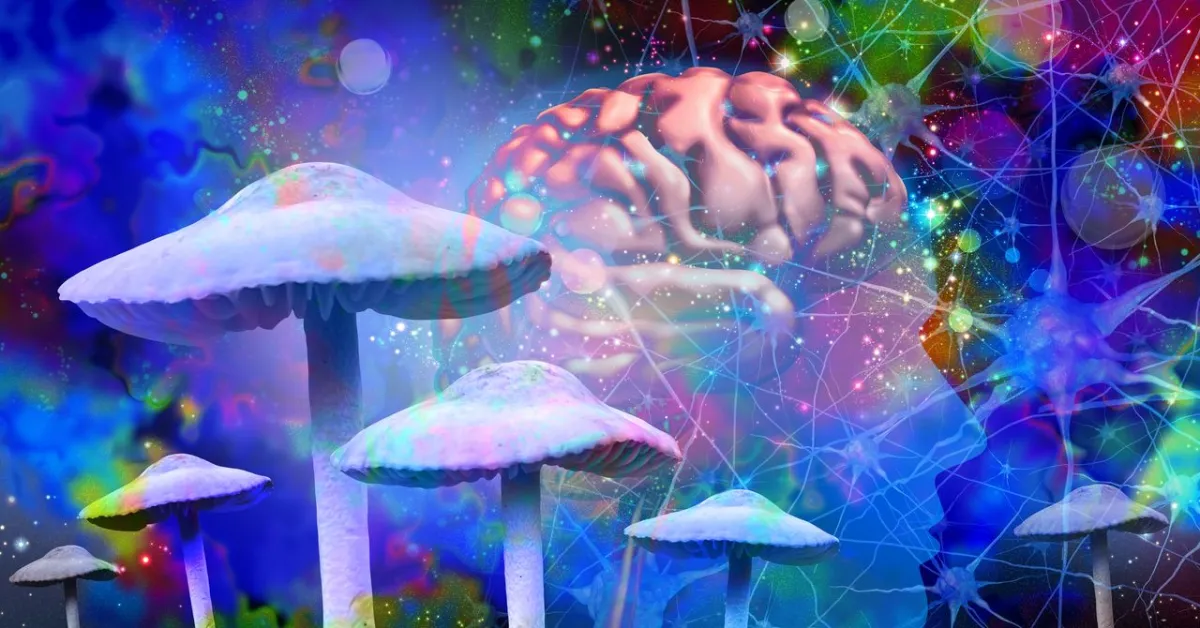
A groundbreaking study reveals that while psilocybin, the active compound in magic mushrooms, might seem to scramble the brain, it actually sharpens our neurological response to what's happening right now. This research challenges the long-held idea that psychedelics just create chaos, suggesting instead a more nuanced way the brain processes reality under their influence.
Scientists traditionally believed that psychedelics loosen the brain's organizational structure, leading to more diverse and unpredictable neural signals. This "increased entropy" was thought to explain the often bizarre and memorable experiences associated with psychedelic trips. However, this new, large-scale neuroimaging study, published in Nature, found a surprising hidden order within this apparent disarray.
Using fMRI and EEG to track brain activity across 332 regions in 62 participants with no prior psychedelic experience, researchers observed that the clearer the neural signals became, the more intense the psilocybin experience. Participants, who took 19mg of psilocybin and then meditated, listened to music, or watched a movie, showed that reality seemed to leave a more distinct imprint on the brain, rather than the mind getting lost in a chaotic trip.
The study's lead author, Devon Stoliker from Monash University, explained that brain networks processing our inner and outer worlds became less distinct but reorganized to reflect the participants' immediate experiences. This heightened clarity in neural patterns correlated with participants reporting more intense feelings of immersion and unity with their surroundings, sometimes blurring the lines between self and environment.
These findings offer a biological basis for the sense of oneness often described during psychedelic journeys and add crucial context to the concept of psilocybin inducing "chaos." Senior author Adeel Razi emphasized that this highlights the importance of the environment and activities during a psychedelic session, particularly for the growing field of psychedelic therapy, reinforcing that context is not just background but an integral part of the experience.