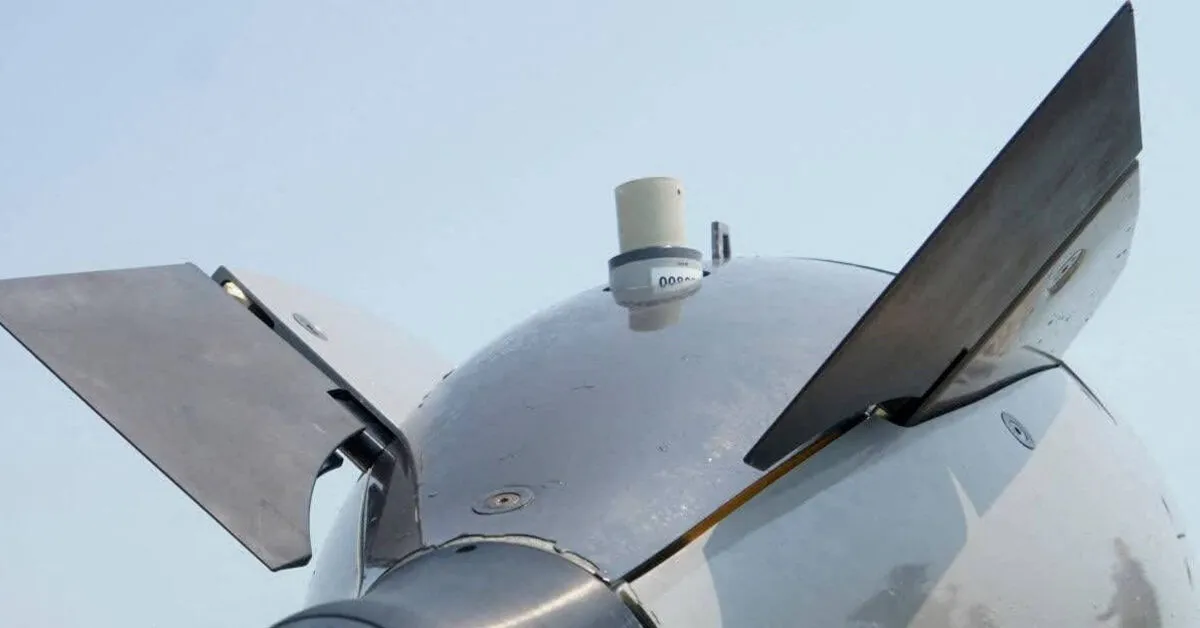
Iran's capture of a U.S. military underwater drone presents an opportunity for Tehran to study and potentially reverse-engineer the advanced vessel, marking a setback for the Pentagon and drone manufacturer Anduril.
While U.S. military officials and Anduril have downplayed the significance of the drone falling into Iranian hands, the Dive-LD autonomous underwater vehicle is part of a new generation designed for long-range surveillance with minimal human intervention. This incident echoes past events, such as Iran's capture of a U.S. RQ-170 Sentinel stealth drone in 2011, which Tehran later claimed to have reverse-engineered, subsequently unveiling domestically produced models resembling its design.
Analysts suggest that while Iran is unlikely to gain a decisive military advantage, the episode represents a propaganda victory and an awkward challenge to Washington's projection of technological superiority. Iranian embassies globally have used the incident for mockery, with Iran's embassy in Ghana boasting about the drone's capture in a contested waterway.
U.S. Navy Captain Tim Hawkins stated that the captured drone was an "older model" that did not carry sensitive data or classified equipment. However, experts like Farzin Nadimi, a senior fellow at the Washington Institute for Near East Policy, believe Iran will leverage this for propaganda and to improve its own drone designs. Bryan Clark, a fellow at the Hudson Institute, noted that while Iran could reverse-engineer the mechanical systems, the drone's software incorporates built-in defenses.
The incident also highlights a potential discrepancy between Anduril's marketing of the Dive-LD as highly reliable and capable of extended autonomous operation, and the U.S. Navy's description of it as an older model that suffered a malfunction. The Dive-LD has also served as a testbed for Australia's new Ghost Shark underwater drone.
Mona Yacoubian, director of the Middle East program at the Center for Strategic and International Studies, commented that Iran has proven adept at using such events to frame narratives of U.S. ineptitude and to assert control over key waterways like the Strait of Hormuz.