Prime Minister Andy Burnham has defended his government's decision to block imports from Israeli settlements in the occupied West Bank, stating that Britain must "stand for something" and take action against injustice.
Speaking in parliament, Burnham emphasized the need for words to be backed by action, particularly in the context of Britain's long-standing endorsement of a two-state solution in the Middle East. He argued that leadership requires addressing injustice and unfairness, such as the displacement of people from their homes, especially in a challenging global landscape.
The import ban, announced by Foreign Secretary Ed Miliband along with measures targeting settlement-linked entities and individuals, represents a significant policy shift by Britain towards Israel. This move is part of a broader international effort, involving France and Canada, to pressure Israel regarding settlement expansion, which these nations contend jeopardizes the prospects for a two-state solution.
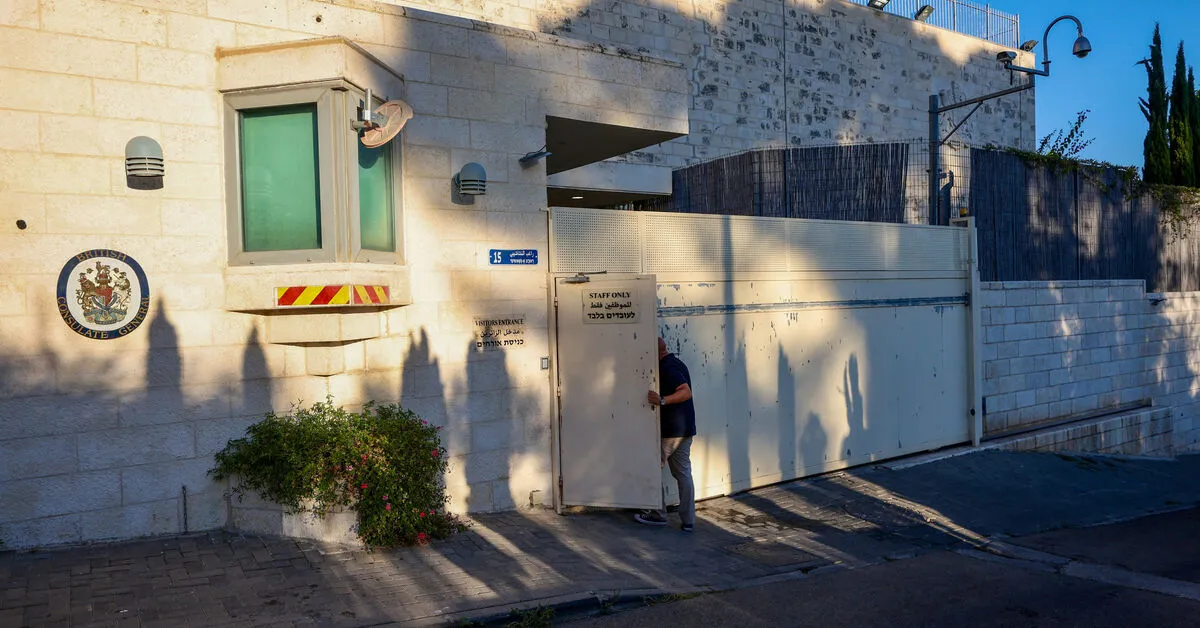
Israel responded strongly to the sanctions, ordering the closure of Britain's consulate in East Jerusalem and prohibiting twelve Britons from entering the country. Israeli Foreign Minister Gideon Saar reportedly expressed gratitude to Kemi Badenoch, leader of the opposition Conservative Party, for her criticism of the policy. Badenoch had written in The Sun newspaper that the Labour government was prioritizing its political interests over national interests.
However, during a parliamentary session, Badenoch focused her questioning on defense spending rather than the settlement issue. Prime Minister Burnham, conversely, highlighted the action as a response to demands from within his party, asserting that Britain should support the underdog and act consistently with its global principles.