Apple is finally diving into the smart display market with the HomeView, its first-ever smart display, aiming to revitalize its smart home ecosystem.
After years of focusing on a more exclusive smart home setup with devices like the HomePod, Apple is now competing directly with giants like Google and Amazon, who have long dominated the smart display space. The HomeView, announced in New York City, sports a 7-inch screen and arrives as part of a broader push to boost Apple's smart home offerings. It's priced at $299 and comes in two configurations: a speaker base model and a wall-mounted version, both at the same price. Preorders are open, with the device hitting shelves on November 13.
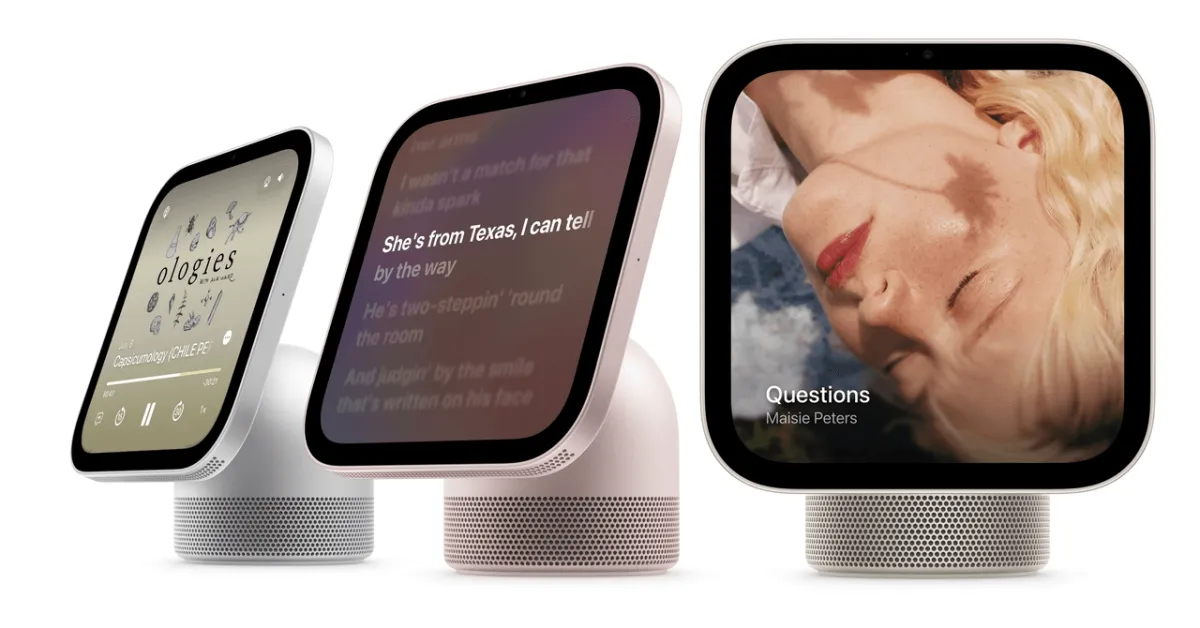
Visually, the HomeView strongly resembles a supersized Apple Watch. It features a square 7-inch display with customizable "faces" that allow users to swipe through information like the time, personal photos, weather updates, and even animations. Similar to the Apple Watch, you can personalize these faces with complications for quick access to data. The home screen operates much like an iPhone or iPad, displaying apps and widgets, though it runs on a dedicated HomeView software, not iOS or iPadOS. While it lacks an App Store, Apple offers a curated selection of apps, including FaceTime, Messages, and Safari, alongside some third-party media apps and existing CarPlay apps that can automatically sync if installed on your iPhone.
The HomeView hardware, powered by Apple's A18 chip, is available in silver, starlight, rose pink, and space gray, complete with color-matched woven cables. The standard model includes a speaker base with a manually adjustable screen, while the wall-mounted option offers different mounting solutions, including DIY-friendly and professionally installed hardwired or Power over Ethernet (PoE) setups. The device boasts a 7-inch Liquid Retina display with True Tone technology and an ambient light sensor that can dim the screen to an exceptionally low brightness, making it suitable for bedside use. A 12-megapixel Center Stage camera and a four-microphone array are on board for FaceTime calls and facial recognition, enabling personalized user interfaces.
The HomeView leverages facial recognition and voice recognition to personalize the experience for up to six iCloud accounts. When a recognized user approaches, the display adapts to their individual setup, similar to Google's Pixel Tablet. For privacy, personal content only appears if the user's iPhone is on the same Wi-Fi network and has been recently unlocked. Voice recognition allows Siri to tailor responses based on individual user preferences and linked accounts, whether it's playing music from a specific library or managing smart home devices. The device also supports Apple's Handoff feature, allowing seamless transfer of content like recipes or podcasts from an iPhone to the HomeView, and even call transfers.
At its core, the HomeView is powered by Siri, which has undergone significant updates this year. The enhanced Siri AI on the HomeView can understand personal context from your iPhone, such as recognizing a song recommendation from a friend via Messages history or calculating travel times for family members. A standout feature is its ability to convert web recipe pages into easily digestible, step-by-step cooking instructions with integrated timers. Naturally, the HomeView also serves as a central hub for controlling smart home devices through the Home app and can display live feeds from connected security cameras. Apple is betting that its tight iPhone integration, familiar Watch-like interface, and a more intelligent Siri will make the HomeView a compelling addition to the smart home market, despite entering the space later than competitors.