The October 7th Hamas attacks have profoundly altered the political and social landscape of Israeli kibbutzim, particularly those with a historically leftist ethos, as residents grapple with trauma and a diminished belief in peaceful coexistence with their Palestinian neighbors.
Danny Rahamim, a 72-year-old resident of Kibbutz Nahal Oz, located scantily a few hundred meters from the Gaza border, identifies as perhaps the most left-wing individual on the kibbutz. This self-perception has intensified following the unprecedented Hamas assault on October 7, 2023, an event that has coincided with Israel's first election since the nation's deadliest day.
Nahal Oz, like many of Israel's kibbutzim, traditionally embodied the socialist ideals of the country's founders, serving as strongholds of the left and advocating for peace with the Palestinians. However, the kibbutz found itself on the front lines of the Hamas attacks, with 16 of its 400 residents losing their lives. Rahamim noted that proximity to a military base mitigated the death toll compared to neighboring kibbutzim like Kfar Aza and Beeri, which suffered significantly higher casualties.
"People changed their minds," Rahamim stated, explaining that while most residents have not become right-wing, their belief in improving relations with their neighbors has eroded. Despite this shift, Rahamim, who serves as the kibbutz spokesman, remains steadfast, asserting, "I'm not giving up." The broader political context sees the peace camp dwindling in Israeli politics, with Prime Minister Benjamin Netanyahu campaigning on promises to prevent a Palestinian state, and his main rival, Gadi Eisenkot, positioning himself as even more opposed to such an outcome.
The physical scars of the attack on Nahal Oz have been mended with fresh paint covering bullet holes, but the memories persist. Rahamim's own children consider him naive, and his stepdaughter, Naama Zadok-Rahamim, expressed a desire for security and assurance that such an event will not recur. Previously, she felt empathy for the suffering on the other side of the border during periods of conflict, but now finds it difficult to differentiate between Hamas and the broader Palestinian population, questioning if there is significant difference. Similarly, Nadav Perez, a hospital worker who historically voted left, recounted his involvement in a project to build a clinic for Gazan patients, a project whose regional council official was killed defending his kibbutz. Perez admitted his compassion has become "blurred," stating, "I don't really care what's happening on the other side."
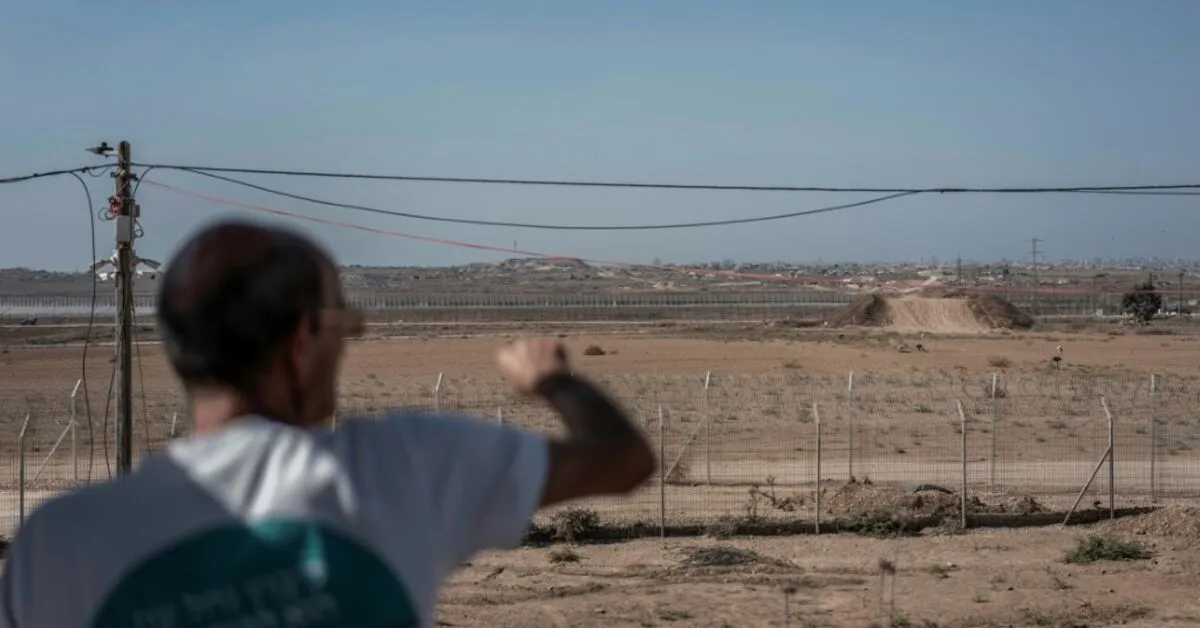
Rahamim plans to vote for center-left candidate Yair Golan, citing his commitment to governing with lawmakers from Israel's Arab minority. Observing Gaza from an observation post, Rahamim pointed to the breached fences and the rubble where houses once stood. He recalled his daughter's childhood distress during bombings, questioning how Gazan children endured such sounds. While she too has changed, convinced that Palestinians in Gaza "all the same -- all they wait for is to kill us," she ultimately chose to return to the kibbutz, which Rahamim described as "heaven for children."