Houthi forces have reportedly failed to achieve significant military gains in recent days, particularly in the Taiz and Marib regions, potentially thwarting Iranian ambitions in Yemen. This stagnation contrasts with earlier advances following the fall of the West Coast.
After the surprise fall of the West Coast and the advance to Bab al-Mandab in early September, the Houthi militia, supported by Iran, attempted to exploit this military setback for the Yemeni government by expanding into liberated territories. Within a month, the militia reportedly controlled the entire southern rural Taiz, an achievement they failed to secure even at their peak strength in 2015. Their expansion also extended into the al-Mudhaykhirah district in Lahj, a stronghold of the al-Subeihi tribes, leveraging their control over the al-Wazi'iyah district.
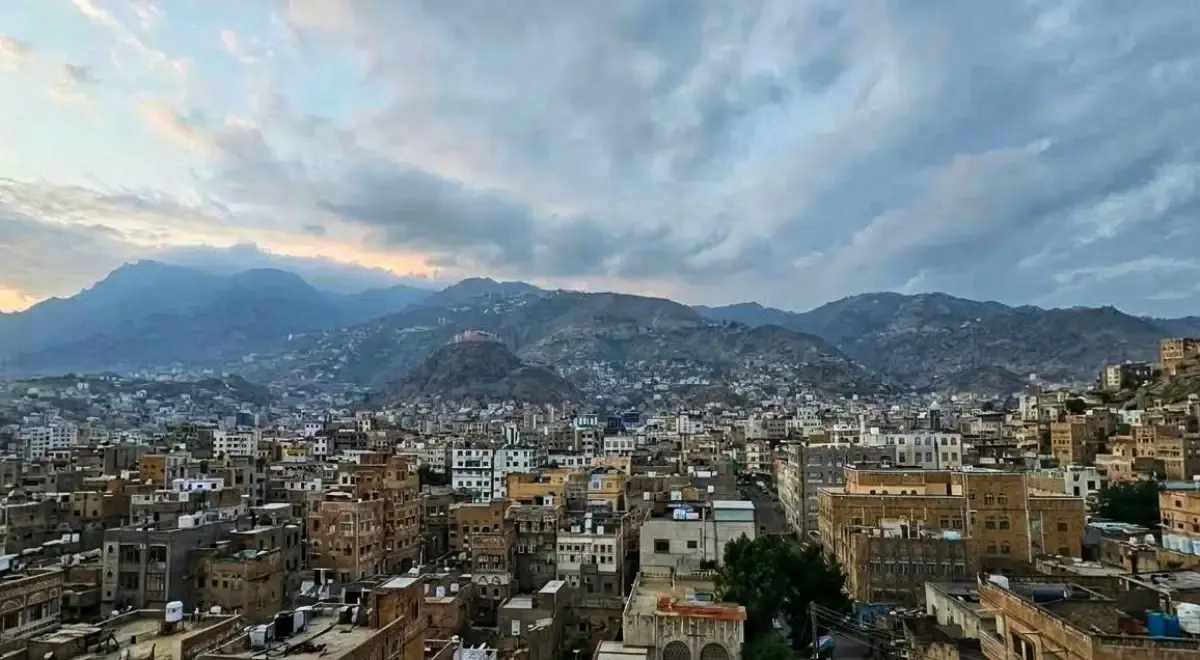
These advances reportedly fueled a "military euphoria," pushing the militia towards a long-held objective: the capture of Taiz city. This city had previously represented a major obstacle to their broader control ambitions across Yemen. Emerging from victories on the West Coast and rural Taiz, the Houthi militia reportedly moved to encircle and assault Taiz city, simultaneously seeking to secure the strategic Mount Sabr. Despite understanding the high cost of controlling Taiz, the militia's fear of repeating the 2015 scenario was reportedly greater.
The militia was aware that isolating and besieging Taiz city, as occurred 11 years prior, did not lead to its subjugation. Instead, it fueled resistance that eventually broke the siege and opened a supply route to the south. This historical context reportedly explains the Houthi militia's intense offensive operations and determination to seize Taiz and its strategic Mount Sabr, despite incurring significant losses in personnel and equipment from direct clashes and airstrikes.
However, recent confrontations have indicated a clear inability of the Houthi militia to achieve its objective. Battles in Sabr and around the city have reportedly become a drain on the militia's strength, consuming fighters, commanders, and matériel. This situation places the militia in a precarious position, echoing a scenario from approximately five years ago when they failed to capture Marib city and its oil and gas fields, a failure that also thwarted Iran's aspirations.
Following the surprising collapse of government fronts in Nehm, Al Bayda, and Al Jawf between 2020 and 2021, the Houthi militia reportedly attempted to storm Marib city and seize the oil and gas fields in Safer. Despite immense human cost, the militia's objective remained elusive. A significant military blow was then dealt by the Southern Giants Brigades, who, in less than a month, expelled the Houthis from western Shabwah districts and the Marib district of Harib, forcing the militia to accept the UN-brokered truce in April 2022. This is reportedly what the Houthi militia most fears today: a repetition of that scenario. They are currently stalled at the gates of Taiz city and may face a similar military setback from the same forces, the Southern Giants Brigades, who are now reportedly nearing the expulsion of the Houthis and Iranian influence from Bab al-Mandab.