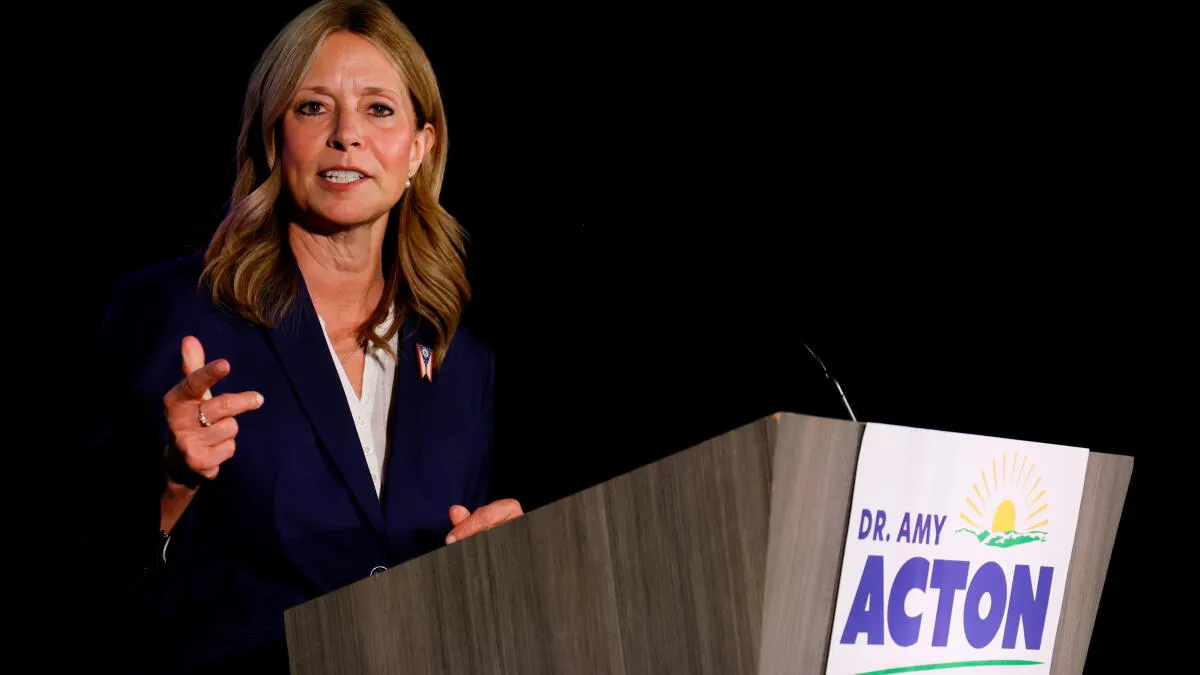
Ohio gubernatorial candidate Vivek Ramaswamy's controversial advertisement attacking opponent Amy Acton, which features Acton's mother discussing a history of child abuse, has ignited widespread condemnation, even among some Republicans. However, the ad's true significance may lie not in its ethical implications, but in its function as a strategic test of loyalty for Donald Trump's base.
The advertisement, which depicts Acton's mother recounting her struggles with addiction and her failure to protect her child from an abusive stepfather, has been labeled "repugnant" by many. Despite this, former President Trump and Vice President JD Vance have defended the ad, with Trump suggesting that Acton's mother's story was "fair game." This defense has drawn criticism from those who believe it represents a new low for the Republican Party.
Despite the outcry, the author argues that this ad will not be a turning point for the Republican Party, nor will it signify a loss of morals. Instead, it serves a dual purpose for Donald Trump. Firstly, it allows Ramaswamy, whom Trump has endorsed, to potentially lose without directly implicating Trump in a failed campaign. Trump is expected to claim the ad was misrepresented by Democrats and the media, thus reinforcing his narrative of being unfairly targeted.
Secondly, the ad functions as a loyalty test for Trump's "MAGA acolytes" ahead of a potential 2028 presidential run. JD Vance's defense of the ad, urging Republicans to focus on winning the election rather than moral objections, exemplifies this strategy. The author contends that for many dedicated Trump supporters, loyalty to the former president and the pursuit of conservative policy goals outweigh concerns about ethical conduct, including the exploitation of victims of sexual abuse.
The author points to responses on social media platforms and the historical behavior of Trump supporters when faced with controversial tactics. Despite professions of outrage, many appear willing to overlook the ad's content if it aligns with Trump's directives. The ad's effectiveness in galvanizing the base, particularly among white evangelical voters who overwhelmingly support Trump, is expected to be significant, regardless of the election's outcome. This maneuvering allows Trump to consolidate power by identifying and potentially purging any remaining "old-guard Republicans" who demonstrate insufficient loyalty.
Ultimately, the advertisement is presented not as a campaign gaffe, but as a deliberate tactic. It is designed to energize Trump's core supporters through provocative tactics, mirroring Trump's own style. The author predicts that Trump's rally with Ramaswamy in Ohio will likely see this base transmute their initial outrage into renewed support, understanding the ad as an expression of power and a necessary trade-off for achieving their political objectives.