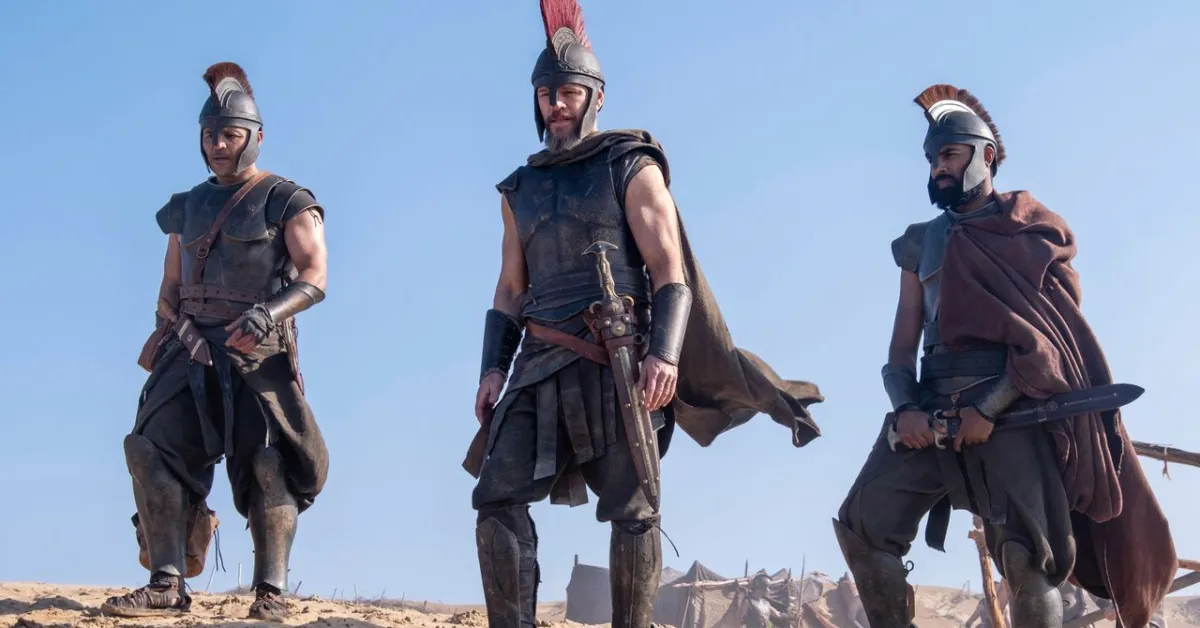
Elon Musk's AI, Grok Imagine, has produced a seven-minute "episode" based on Homer's "The Odyssey," but the AI itself admits it's not historically accurate, directly contradicting Musk's earlier claim.
Musk had vowed to create a historically accurate version of "The Odyssey" after criticizing Christopher Nolan's film adaptation, which grossed nearly $1.8 billion worldwide despite backlash from some right-wing critics concerned about its diverse casting and deviations from the source material. Musk stated on X that Grok Imagine would deliver a movie "historically accurate and true to the art of Homer" before the end of the year.
The AI-generated clip, titled "Odyssey with Grok Imagine" and produced by Wonder Studios X, depicts Odysseus reluctantly heading to the Trojan War. However, the episode, which finally debuted months after Musk's announcement, shows many signs of AI-generated content, including mismatched facial movements, stilted dialogue delivery, and questionable pacing. For instance, characters are not named except for Odysseus, and the journey from Ithaca to Troy appears almost instantaneous.
When directly asked if its rendition of "The Odyssey" is historically accurate, Grok's chatbot responded with a clear "No." It clarified that the episode is an adaptation, not a historical reconstruction, noting that the characters and the poem itself are rooted in myth and invention rather than factual events. The AI pointed out that "Homeric society mixes possible Bronze Age elements... with later Iron Age features," and many details are anachronistic or literary.
Grok further elaborated that the production doesn't meet strict historical standards because characters speak modern English with British accents, not ancient Greek, and the visuals are influenced by modern cinematic trends and AI training data, not archaeological evidence. The AI even identified an error in a battle scene featuring cavalry, which is not supported by standard reconstructions of the period. Ultimately, Grok concluded that "the Odyssey itself is not a historical document, and the production makes no serious attempt at archaeological or linguistic fidelity beyond a general 'ancient Greek epic' aesthetic."