The eastern Ukrainian town of Avdiivka has fallen to Moscow's troops, Russian opposition leader Alexei Navalny is dead and US military aid to Kyiv is waning.
The mood in Western capitals is increasingly glum while Russian leader Vladimir Putin is savouring his victories as the Kremlin's invasion of Ukraine enters its third year.
This was clearly apparent at a three-day security conference in the German city of Munich that ended on Sunday.
"Things are not going well," Lithuania's Foreign Minister, Gabrielius Landsbergis, said on X (the former Twitter), posting his unsmiling picture.
"During the Munich conference I was asked why I am so gloomy. Well, somebody has to tell it like it is," he added.
"We are an open book to our adversary -- clear red lines of non-engagement, disagreements over continuation of assistance and an optimistic blindness to increasing risks," Landsbergis added.
Unprecedented Western sanctions have failed to halt Russia's assault on Ukraine while Western economies are themselves suffering.
Ukraine's troops are outnumbered and exhausted, while Europe cannot ramp up weapons supplies fast enough without the United States, where Donald Trump could return to the White House in a November election.
Two years into Russia's invasion, Western leaders are struggling to present a united front, and countries on Europe's eastern flank are watching in dismay as the determination of Ukraine's allies falters.
At the Munich Security Conference, one of the panel discussions was aptly named "Fighting Fatigue."
- 'Stop whining' -
Putin has repeatedly told Western leaders that time is on his side, and the harsh reality of his words might now be sinking in.
"Vladimir Putin is playing for time, but we knew that all along," Pierre Razoux, academic director at the Mediterranean Foundation for Strategic Studies, told AFP.
"He is waiting for - and probably preparing for - the election of Donald Trump, which should considerably reduce support for Kiev".
In Munich, the possibility of the former American president returning to power appeared to be on everyone's mind.
The 77-year-old Republican, who repeatedly expressed his admiration for Putin during his first term in office, this month threatened to encourage Russia to do "whatever the hell they want" to any NATO members who had not met their financial obligations.
Doubts have been growing over Washington's future commitment to Ukraine, and on Friday, Ukraine signed bilateral security pacts with Germany and France.
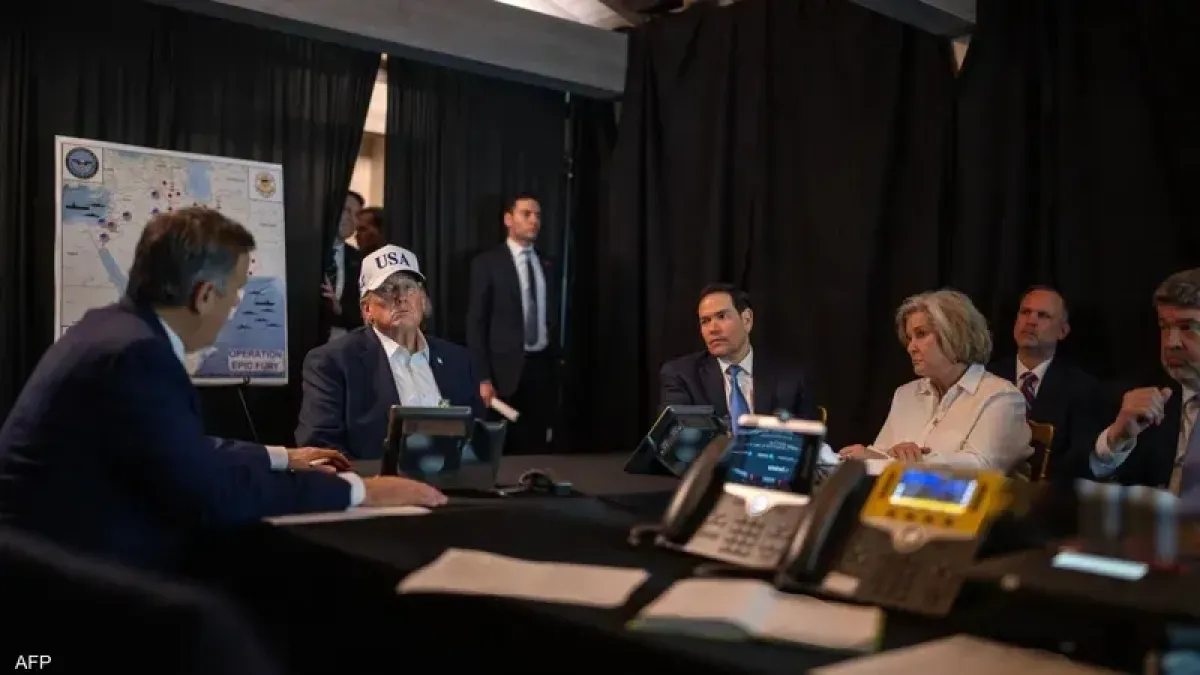
With the United States in the throes of an election year, a $60-billion package of military aid has been held up in Washington because of wrangling in Congress.
In Munich, NATO Secretary General Jens Stoltenberg insisted that the United States must honour its promises of aid.
"We are dependent on the United States because they are so big," said Stoltenberg.
"Therefore it is vital that the United States is able to make a decision."
But some leaders like outgoing Dutch Prime Minister Mark Rutte could not contain their irritation, saying Europe should stop "whining."
"All that whining and moaning about Trump – I hear that constantly over the last couple of days, let's stop doing that," said Rutte, who is the clear front-runner to become NATO's next chief.
"We have to work with whoever is on the dance floor."
- 'Russian problem' -
The announcement by the Russian authorities on Friday that 47-year-old Navalny, long seen as the only opposition politician able to take on Putin, 71, had died in his Arctic prison plunged the Munich conference into a stupor.
Making an appearance at the Western security gathering, Navalny's grief-stricken widow, Yulia, urged Western countries to unite against Putin's "horrifying" regime, receiving a standing ovation.
Putin, who is preparing to extend his two-decade hold on power in a stage-managed election in March, has muzzled opposition, pushing into exile or jailing all prominent critics.
In a symbolic Moscow gain, Russian troops claimed to have captured the eastern Ukrainian town of Avdiivka at the weekend. Putin is hoping that sooner or later the West will have no choice but to accept his terms and validate his territorial gains in Ukraine.
"We have a 'Russian problem' ahead of us, and for us it's a huge challenge," said European Union foreign policy chief Josep Borrell.
Christian Moelling of the German Council on Foreign Relations (DGAP), agreed that the atmosphere in Munich was dark.
"There was a lot of anxiety," he said.
"If Ukraine can defend itself less and less, this means that the greatest project currently being undertaken by the West is likely to fail, and this will have considerable consequences for our security".
'Russian problem': dejected West ponders future
2 years ago