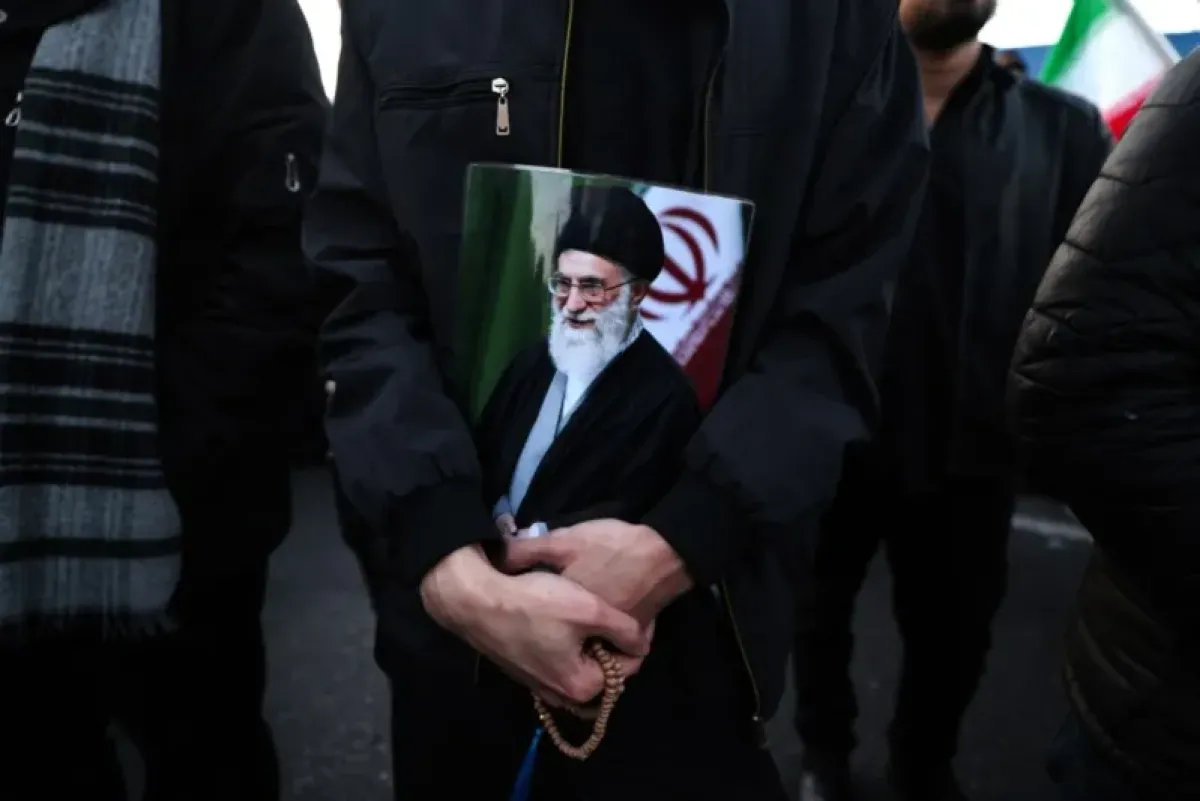
A new alliance among influential figures within Iran's Islamic Revolutionary Guard Corps (IRGC) indicates a significant consolidation of military and security control over the country's political decision-making, particularly in the wake of the recent death of Supreme Leader Ali Khamenei and the continued absence of his successor, Mojtaba Khamenei.
An analysis published by The Telegraph suggests that these developments represent more than just a redistribution of influence; they signal a fundamental shift in the nature of the Iranian regime. The transition appears to be moving away from a religious republic reliant on traditional ideological institutions towards a security state managed directly by the IRGC.
While Western attention has focused on political figures like Parliament Speaker Mohammad Bagher Ghalibaf as potential leaders, the true centers of power are reportedly consolidating elsewhere. IRGC Commander-in-Chief Ahmad Vahidi is emerging as a key figure. To solidify his position within the military establishment, Vahidi is strengthening his partnership with former IRGC commander Mohammad Ali Jafari, who retains considerable influence within the IRGC and Basij networks, particularly among younger, more ideologically driven elements.
This alliance between Vahidi, representing direct military power, and Jafari, with his organizational and mobilization capabilities, is considered one of the most significant to emerge in recent years. The growing proximity between them is intertwined with internal power struggles within the IRGC, from which Ghalibaf appears to be the primary loser. Facing increasing criticism over past corruption allegations and controversy surrounding his family's foreign activities, Ghalibaf's image has weakened among hardline ideological factions.
Jafari plays a crucial role through "Baqiyatollah Headquarters," an opaque and influential organization. For years, he has cultivated a broad network of ideological and organizational groups linked to the IRGC and Basij under the "Middle Ring" project, designed to mobilize and indoctrinate hundreds of thousands of young individuals. This network is reportedly used to influence elections, political decisions, and public opinion, granting Jafari influence beyond official positions.
The analysis warns that this burgeoning alliance could accelerate the militarization of the Iranian state, weakening civilian institutions. In the face of severe economic crises and mounting public discontent, hardline military elites are inclined to address challenges through a purely security-oriented lens, prioritizing control and repression over political or economic solutions. This approach may lead to increased internal hardline policies, especially in response to future popular movements, as security and military agencies expand their role in governance.
The implications extend beyond Iran's borders. The rise of hardline factions within the IRGC is expected to directly impact Tehran's foreign policy. This faction views confrontation with the United States and its allies as integral to the regime's identity and a tool for regional influence, rather than a negotiable political issue. Increased IRGC influence in decision-making circles will likely prioritize military and security tools in regional affairs, including support for allied armed groups. Western powers risk miscalculating the nature of the evolving power structure in Tehran if they overlook these internal shifts, potentially leading to a more inward-looking and externally assertive Iranian regime.