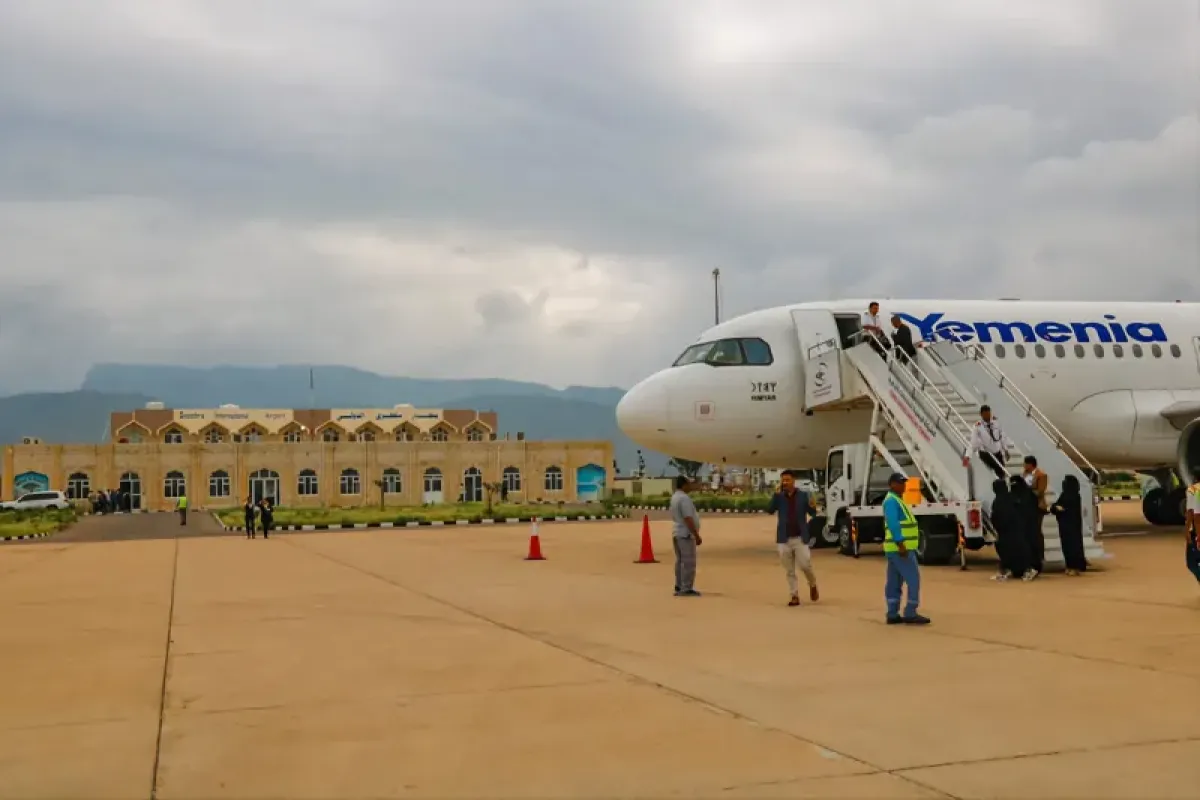
Yemen Airways has announced the cancellation of scheduled flights to Seiyun and the suspension of all domestic services to Socotra due to a severe fuel shortage, highlighting the widening impact of the crisis on vital services and the government's apparent inability to provide effective solutions.
The national carrier canceled its flight from Seiyun to Cairo on Saturday and suspended all flights to and from the Socotra archipelago starting Sunday, citing insufficient quantities of aviation fuel. The airline apologized to affected passengers for the "unavoidable" decision, describing it as a result of exceptional circumstances related to fuel scarcity in Yemen and neighboring countries.
Company spokesperson Hatem Al-Shaabi stated that Yemen Airways is coordinating with relevant authorities to resolve the issue and resume normal flight operations. However, sources within the transport sector indicate that this is not an isolated incident but rather a symptom of a deepening crisis in Yemeni aviation, stemming from persistent fuel supply disruptions and the inability of responsible bodies to meet the operational needs of the national carrier.
In recent days, Yemen Airways had already signaled a critical phase for civil aviation, implementing exceptional operational measures due to acute fuel shortages. This led to technical stops for refueling at King Abdulaziz International Airport in Jeddah and Djibouti International Airport to complete certain routes. The necessity for the national airline to refuel abroad is an unprecedented development underscoring the severity of the logistical and infrastructural crisis, and the limitations of governmental responses.
These developments raise significant questions about the ongoing fuel crisis, despite repeated warnings of its repercussions on critical sectors like electricity, transportation, and aviation. Sources suggest the crisis extends beyond supply shortages, reflecting broader systemic failures in economic and service management, with a lack of proactive planning to address recurring issues.
Aviation specialists warn that frequent technical refueling stops abroad not only cause flight delays but also increase operational costs for Yemen Airways, which already faces substantial financial and operational challenges. These measures directly impact passengers through extended travel times, increased likelihood of cancellations, and disruption to travel schedules, particularly affecting those with urgent appointments.
The aviation fuel crisis occurs amidst a cascade of service-related emergencies in the liberated areas, including deteriorating electricity services, fuel shortages, economic challenges tied to currency depreciation, and rising prices. With the continued scarcity of fuel and the absence of concrete solutions, concerns are mounting about further disruptions to air travel, especially during the peak summer travel season.