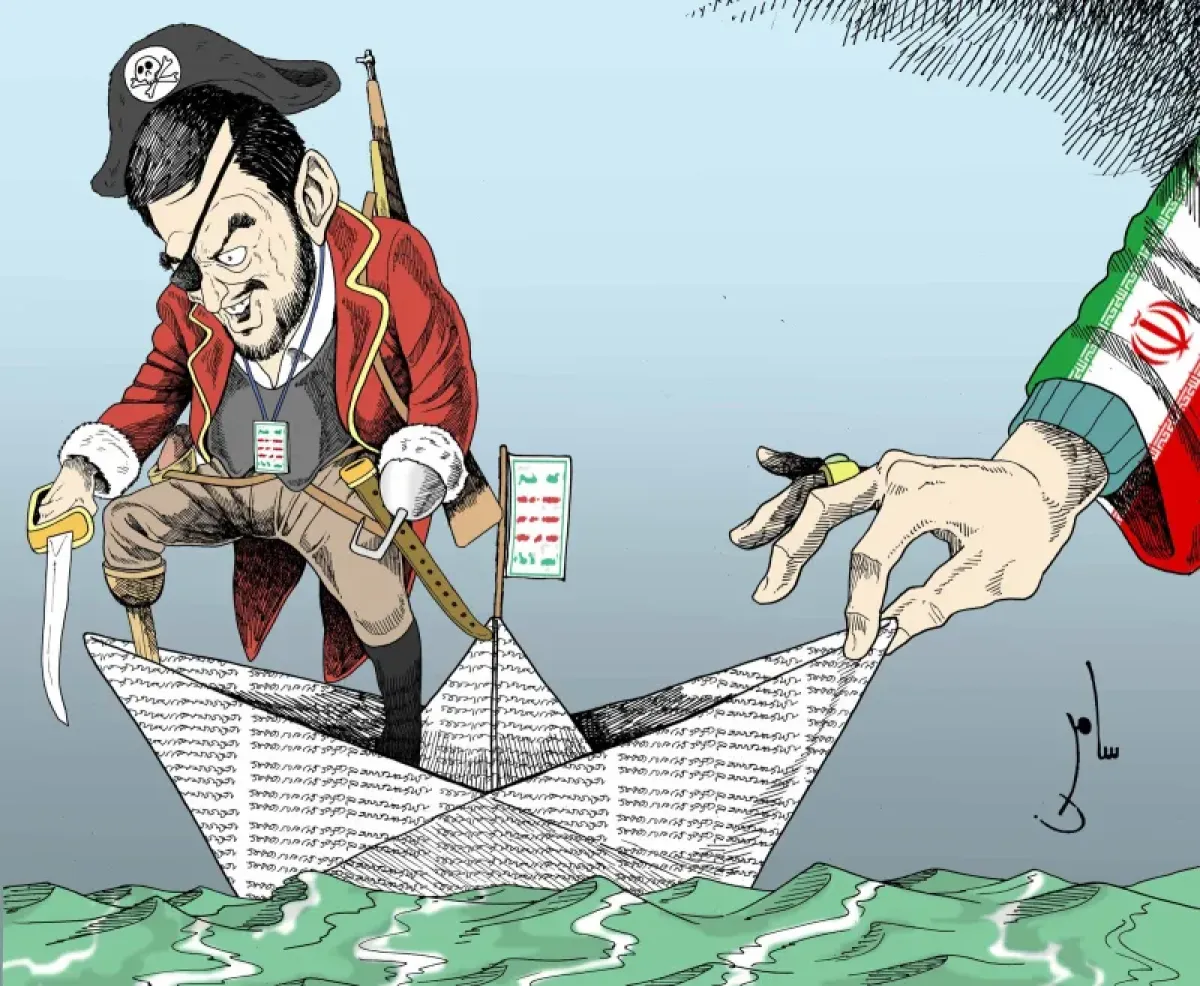
Iran is reportedly deploying its Yemeni proxy, the Houthi militia, in the ongoing regional conflict due to the escalating costs of its confrontation with the United States and Israel. This strategic move comes as Tehran faces significant pressure from international sanctions and a prolonged state of geopolitical tension.
The Houthi militia announced on Monday that it had conducted missile attacks targeting Israel, citing what it termed the "unjust and oppressive siege" imposed by the U.S. on the Iranian regime and its regional affiliates. The group also declared its intention to resume attacks on international shipping in the Red Sea and the Bab al-Mandab strait, under the guise of prohibiting navigation for Israeli interests. The Houthis vowed to escalate these operations in conjunction with the "Axis of Resistance," a term used by Iran to denote its aligned groups in the region.
The announcement was echoed by Iran's Islamic Revolutionary Guard Corps (IRGC) Quds Force commander, Esmail Ghaani, who described the actions as part of a developing "new security belt for the resistance" extending from the Strait of Hormuz to the Bab al-Mandab and from the Persian Gulf to the Red Sea. Ghaani suggested that allied groups are coordinating more effectively, praising the "strong and timely action" by Iran's allies in Yemen, referring to the Houthi missile strikes towards Israel.
Ghaani's remarks, as reported by Iran's official news agency IRNA, highlighted the strategic importance of the Houthi card for the Iranian regime, particularly in threatening international maritime traffic. He indicated the presence of Iranian-aligned fighters near strategic maritime passages, observing key transit points, a clear reference to the Houthi threat in the Bab al-Mandab strait.
This activation of the Houthi leverage by Iran occurs against a backdrop of acknowledgments from Iranian leadership regarding the substantial costs incurred from the confrontation with the U.S. and Israel. Iranian President Ebrahim Raisi recently stated that the country is facing a "difficult test" under U.S. sanctions and blockade, describing the management of the nation amid economic deficits and imbalances as a significant challenge. He further acknowledged the unacceptability of adversaries easily targeting and eliminating Iranian leaders.
Raisi's statements also shed light on the systemic strain and pressure Tehran is experiencing due to the protracted "no war, no peace" situation stemming from negotiations with the U.S., emphasizing the need to move beyond this state. His remarks implicitly address the impact of the naval blockade imposed by the U.S. during negotiation periods, a strategy previously lauded by former U.S. President Donald Trump as the "most successful blockade in the history of naval warfare." Trump claimed Iran was unable to conduct business or pay its military salaries as a result, characterizing it as a move towards becoming a "failed state."
These U.S. threats of renewed aerial attacks, aimed at compelling Iran to sign a comprehensive agreement to end the conflict, are reportedly pushing Tehran, according to observers, to mobilize its assets. Among these, the Houthi militia in Yemen stands out as a primary instrument in Iran's strategy to counter external pressures and navigate the complex geopolitical landscape.