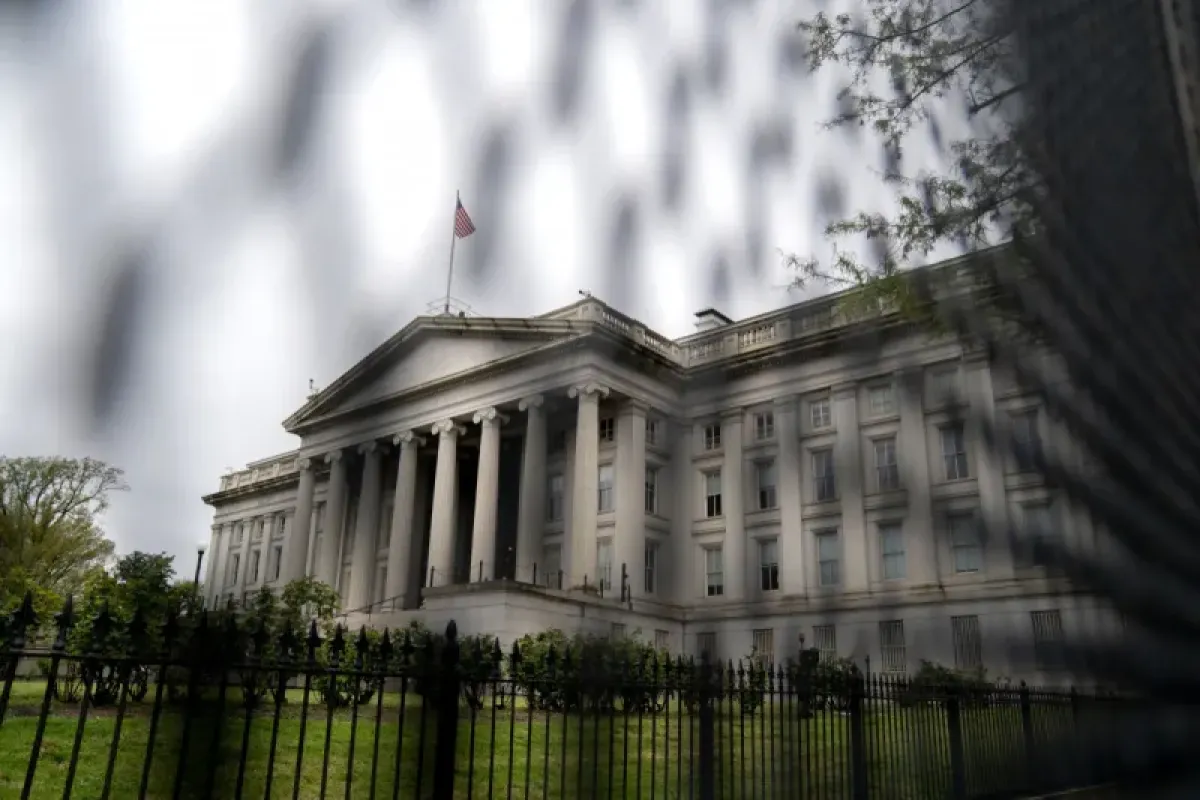
The U.S. Department of the Treasury has imposed a new round of sanctions targeting nine individuals and entities linked to the procurement networks of Iran's Islamic Revolutionary Guard Corps (IRGC) and its Ministry of Defense. This action is part of the administration's "economic wrath" campaign aimed at intensifying economic pressure on Tehran and disrupting its military capabilities.
The new sanctions, implemented by the Office of Foreign Assets Control (OFAC), target individuals and companies in China and Hong Kong involved in facilitating the purchase of weapons and military components for the IRGC and Iran's Ministry of Defense and Logistics. Additionally, a company operating within a clandestine banking network used by Tehran for transactions related to its arms programs has been sanctioned.
U.S. Treasury Secretary Scott Bessent stated that the "economic wrath" program aims to "disrupt foreign supply chains supporting the Iranian military's efforts to acquire weapons." He highlighted the Treasury's success in freezing assets linked to the Iranian regime, significantly damaging its economy, and targeting what he described as the "Iranian war machine." Bessent emphasized Washington's intolerance for any support of the Iranian military and vowed continued pursuit of those financing or facilitating Iran's arms activities.
These measures are a continuation of sanctions imposed on May 8, 2026, against procurement networks that supplied the IRGC and Iran's Center for Innovation and Technological Cooperation with military equipment and advanced technologies, including man-portable air defense systems sought from China. The sanctions are based on Executive Order 13382, targeting proliferation of weapons of mass destruction and their supporters, and Executive Order 13902, which targets entities operating in Iran's financial sector. They also align with directives from the Second National Security Presidential Memorandum, aimed at denying the IRGC access to financial and economic resources supporting its activities.
Concurrently, the U.S. Department of State announced additional sanctions on two individuals and two entities in Iran and Belarus under Executive Order 13949, in connection with activities related to Iran's conventional arms program. The Treasury reiterated that the "economic wrath" campaign extends the "maximum pressure" policy against Iran, focusing on depriving the regime of key funding sources and disrupting its ability to divert revenues.
The Treasury noted its success in recent months in blocking tens of billions of dollars that could have reached the Iranian regime and its proxies, including freezing digital assets, targeting informal finance networks, and sanctioning individuals, companies, and vessels linked to Iran's oil sector and arms smuggling networks. Washington also warned foreign companies and financial institutions of the risks of engaging in Iran's illicit commercial activities, stating that secondary sanctions may be imposed on entities facilitating transactions or economic activities for sanctioned Iranian entities.
Sanctioned entities include Chinese national Liu Boyu, the sole director and chairman of Hong Kong-registered Mostead Limited, previously sanctioned in May for facilitating millions of dollars in financial transactions for the IRGC's arms purchases. Chinese nationals Wang Hongyi and Xu Lichun were sanctioned for their roles in IRGC arms procurement, along with Mostead Shanghai International Trading Co., a subsidiary of Mostead. Domus Trading in Hong Kong was sanctioned for operating within a clandestine Iranian banking network to facilitate payments and financial transactions for sanctioned Iranian persons and entities, including arms purchases.
Additionally, Iranian national Manouchehr Gholshin, residing in China, was sanctioned as a key intermediary for the Iranian Ministry of Defense's arms purchases. Chinese national Meng Shaobai, owner and operator of Hong Kong-based Solus International, accused of facilitating military procurements for Tehran, was also sanctioned. Changchun Hong Kong Limited, chaired by Gholshin, was designated as part of Iran's arms program support network. Washington affirmed that these actions underscore its continued efforts to track foreign procurement and financing networks relied upon by Iran, emphasizing that targeting intermediaries and foreign companies is integral to the U.S. strategy to limit Iranian arms proliferation and prevent military technology from reaching Tehran.