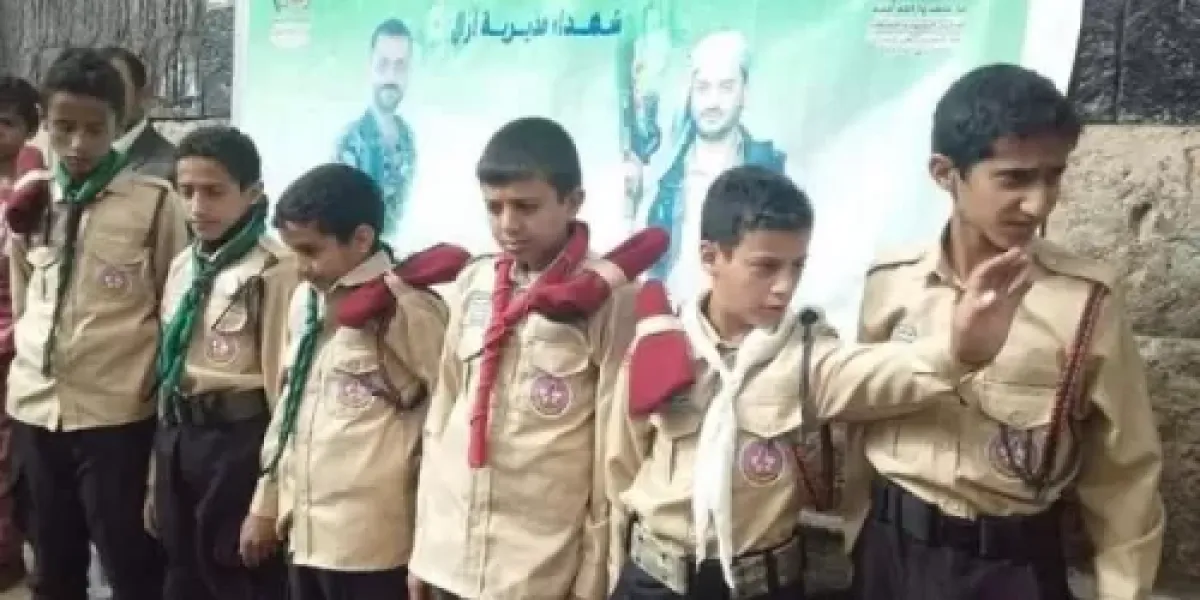
The Houthi group is reportedly exploiting its "summer centers" to systematically indoctrinate young Yemenis with sectarian ideologies and foster political loyalty, raising significant concerns among educators, human rights advocates, and parents about the future of the nation's generations.
Experts contend that these centers have long surpassed their intended purpose of educational and recreational activities, transforming into platforms for ideological and doctrinal mobilization. Targeting children and adolescents during their most impressionable years, this practice poses a direct threat to intellectual security, social cohesion, and the future of the Yemeni state.
Human rights and educational reports indicate that the Houthi group utilizes these summer centers to disseminate sectarian and militaristic ideas among children and youth. Specialists describe these practices as a direct threat to national identity and unifying societal values. Educators warn that the continuation of such activities creates an intellectual and cultural divide, fostering generations with narrow, single-minded perspectives that undermine prospects for coexistence and future social stability.
The early targeting of children's minds is deemed particularly dangerous, given its profound capacity to shape convictions and behaviors that can persist for many years. In response to these challenges, there are growing calls to bolster national awareness as the primary defense against ideological polarization and extremist rhetoric. Educators emphasize that protecting youth is a shared responsibility requiring collaboration among families, schools, mosques, media outlets, and civil society organizations through continuous awareness programs promoting citizenship, national belonging, respect for diversity, and the rejection of violence.
Testimonies from parents reflect mounting anxiety regarding these centers. One parent, Mohammed Abdulqader, stated that the most dangerous aspect is the premature targeting of children's minds, presenting distorted concepts as undeniable truths. Educational specialist Mohammed Saeed believes that combating this phenomenon necessitates long-term intellectual, cultural, and educational solutions, rather than solely security measures, advocating for national programs to dismantle extremist discourse and offer moderate educational alternatives.
Social experts identify the protection of children from intellectual exploitation as a national security issue crucial for societal stability and the state's future. They highlight that targeting youth through ideologically driven programs and mobilization activities threatens national identity and erodes the fundamental values that underpin social cohesion. Political actors are urged to adopt unifying national discourse, enhance belonging to the state, protect children from exploitation, and enact effective legislation and policies for child protection, coupled with robust oversight mechanisms.
The Yemeni Teachers' Syndicate issued a warning in April, detailing the "grave dangers" of Houthi summer centers, describing them as a direct threat to the identity of Yemeni youth and an effort to indoctrinate children and adolescents. The syndicate noted that Yemen faces a dual threat: the erosion of national consciousness and identity through systematic ideological tools, and the continued non-payment of teachers' salaries, which has weakened the educational system. They called on the international community and relevant organizations to intervene to halt the politicization of education and protect children from exploitation.
In the context of the ongoing conflict, the battle for minds is paramount to Yemen's future, extending beyond military confrontations to shaping the consciousness of future generations and national identity. Observers stress that investing in human capital and national awareness are foundational to building a cohesive society capable of resisting extremism. Protecting children from intellectual exploitation is a collective responsibility involving families, educational institutions, religious bodies, media, and civil society organizations. Ultimately, the true hope lies in nurturing a generation that is aware, knowledgeable, and possesses a strong sense of national belonging, capable of distinguishing between education and indoctrination, and between building a future and exploiting childhood for divisive and extremist agendas.