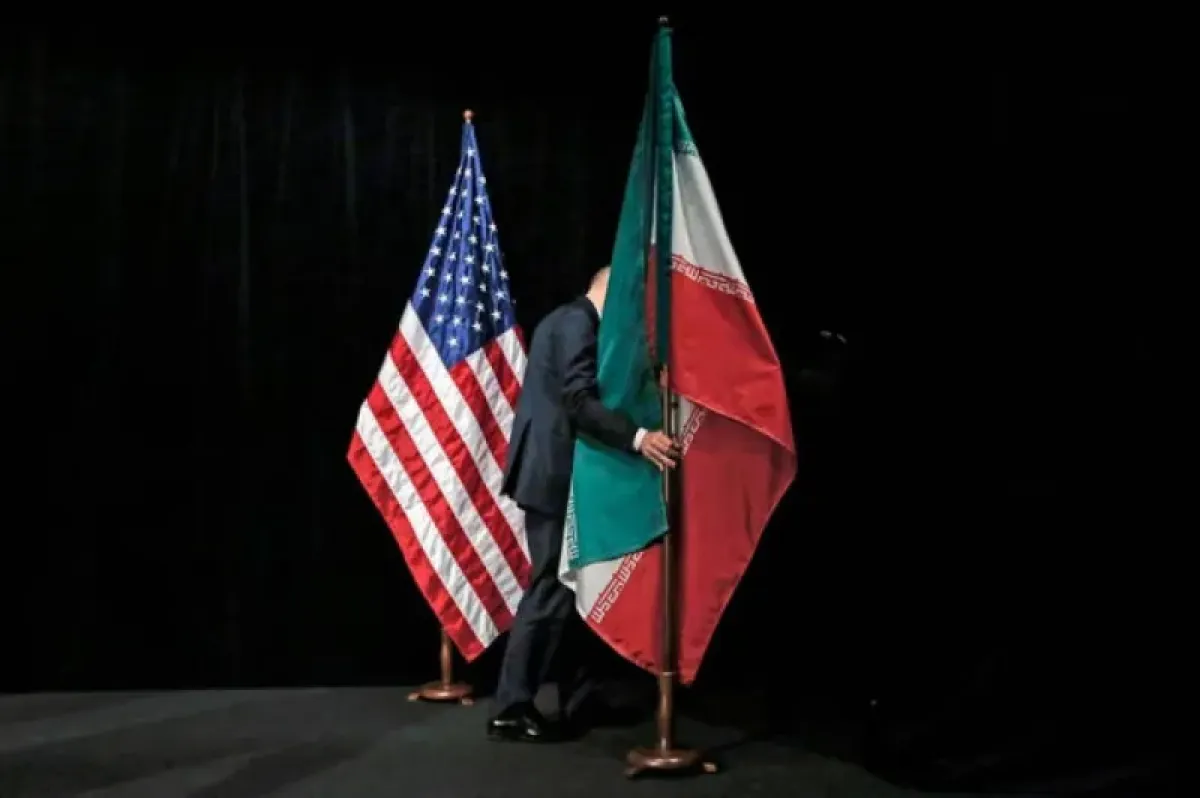
In an unprecedented political development that could reshape the regional and international landscape, a comprehensive peace agreement between the United States and Iran was announced on Sunday, following years of tensions and indirect confrontations that have impacted regional security, global energy markets, and international navigation.
The Prime Minister of Pakistan, Shehbaz Sharif, announced the success of diplomatic efforts in reaching a final agreement between Washington and Tehran. He confirmed that both parties have reached understandings stipulating an immediate and permanent cessation of military operations on various fronts, including areas related to the regional influence of both parties. This development opens the door to a new era of de-escalation and stability after years of confrontation and escalation.
Sharif stated that the agreement resulted from intensive discussions and mediation efforts involving several regional and international countries. He indicated that the official signing ceremony will take place on Friday, June 19, in Switzerland, which has hosted numerous significant international negotiations and agreements over the past decades. The mediators will work in the coming days to complete the technical and organizational procedures for implementing the agreement, alongside establishing monitoring mechanisms and guarantees to ensure the parties' adherence to its terms, paving the way for a new political phase between the two countries.
In a message posted on the platform "X," the Pakistani Prime Minister expressed his appreciation to the United States and Iran for demonstrating the necessary political will to achieve a diplomatic solution. He extended thanks to Qatar for its role in the mediation and praised the contributions of Saudi Arabia and Turkey during the various negotiation stages.
Concurrently with Sharif's announcement, U.S. President Donald Trump confirmed the completion of the agreement with Iran, announcing the lifting of the U.S. naval blockade and the immediate reopening of the Strait of Hormuz to international navigation. Trump stated in a brief statement that the agreement is complete, considering it a major political achievement that will end one of the most complex crises in the Middle East. He added that the reopening of the Strait of Hormuz will allow for the resumption of global trade and the flow of oil to international markets under normal conditions, calling on shipping companies and cargo vessels to resume their activities in the region.
Iranian authorities, for their part, announced the finalization of the memorandum of understanding to end the confrontation with the United States, affirming that the agreement is the fruit of a long series of political consultations and diplomatic communications over recent months. The Iranian Supreme National Security Council stated that the agreement includes the immediate and full lifting of the naval blockade imposed on Iran, allowing for the normalization of commercial and maritime activity, as well as the cessation of military operations on all fronts.
The Council emphasized that the understandings stipulate the immediate and permanent termination of military actions, including in the Lebanese arena, noting that the agreement's implementation will commence upon its entry into force. It also clarified that the anticipated official signing ceremony in Switzerland will mark the beginning of a new era in U.S.-Iran relations after decades of animosity and political and security disputes.
The Iranian authorities expressed their gratitude to Pakistan and Qatar for their efforts during the negotiation phases, confirming that the agreement was reached under the directives of the Iranian leadership and with the support of various state institutions. In a related context, American media reports revealed that the agreement includes an Iranian commitment not to possess nuclear weapons, subjecting the Iranian nuclear program to strict international oversight and inspection measures. According to the reports, the agreement does not currently stipulate the transfer of Iranian nuclear materials out of the country but establishes a framework for strict oversight of future nuclear activities.
The agreement also includes the possibility of gradually easing economic sanctions imposed on Iran, provided Tehran fully adheres to its terms. Trump confirmed that the agreement does not involve providing cash to Iran but relies on reciprocal steps linked to compliance with the new understandings. Observers believe that the anticipated agreement could represent a major turning point in the political and security landscape of the Middle East, particularly given its connection to complex regional issues whose repercussions have extended to several countries in recent years. The agreement is also expected to directly impact the security of international navigation in the Arabian Gulf and contribute to stabilizing global energy markets by ensuring the continued flow of oil and gas from the region without security or military threats.
Should the agreement be officially signed and its provisions implemented according to the announced schedule, it could mark the beginning of a new phase in U.S.-Iran relations and put an end to one of the most complex and impactful international crises on regional and global stability in recent decades.