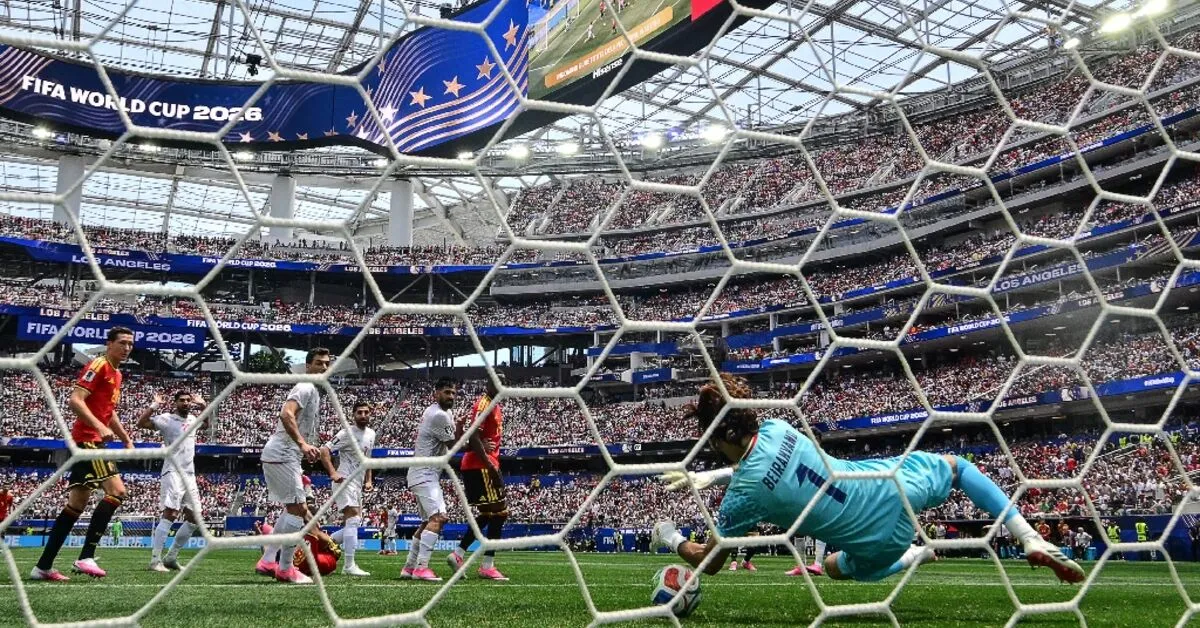
Hundreds of football fans gathered at Tehran Book Garden to watch Iran's national team, known as Team Melli, compete against Belgium in the World Cup. Unlike many national teams, Team Melli's presence at the tournament is shadowed by deep divisions within Iran, reflecting broader societal debates.
The spectators, a diverse group including families, students, and pensioners, filled the venue equipped with giant screens. While some displayed patriotic fervor with Iranian flags and face paint, a palpable sense of mixed feelings permeated the atmosphere. This sentiment stems from recent years' controversies surrounding the team, with some critics linking it to state institutions and expressing anger over domestic political developments. Others point to mismanagement, citing the appointment of individuals with political or military backgrounds to senior sporting roles, and questioning technical decisions such as the exclusion of star striker Sardar Azmoun.
"It is true that the team has been involved in many controversies but no matter what, it is the national team of our country," stated Amir Hossein Rahimi, 25, a private sector employee. However, he also expressed disappointment with several issues, including Azmoun's absence. These complaints are common on social media and sports programs, yet they have not entirely extinguished support. Many Iranians differentiate between their frustrations with football administrators and their allegiance to the players representing the nation.
For many, supporting Team Melli is an act of patriotism rather than an endorsement of the sport's management. Roza Assari, 36, who works in pharmaceuticals, emphasized, "We are Iranians and we support our team no matter what; We really like to see it win." She added, "I think sports should not be mixed up with politics; any country has its own national team and that team trying to get a good standing for that country."
The debate has been further amplified by the unusual circumstances of Iran's World Cup campaign. Strained relations between Iran and the United States have prevented many Iranian supporters from traveling to attend matches. This has led to a situation where Iranian fans are watching from afar, while stadium seats that might have been filled by their supporters are occupied by neutrals or members of the Iranian diaspora abroad, many of whom are critical of Team Melli. Some spectators felt these restrictions fostered greater sympathy towards the team, noting the difficulty of playing without their usual vocal support.
Logistical challenges have also been a point of contention. Iran's World Cup base in Tijuana, Mexico, has necessitated frequent long-distance travel for matches within the United States. Iranian football officials have publicly voiced concerns, arguing that the schedule places undue strain on the players compared to some rivals. Farhad Cheshmi commented, "For this big game, it affects the team's situation, and well, the situation is unequal, and this is American politics, and there's nothing you can do about it."
The unfolding debate occurred against the backdrop of Muharram, a sacred month of mourning for Shia Muslims. Despite the somber atmosphere outside the venue, attention inside remained fixed on the match. For many, the coexistence of mourning ceremonies and World Cup excitement symbolized the complexities of modern Iranian life. Iran's opening 2-2 draw against New Zealand had kept their qualification hopes alive, making the Belgium match crucial. As kickoff approached, disagreements over coaches, administrators, politics, and player selections temporarily subsided. For the duration of the game, supporters and critics alike shared the experience, celebrating Iran's attacks and lamenting missed opportunities. Ultimately, a 0-0 draw, bolstered by a strong performance from goalkeeper Alireza Beiranvand, meant the team still had a chance to advance to the next round.