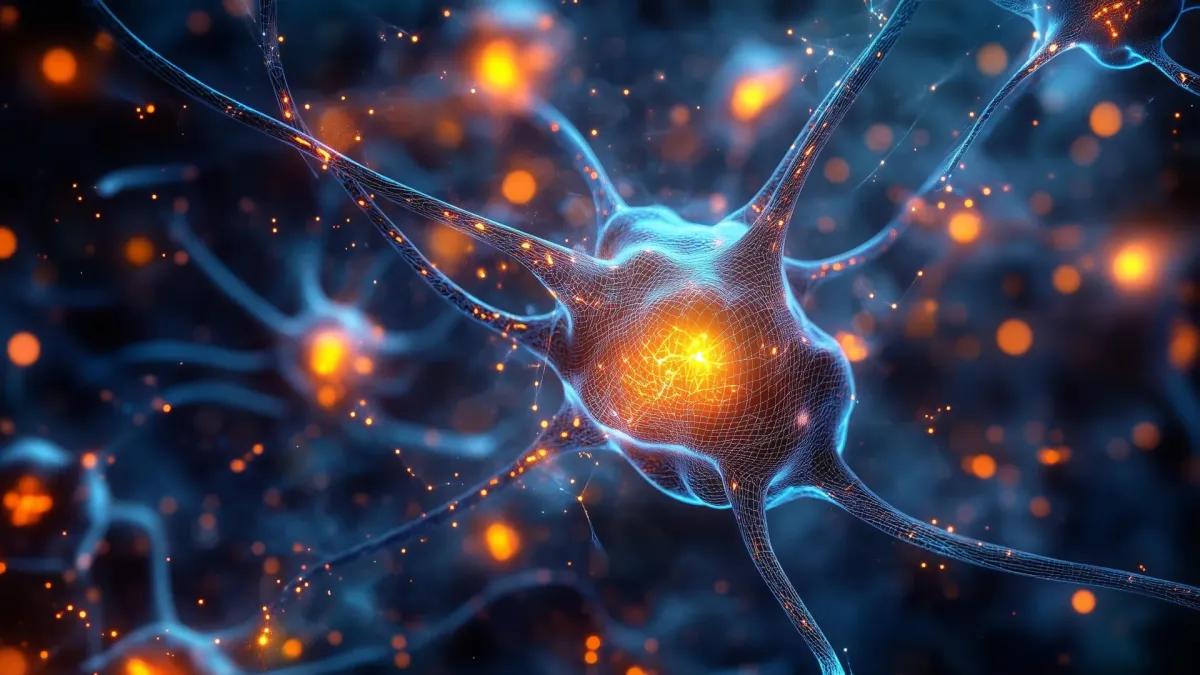
Scientists have pinpointed a group of ancient brain cells that act like a built-in filter, helping animals, including humans, stay focused by actively blocking out distractions. This discovery in mice, made by researchers at Johns Hopkins University, highlights a fundamental brain system shared across all vertebrates.
These neurons, located in a primitive part of the brainstem, appear to boost attention by sifting through incoming information and zeroing in on what's most important. "A hallmark of ADHD is that even faint distractors draw attention away -- and that's exactly what we see here when these neurons are silenced," explained senior author Shreesh Mysore, a neuroscientist. "But the very next day, when the neurons are turned back on, the same animal can ignore distractors again, even very strong ones." The findings, published in Nature Communications, could pave the way for more targeted treatments for attention-related disorders.
Humans and other animals are constantly bombarded with information, needing to prioritize crucial signals while tuning out the rest. This skill, known as selective spatial attention, allows us to follow conversations in loud environments or find friends in a crowd. Issues with this ability are often linked to conditions like autism and ADHD. For years, scientists believed the prefrontal cortex, a more recently evolved brain region prominent in primates, was the main driver of attention. However, this didn't explain how animals with less developed prefrontal cortices could still focus so effectively.
"If we really go back in evolution, for hundreds of millions of years, birds have had this ability, fish have had this ability. And they do not typically have a highly developed prefrontal cortex, so how does the brain solve this problem?" questioned lead author Ninad Kothari. "We were able to identify an evolutionarily old region in the brainstem which affords this ability."
The research team designed an attention task where mice had to focus on visual cues on a screen while ignoring distractions. The mice performed well until researchers temporarily deactivated the brainstem neurons. When this happened, the animals became significantly more distractible, not due to vision or movement issues, but because they lost the ability to weigh competing information and select the most relevant signal.
"The only thing impaired was their ability to take the competing pieces of information, compare them, and pay attention to the location with the most important information," Mysore stated. "This part of the brain is like an attentional selection engine. It helps solve the question: 'What is most important information I should pay attention to right now?'"
The researchers are now eager to explore how these neurons function across different vertebrate species and if they play a similar role in humans. "All the evidence to date suggests that these neurons exist in humans too," Mysore added. "But are they responsible for selective spatial attention in humans? An exciting hypothesis is that they play a crucial role." Future studies could investigate these neurons' activity in individuals with ADHD and autism, potentially leading to more precise therapies.