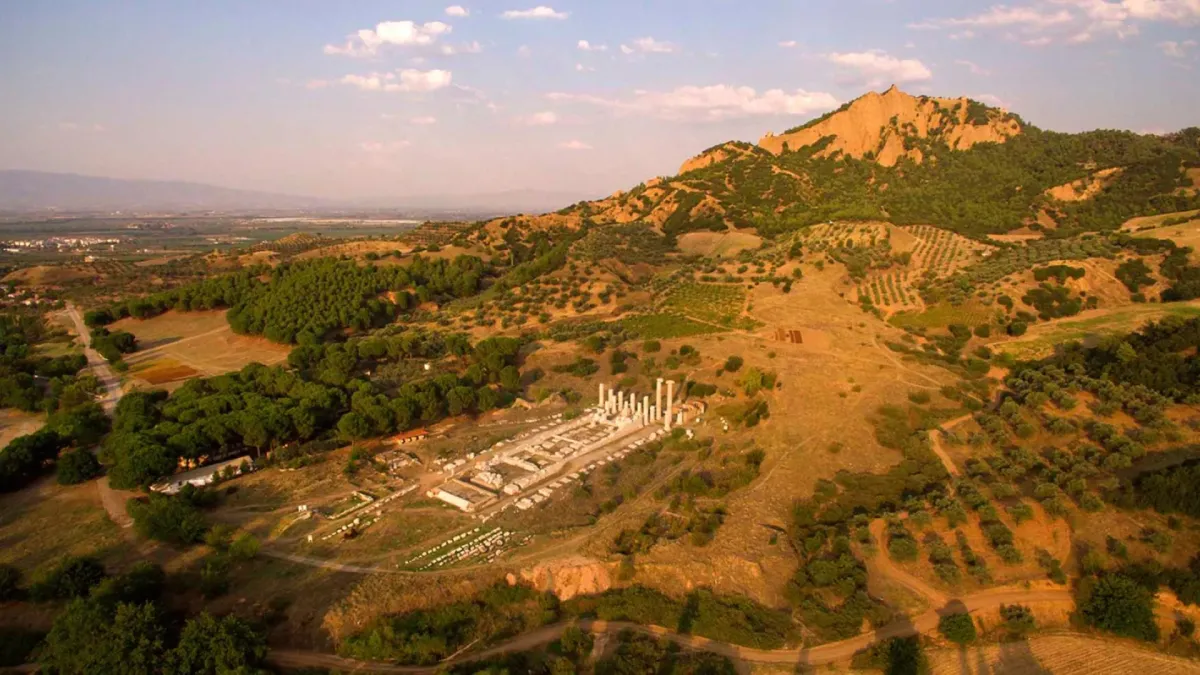
After seven decades of relentless excavation, the ancient city of Sardis in western Turkey has officially been recognized as a UNESCO World Heritage site, marking a monumental achievement for one of the world's longest-running archaeological projects.
For millennia, Sardis has been a crossroads of civilizations, shifting hands between Greeks, Romans, Byzantines, and Ottomans. Since 1958, archaeologists from the Harvard Cornell Exploration of Ancient Sardis have returned year after year, fostering an institutional continuity that Benjamin Anderson, an associate professor of history of art and visual studies, highlights as crucial for accumulating a significant body of data. "Many of us know and have been mentored by colleagues of the previous generation of excavators," Anderson explained. "As a result, it's one of the few long-term archaeological projects in the region that has generated a critical mass of data."
This UNESCO designation celebrates not just the rich history of Sardis, once the capital of the Lydian kingdom credited with inventing coinage, but also the dedication of those who have unearthed its secrets. Annetta Alexandridis, an associate professor of the history of art and classics, notes that Sardis offers an unparalleled glimpse into history, from the Bronze Age to the present day, acting as a "place of cultural encounter between the East and West." The city's layers of history, though challenging to excavate due to their complex stratification, provide a continuous narrative that fascinates researchers.
The modern excavation project, a partnership between Harvard and Cornell that began in 1958, has been influential in shaping archaeological practices. Unlike earlier, more exploitative excavations that sometimes led to the questionable removal of artifacts, this project has focused on responsible documentation and restoration. Teams have reconstructed significant structures like a monumental bath-gymnasium complex and one of the ancient world's largest synagogues, setting precedents for similar work globally.
Today, the project continues to train the next generation of archaeologists, with a strong emphasis on Turkish institutions and local collaboration. Students gain hands-on experience, often working alongside skilled local laborers in trenches that can extend deep underground. Leyla Uğurer, a doctoral student who grew up near Sardis, exemplifies this local connection, having been inspired by the excavations as a child to pursue a career in archaeology. "As a local, I can say it is very important," she stated regarding the UNESCO recognition. "First of all, now it is known worldwide and because of UNESCO, there can maybe be more funding for the excavation, also people, more tourists and more research."
Despite the progress and recognition, Sardis faces ongoing threats from natural erosion, farming, and increasingly sophisticated looting operations. Researchers stress that the long-term commitment to excavation and preservation remains vital. "One season's work, you'll learn how to do the thing, but you're not necessarily going to find something that will be especially significant for the history of the site, until maybe 10 years later, you find something else a little bit further away, and the pieces start to add up," Anderson concluded, underscoring the enduring importance of continued exploration.