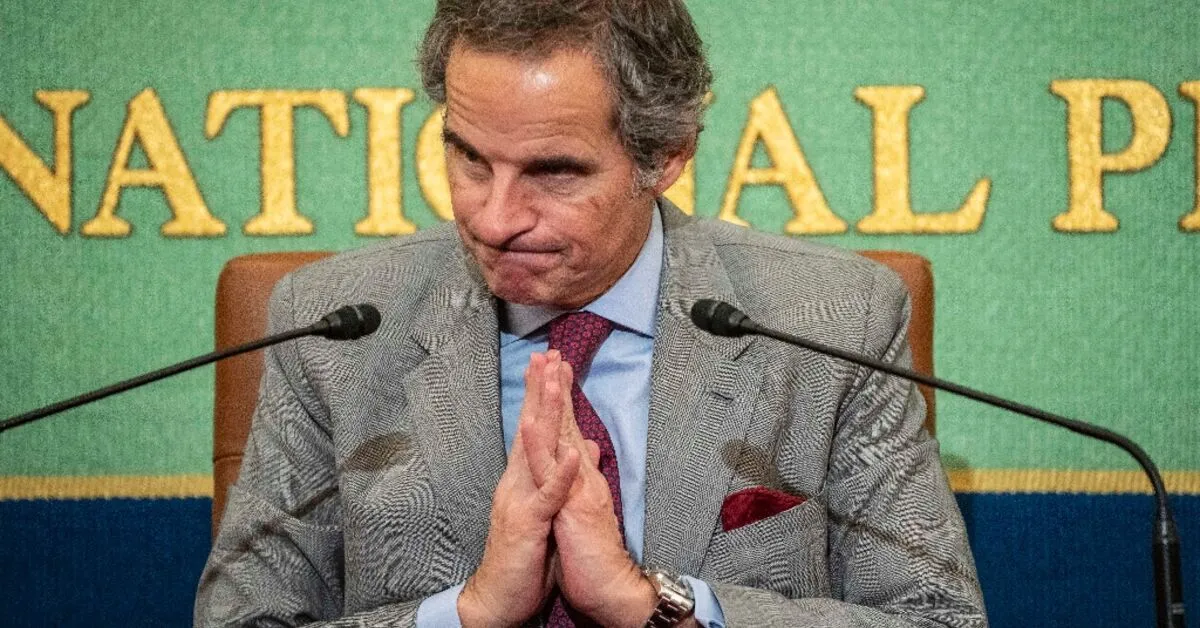
The head of the International Atomic Energy Agency (IAEA), Rafael Grossi, has emphasized the necessity of "very strong" nuclear verification in Iran following the recent Middle East conflict to prevent the development of nuclear weapons.
Grossi's statements come amidst ongoing negotiations between the United States and Iran aimed at resolving the broader conflict, with Tehran's nuclear program being a significant point of contention. He noted that while Iran has publicly stated it does not intend to develop nuclear weapons, stated intentions are insufficient without a robust verification system.
"But of course intentions are not enough. We have to have a very strong verification system in place... as soon as is practicable," Grossi told reporters. He also indicated that initial discussions have commenced with Iran regarding its uranium stockpile following a preliminary agreement with the United States, expressing an expectation for these talks to intensify soon.
Prior to the conflict, the IAEA estimated Iran possessed 440 kilograms of uranium enriched to 60 percent, a level close to the 90 percent purity required for nuclear weapons and significantly above the 3.67 percent limit stipulated by the now-defunct 2015 agreement. Iran had ceased cooperation with the IAEA in June 2025, preventing inspectors from accessing its nuclear materials since then.
Under the preliminary agreement, the enriched uranium stockpile is slated for "downblending" under IAEA supervision. Grossi acknowledged the prevailing assumption that the stockpile remains at its pre-June 2025 location near Iran's Isfahan facility, though he noted that the facility had been bombed and Iran has indicated it will not permit inspections of attacked sites. He also proposed alternative solutions, such as shipping the enriched uranium out of Iran, as stipulated in the memorandum of understanding.
Iran has consistently denied pursuing nuclear weapons while asserting its right to a civilian nuclear program. As a signatory to the nuclear non-proliferation treaty, Iran had previously allowed IAEA inspections of its nuclear sites under its safeguards agreement. The 2015 nuclear deal, which limited Iran's program in exchange for sanctions relief, was exited by the United States during the Trump administration.