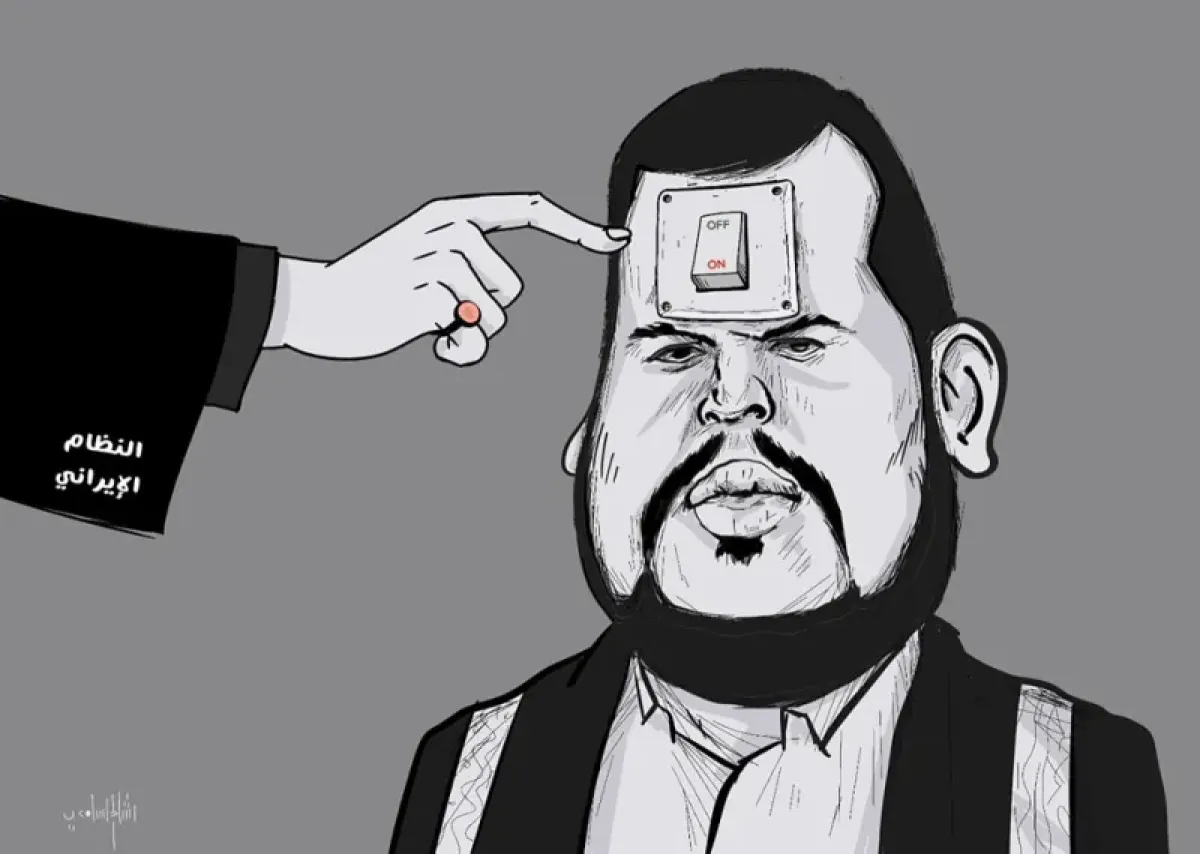
The Houthi militia, Iran's key ally in Yemen, finds itself in a precarious position following a recent US-Iran understanding, which Tehran has framed as a significant victory. This narrative of triumph has created internal dissent and undermined the group's justification for its ongoing actions in Yemen.
The Houthi movement, after more than three years of a UN-brokered truce, has recently escalated its rhetoric, threatening to resume hostilities both domestically and against Saudi Arabia. The renewed threats, articulated by the militia's leader, Abdul-Malik al-Houthi, in a speech marking the new Hijri year, urged supporters to prepare for an end to the "aggression, occupation, and blockade." This call was quickly echoed by affiliated bodies, including the "Public Mobilization Forces," which announced readiness to supply hundreds of thousands of trained personnel to the Houthi fronts.
These belligerent declarations coincided with the signing of a memorandum of understanding between the United States and Iran to extend a ceasefire, potentially paving the way for de-escalation in the region. Iran has hailed this agreement as a military and political triumph, a sentiment enthusiastically shared by its regional proxies, notably the Houthi militia in Yemen. Al-Houthi himself, in his aforementioned speech, congratulated Tehran on its "great victory against the arrogant tyrant of the age: America and Israel."
A particularly contentious clause in the memorandum of understanding involves a US commitment, in cooperation with regional partners, to develop a "mutually agreed final plan" for Iran's economic reconstruction and development, valued at no less than $300 billion. While some observers view this as a potential price for Iran curtailing its nuclear ambitions and regional influence, Tehran and its affiliates have promoted it as evidence of their success in compelling the US to fund reconstruction efforts.
The Houthi group's alignment with this Iranian narrative has created a significant dilemma for its supporters. Some have recalled past Houthi threats to compel the Saudi-led coalition to fund Yemen's reconstruction. Furthermore, a notable segment of Houthi sympathizers has expressed derision regarding Iran's supposed victory and its ability to extract funds from the US, especially while the Houthi leadership itself complains of an economic blockade imposed by Saudi Arabia and the Yemeni government, using it as a pretext for failing to pay salaries and provide essential services in Houthi-controlled areas.
This skepticism towards the proclaimed Iranian "victory" over the US and Israel has eroded the very justification the Houthi militia uses for its domestic shortcomings. Supporters are questioning why the Houthi leadership cannot achieve a similar outcome. In response, analysts suggest, the militia has resorted to its recent threats against the Yemeni government and Saudi Arabia to resume hostilities and end the UN truce, under the guise of "lifting the blockade and reclaiming oil and gas wealth."