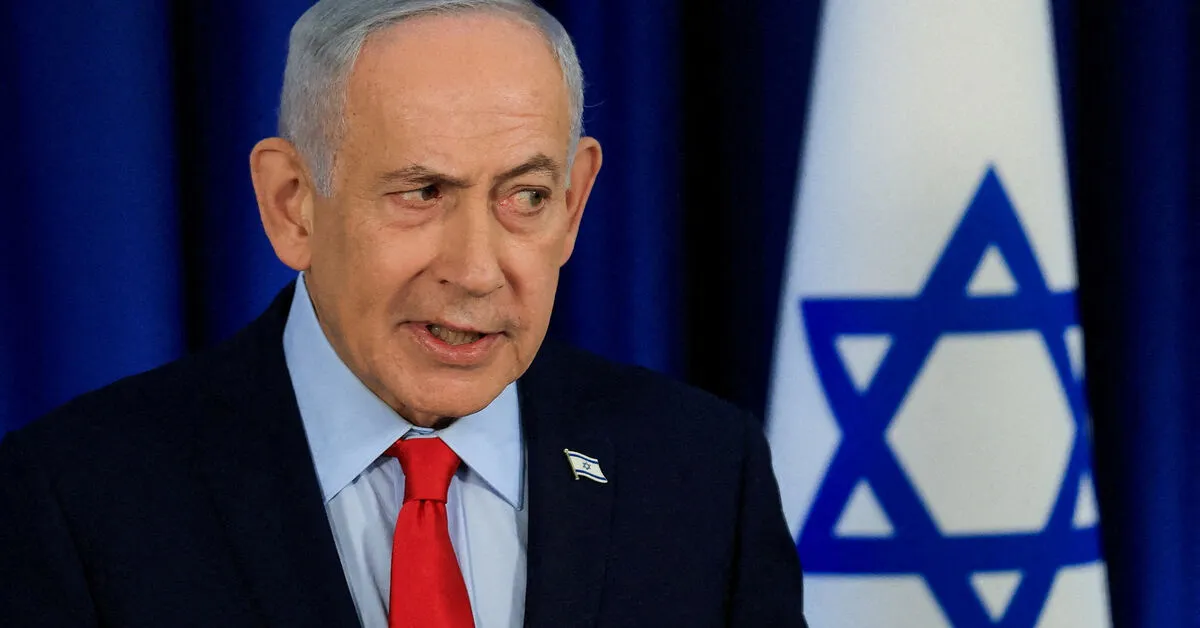
Former Israeli military chief Gadi Eisenkot is gaining significant traction in opinion polls and presents a potential challenge to Prime Minister Benjamin Netanyahu's leadership in an upcoming election, fueled by his hawkish security credentials and a contrast to Netanyahu's long tenure and legal troubles.
Eisenkot, 66, has cultivated an image as a political outsider with a military background and a strong security stance. His humble origins and personal sacrifices, including the loss of his son in Gaza and nephews in the recent conflict, are presented in stark opposition to Netanyahu's decades in public office and ongoing corruption allegations. As Israel faces the aftermath of the October 7 Hamas attack and subsequent military operations, public sentiment appears to be shifting away from incumbent leadership.
Polls indicate that Eisenkot's new Yashar party is poised to secure second place in parliamentary seats, trailing Netanyahu's Likud, though neither is projected to achieve a majority. However, Yashar, whose name signifies "straight" or "honest" in Hebrew, may be better positioned to assemble a governing coalition by collaborating with a wider range of parties across the political spectrum.
Despite his potential to unseat Netanyahu, an Eisenkot premiership might not signal a significant moderation of Israel's regional security policies, which have drawn criticism from Western allies. While a brief member of the war cabinet, Eisenkot has voiced disapproval of Netanyahu's concessions to U.S. demands for a ceasefire and has dismissed the concept of a Palestinian state as "irrelevant." His military doctrine, exemplified by the "Dahiyeh doctrine" during the 2006 Lebanon war, advocates for overwhelming destructive force in response to militant attacks, a strategy he acknowledges employing with "disproportionate strikes." This uncompromising approach, coupled with critiques of Netanyahu's strategic handling of regional conflicts and relations with the U.S., appears to resonate with a segment of the Israeli electorate despite potential diplomatic repercussions.
Hailing from a background of Moroccan immigrants, Eisenkot is reportedly connecting with voters of Mizrahi descent, a demographic that has historically formed a key support base for Netanyahu. His extensive career in the Israel Defense Forces, culminating as Chief of Staff from 2015 to 2019, has provided him with deeply respected security credentials, further amplified by the personal tragedies he has endured. Observers note his perceived authenticity and relatability, contrasting with the perceived sophistication of career politicians.
Netanyahu's camp has reportedly questioned Eisenkot's English proficiency, suggesting it could hinder crucial ties with Western nations. Within Israel's increasingly right-leaning political landscape, Eisenkot is viewed as a centrist, open to alliances with left-leaning parties and supportive of broader military conscription. He entered politics only four years ago, served in the war cabinet for eight months following the October 7 attacks, and left citing leadership concerns. His party is currently benefiting from considerable momentum leading into the election period.