California lawmakers are considering implementing math assessments for kindergartners as a strategy to address alarmingly low math proficiency rates among the state's students. The proposal aims to identify early foundational math weaknesses before they hinder academic progress.
The initiative stems from data revealing that 68% of California public school third-graders do not meet grade-level math standards, with the state ranking 43rd nationally in fourth-grade math achievement. Senate Bill 1067, authored by Sen. Akilah Weber Pierson, would mandate that public schools assess students in kindergarten through second grade for early math difficulties and provide targeted support. Supporters believe that by understanding what young students know about concepts such as number sense, grouping, and quantity comparison, educators can more effectively address learning gaps.
The proposed law, which passed the California Senate unanimously and is awaiting Assembly consideration, seeks to mirror the state's early literacy screening program. Recent amendments suggest assessing a kindergartner's math knowledge rather than solely screening for deficiencies, a change intended to better identify students requiring additional assistance. The bill stipulates that the State Board of Education will establish criteria for assessment selection, with the Department of Education recommending suitable tests for schools by the 2028-29 academic year. Parents would be informed of assessment results, and schools would be required to report this data to the state.
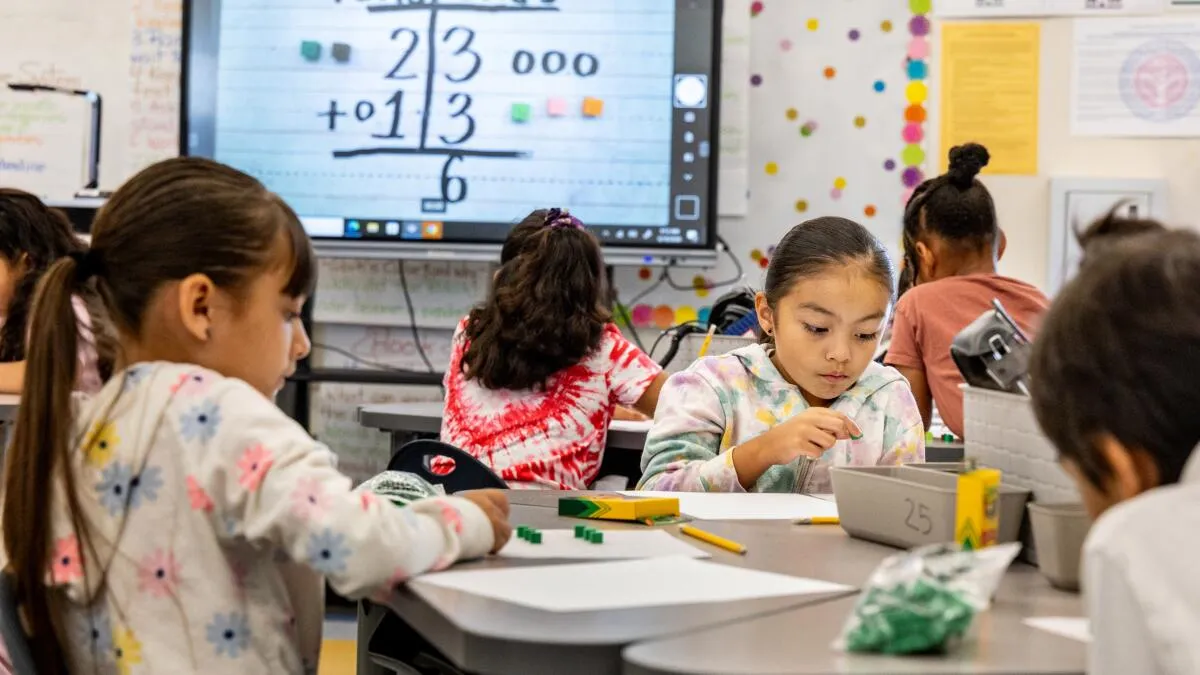
Researchers emphasize that these assessments would focus on "early number sense," encompassing a child's ability to count objects, understand basic addition and subtraction, and recognize numerals. For kindergartners, this involves hands-on manipulation of objects rather than formal written work. Experts like developmental psychologist Alice Klein note that early number sense is a significant predictor of elementary school success. By first and second grade, the assessments would incorporate more symbolic and numeral-based problems.
While the bill proposes approximately $106 million over four years for expert panels, district preparation, and teacher training, some critics have raised concerns about funding for intervention plans and the effectiveness of a statewide mandate. Los Angeles Unified school board member Nick Melvoin expressed reservations, noting that kindergarten attendance is not mandatory in California, leading to varied levels of prior math exposure. California Teachers Association President David Goldberg argued that simply mandating a test is insufficient and that a clear pathway for addressing identified challenges is crucial, highlighting a disparity in funding between math and literacy initiatives.
Professor emeritus Deborah Stipek of Stanford University cautioned that such assessments might increase teacher anxiety without providing adequate tools for intervention, especially if a significant percentage of students demonstrate difficulties. She suggested that screeners may not fully capture the holistic nature of learning math, particularly the hands-on approaches common in early grades. Despite these concerns, Senator Pierson stressed the urgency of addressing math proficiency, warning that delays in intervention have long-term consequences for students. Some districts, like Compton Unified, have already implemented their own math screening programs to identify and support struggling students.