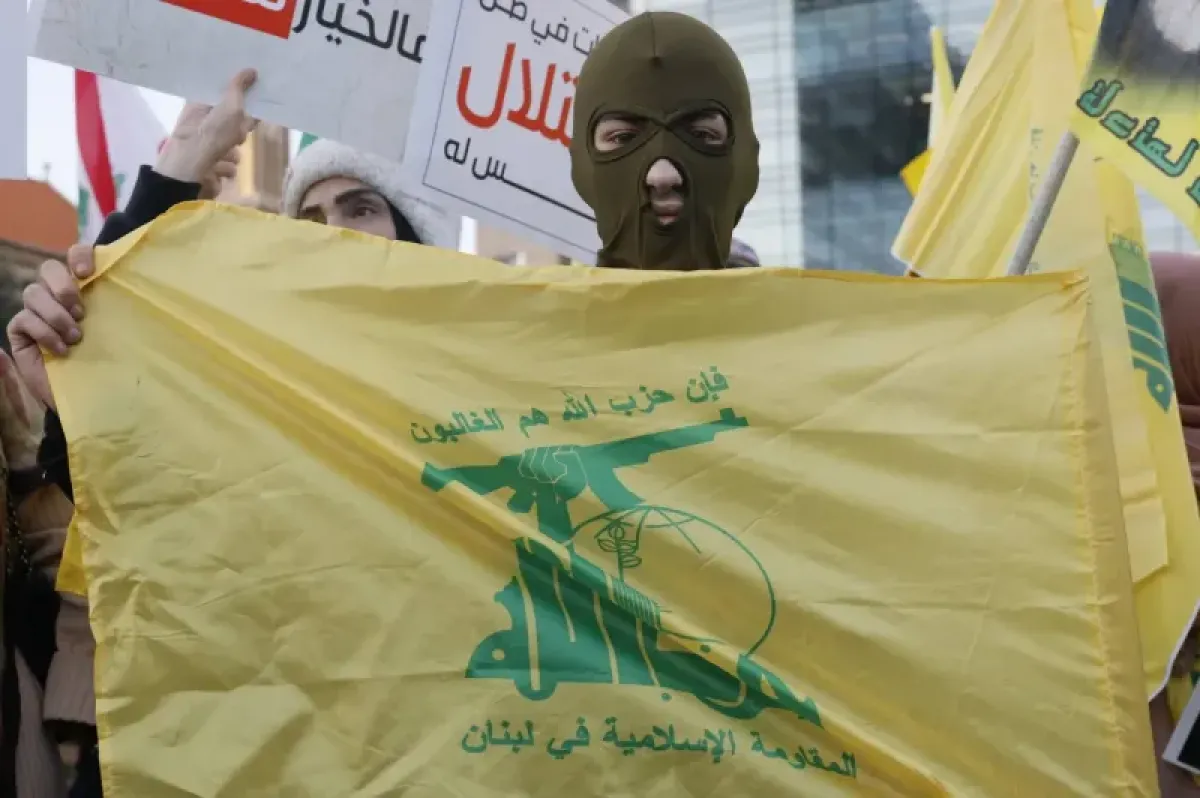
The United States has escalated its financial pressure on the Lebanese Hezbollah group by sanctioning five entities and 16 individuals linked to its financial infrastructure. This move signifies a strategic shift from targeting individuals to a more comprehensive approach aimed at dismantling the economic and financial system that sustains the organization's operations.
Key entities targeted include "Bayt Al-Mal" and "Al-Qard Al-Hasan," described by Washington as the backbone of Hezbollah's financial network. While previously subject to U.S. sanctions, their inclusion in a joint framework led by member states of the Terrorist Financing Targeting Center amplifies the regional and international scope of these measures, enhancing the ability of the U.S. and its partners to track Hezbollah-related financial flows.
U.S. documentation reveals that "Bayt Al-Mal" is considered an unofficial treasury for Hezbollah, responsible for managing assets and serving as a conduit to the formal banking system, operating under the direct supervision of the group's leadership. The new sanctions package extends beyond major institutions to include accounting firms, loan companies, and financial and administrative figures accused of acting as fronts to obscure the true sources of funds.
This approach embodies a strategy of "dismantling the octopus," as the U.S. seeks to disrupt Hezbollah's financial network by targeting intermediaries, supporting companies, and financial managers accused of operating alternative bank accounts and using personal names to circumvent previous sanctions. U.S. data indicates that several sanctioned officials utilized joint bank accounts within Lebanese banks to transfer over $500 million over several years, demonstrating Hezbollah's development of alternative mechanisms to access the formal financial system.
"Al-Qard Al-Hasan," operating under the guise of a Lebanese Interior Ministry-licensed association, is accused of conducting extensive banking activities, including lending and liquidity management. Its role reportedly expanded significantly after 2006, becoming a primary hub for Hezbollah's financial management. Washington also alleges that the institution holds substantial foreign currency reserves outside the Lebanese economy, granting Hezbollah independent financial influence and enabling it to bolster its social and service networks amidst Lebanon's economic collapse.
The impact of these sanctions extends beyond asset freezes, affecting international banking compliance systems. The designation of entities and individuals prompts global banks to intensify scrutiny, potentially refusing transactions linked to sanctioned parties. Furthermore, "secondary sanctions" under the Hezbollah International Financing Prevention Act empower the U.S. to pressure foreign institutions, as international banks and companies risk losing access to the U.S. financial system or dollar transactions if found to be cooperating with sanctioned entities. This increases the cost and narrows the options for any financial activity associated with Hezbollah.
These measures are part of broader U.S. and international efforts to increase pressure on Iran-linked regional networks, coinciding with unprecedented economic and financial crises in Lebanon. By targeting what Washington describes as Hezbollah's financial infrastructure, the U.S. administration aims to signal that attempts to rebuild funding channels outside the formal banking system will be met with prosecution and sanctions, regardless of their form, be it charitable organizations, financial service firms, or accounting institutions. While Hezbollah has adapted to previous sanctions, the expanded targeting of supporting institutions, administrative cadres, and commercial fronts signifies a new phase in financial warfare, aiming to restrict the maneuverability of the economic network that has sustained the group.