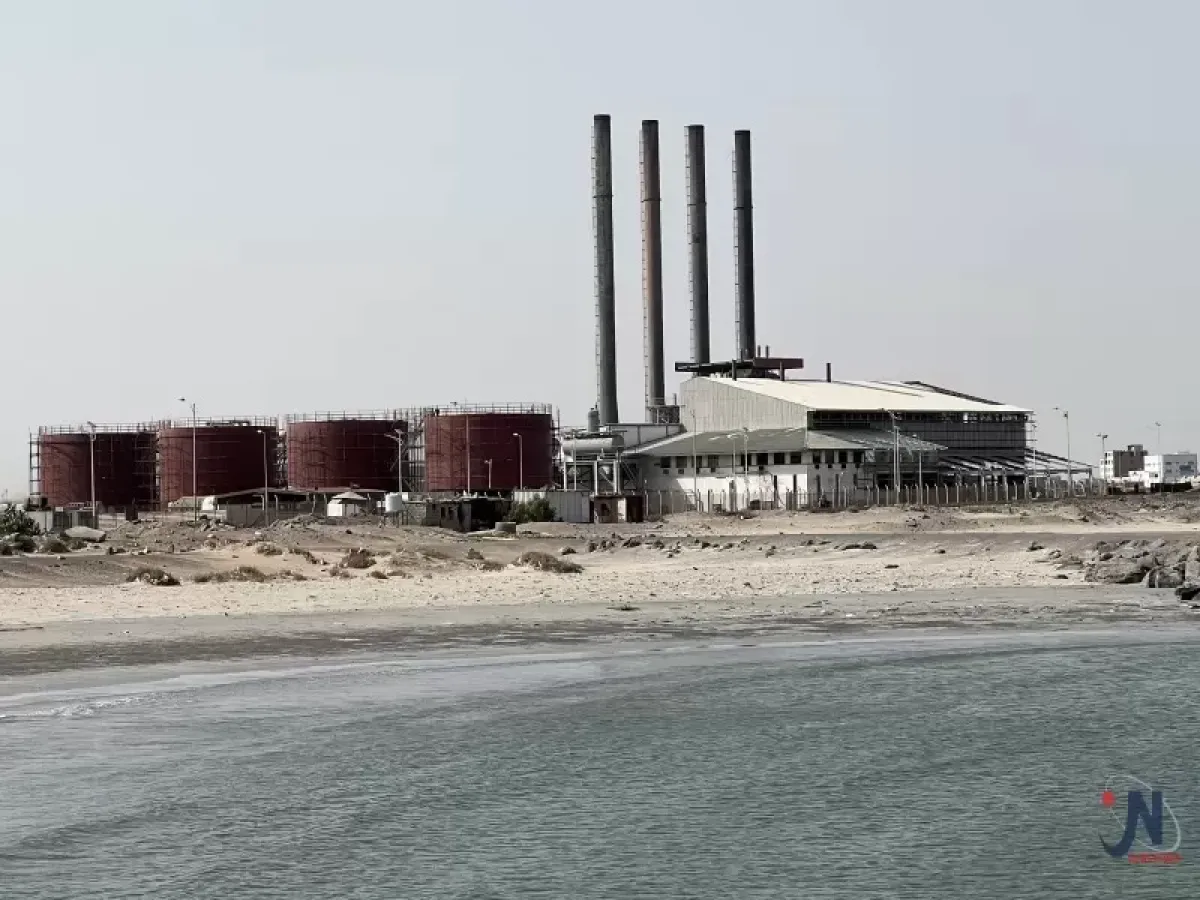
Amid recurring fuel crises and prolonged electricity outages in Aden, questions are mounting regarding the Yemeni government's continued failure to reactivate the Aden Refinery, a critical economic and strategic facility idled since 2015.
Economic experts argue that restarting the refinery offers a practical solution to the fuel and electricity shortages, as it would supply petroleum products to the local market and power plants, reduce reliance on imports and foreign aid, and bolster state revenues and currency stability. They suggest that the government could compensate for lost oil export revenue by reactivating the Aden Refinery and establishing new refineries in Hadramout and Shabwah to process domestic crude for the Yemeni market. Experts emphasize that Yemeni crude is sold locally at international prices, and even with export challenges, domestic oil can meet market needs and generate state resources.
Oil revenues are the primary source of foreign exchange, supporting foreign reserves, financing imports, and maintaining exchange rate stability. While the Yemeni government aims for fiscal balance by 2026 and has raised the customs dollar exchange rate to offset revenue declines, the Aden Refinery, capable of providing a sustainable economic resource, remains inoperative. Recent discussions between the Yemeni government and U.S. company Hunt concerning oil exploration are long-term projects, unlikely to address immediate fuel shortages or export resumption.
Economic data indicates Yemen consumes approximately 100,734 barrels of oil daily, with proven reserves of about 3 billion barrels, ranking it 27th globally. This underscores the feasibility of reactivating refineries to meet domestic demand. However, reports suggest complex political and financial interests, stemming from Aden's liberation in 2015, contribute to the refinery's continued shutdown. Observers point to vested interests benefiting from continued fuel imports, potentially involving corruption networks linked to the Islah party, collaborating with Houthi elements to control the fuel import market. These reports claim the refinery's inactivity is less about technical issues and more about protecting import trade interests, though no official response has been issued.
Estimates suggest that importing a single 50,000-ton oil shipment can yield profits of up to $1,000 per ton. Reactivating the Aden Refinery could potentially inject over $100 million annually into state revenues and end the fuel import monopoly. Reports also detail the depletion of the refinery's financial assets and the seizure of its equipment and vessels over the years, despite directives for its rehabilitation and plans for reactivation. Activist Mohsen Abu Ziyad questioned the ongoing shutdown, stating that ending reliance on imported refined fuel and restarting the refinery would yield significant benefits for the state and citizens. He explained that refining crude oil, priced around $70 per barrel, produces gasoline, diesel, jet fuel, domestic gas, oils, asphalt, and other products. Refining one million barrels of crude for $75-78 million could generate market value between $85-95 million, yielding profits of $10-17 million under favorable conditions, alongside job creation, ending import monopolies, ensuring fuel for power plants, reducing fuel prices, and creating a sustainable state revenue source.
Activist Azmi Mohammed Al-Abd Al-Baqi attributed the Aden electricity crisis largely to the lack of fuel for power plants, noting that Aden once had a stable electricity network extending to several governorates before the state shifted to purchased power. He questioned the number of power stations added since 2015, identifying fuel as the core problem and asserting that reactivating the Aden Refinery would resolve most suffering by securing fuel for generation and restoring service stability. Observers view the refinery's continued dormancy, despite urgent need, as a governmental failure in managing a crucial economic sector, raising serious questions about the leadership's capacity to leverage national resources while Aden and liberated governorates face unprecedented electricity and fuel crises.