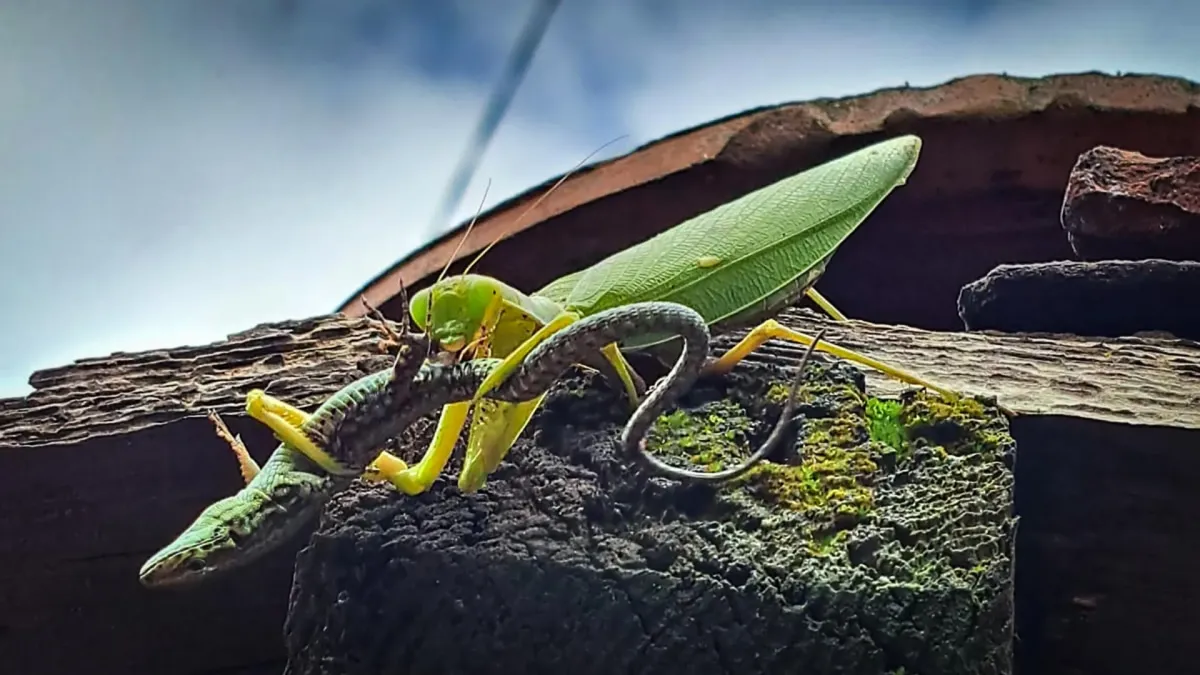
Two species of Asian praying mantises have been officially classified as invasive threats to Europe's native wildlife, scientists announced. The Giant Asian Mantises, Hierodula tenuidentata and Hierodula patellifera, have rapidly expanded their populations across Mediterranean and continental regions over the past decade, raising alarms among researchers.
A recent study published in the Journal of Orthoptera Research formally designates these mantises as Invasive Alien Species (IAS). Lead researcher Roberto Battiston noted that while the insects have been present for about ten years, climate change is accelerating their northward spread. Many people, charmed by their impressive size, don't realize the ecological problem they represent.
These invasive mantises are formidable predators, thriving in trees and shrubs and reproducing at an impressive rate. Each egg case can yield around 200 young, nearly double that of native European mantises, with fewer nymphs cannibalizing each other. This rapid growth impacts native wildlife significantly, as invasive males are often eaten when attempting to mate with females, and the mantises prey on native pollinators like honeybees, as well as protected vertebrates such as tree frogs and lizards.
Surprisingly, domestic cats are the primary vertebrate predators of these invasive mantises, accounting for 45% of predation events. However, cats also hunt native European mantises, which are already struggling due to competition from the newcomers. Urban and suburban areas, with their "insect hotels" and warmer "urban heat islands," provide ideal habitats, extending the mantises' survival and range.
To combat this spread, scientists are leveraging citizen science, collecting thousands of public reports. Researchers encourage the public to spot and remove egg cases during winter, cautioning people to consult experts first to avoid harming native species' eggs. The expansion of these Asian mantises underscores how human activity and climate change are altering ecosystems, making public awareness and targeted conservation vital for protecting Europe's unique biodiversity.