Yemen's Presidential Leadership Council and government are facing widespread criticism following their response to an Iranian aircraft breaching the nation's airspace and landing at Hodeidah Airport. The public had anticipated more decisive actions to safeguard Yemeni sovereignty, but the political leadership issued statements perceived as justifications rather than a clear plan for addressing what they termed a "blatant violation of sovereignty."
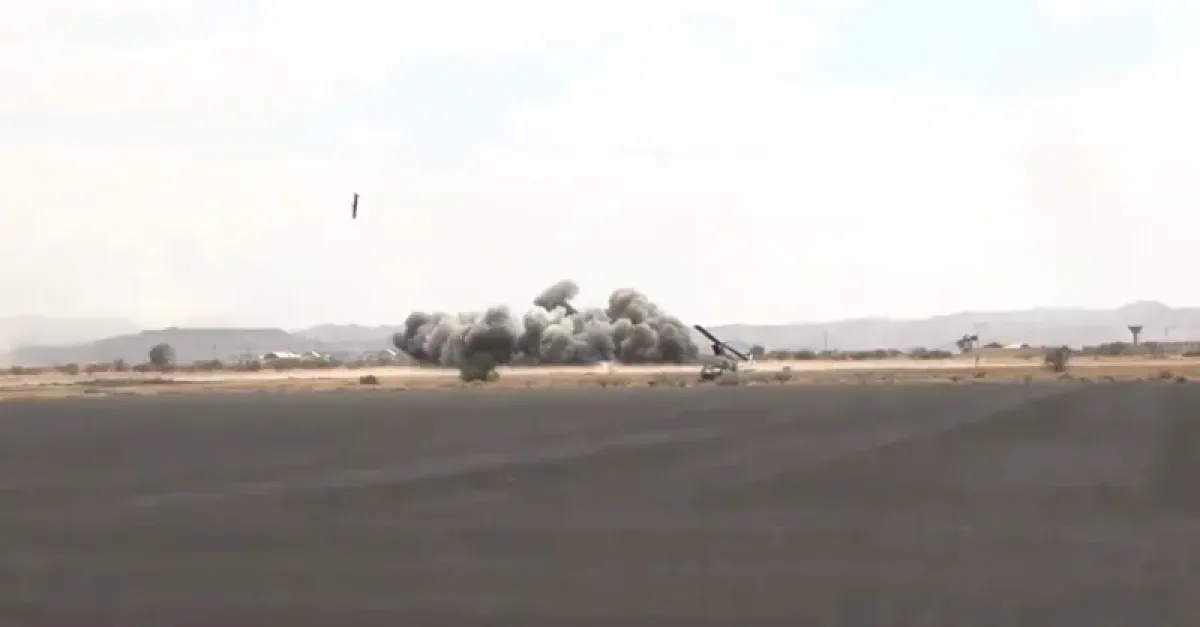
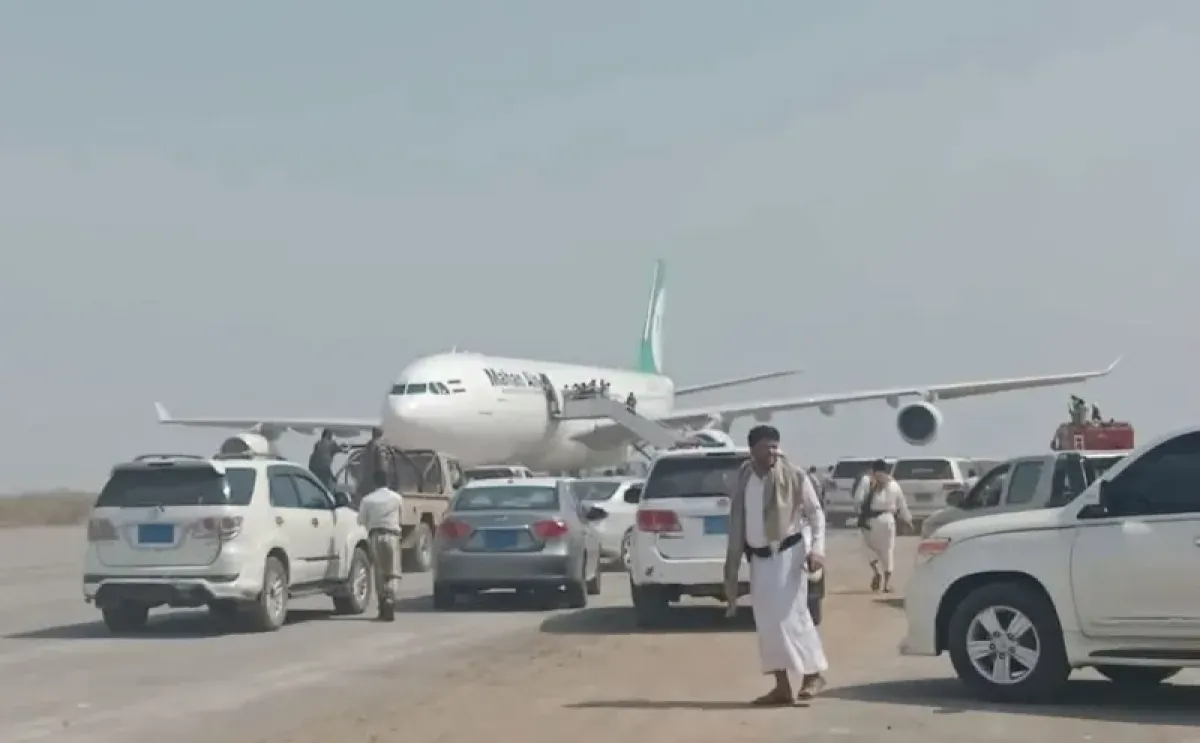
The Iranian aircraft successfully reached Yemeni territory and landed at Hodeidah Airport, carrying a delegation of Houthi leaders and Iranian officials. This occurred despite the government's prior refusal to permit its entry and an earlier attempt to target Sana'a Airport's runway to prevent its landing there. The aircraft subsequently diverted to Hodeidah, a development observers viewed as a direct test of the legitimate government's ability to assert its sovereignty over Yemeni airspace and borders.
In the aftermath, Chairman of the Presidential Leadership Council Rashad al-Alimi issued a statement asserting that the state had decided against escalating the confrontation to protect civilian lives and public property. He noted that the armed forces had taken defensive measures by targeting Sana'a Airport's runway and that the government had presented initiatives for the airport's legal operation, proposing the Houthi delegation travel via Yemen Airways, proposals the group rejected.
The statement affirmed that the government would not permit any aircraft to violate Yemeni airspace in the future and would continue to pursue necessary political, diplomatic, and legal actions to protect sovereignty, while holding the Houthi group and Iran responsible for the escalation. However, the content of the statement did not assuage the criticism. Instead, it fueled widespread doubt regarding the efficacy of official discourse, particularly after the Iranian aircraft successfully reached its destination. This led politicians and activists to declare that the events on the ground contradicted the statements and warnings issued by the Presidential Council, the Yemeni government, and the Ministry of Defense prior to the aircraft's entry into Yemeni airspace.
Political analyst Yasser al-Yafei described the incident as "closing the last page of the book of the so-called Yemeni legitimacy," suggesting that what remains is merely a title without substance, burdened by a record of failures. He highlighted how the Houthis appeared to receive the Iranian aircraft at Hodeidah Airport with a media crew, reception vehicles, equipped stairs, and a prepared runway, despite the airport having been out of service for years. He argued this exposed the vast gap between official rhetoric and the ground reality, and that the political leadership's and Ministry of Defense's threats had culminated in "another scandal."
Conversely, activist Osama Al-Saqqaf viewed the recent developments as indicative of a confused crisis management approach. He pointed out that targeting Sana'a Airport's runway did not prevent the Iranian aircraft's arrival, as Hodeidah Airport was readily available as an alternative. He added that the incident had disheartened the government's allies, identifying the handling of the issue and leadership choices as primary reasons for the failure, and suggested the aircraft incident could mark a turning point in evaluating the current leadership's performance.
However, activist Salem Abu Tammam Al-Awlaqi defended the Presidential Council chairman's stance, considering the prioritization of civilian protection a responsible decision. He believed that preventing the aircraft's landing in Sana'a and forcing it to divert to Hodeidah achieved several objectives, notably exposing the Houthis' lack of seriousness regarding the peace process, highlighting Iran's violation of Yemeni sovereignty, and strengthening the government's position before the Arab and international community to demand stricter measures against Iran and the Houthis.
In contrast, activist Fawzi Al-Hadrami issued sharper criticism, asserting that the Iranian aircraft's successful landing despite official warnings revealed the government's inability to enforce its threats. He criticized the discrepancy between the pre-flight declarations and the final outcome, deeming the incident a political and media victory for the Houthis and Iran, and raising questions about the government's capacity to protect the air sovereignty it had declared its defense of.
Observers believe the crisis transcends a mere aircraft landing, evolving into a political and military test of the state institutions' authority. The public had anticipated a stance reflecting the government's ability to enforce its decisions. Instead, the situation concluded with explanatory statements issued after the flight reached its destination, igniting a wave of broad criticism regarding the official performance in managing one of the most sensitive issues tied to national sovereignty.