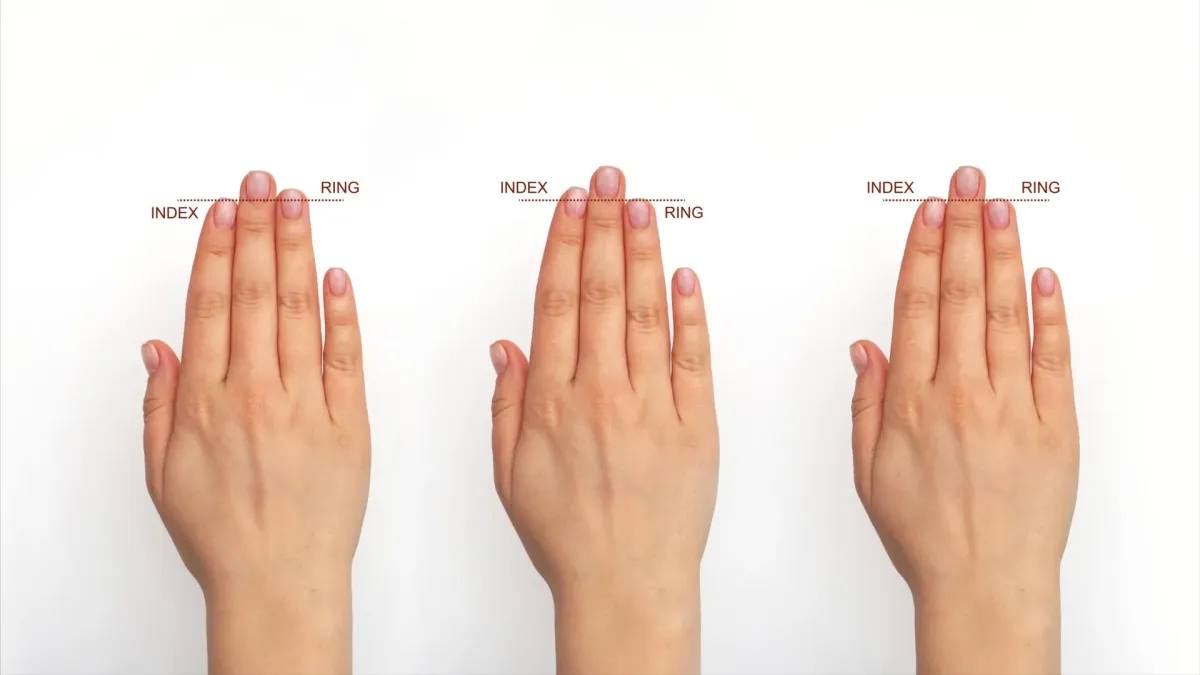
New research suggests that a person's finger length ratio could be a subtle clue to how human brains evolved to become larger, potentially linking it to prenatal estrogen exposure.
Scientists examined the digit ratio, which compares the length of the index finger (2D) to the ring finger (4D). This ratio is believed to be an indirect marker for the balance of estrogen and testosterone a fetus experiences in the womb. A higher 2D:4D ratio, meaning a relatively longer index finger, is generally associated with greater prenatal estrogen exposure.
In a study involving 225 newborns, researchers found that baby boys with a higher 2D:4D ratio also tended to have a larger head circumference, a common indicator of brain size in infants. Interestingly, this connection wasn't observed in baby girls.
These findings align with the "estrogenized ape hypothesis," which proposes that the significant expansion of human brains occurred alongside a trend towards a more feminine skeletal structure compared to our ancestors. Professor John Manning, a lead researcher, noted that while high 2D:4D ratios in males have been linked to issues like heart problems and schizophrenia, the evolutionary drive for larger brains might have outweighed these potential downsides.
The study doesn't claim finger length directly dictates brain size. Instead, it positions digit ratio as a potential indicator of hormonal influences during early development. The researchers suggest that the evolutionary benefits of larger brains may have come with biological trade-offs, possibly related to hormonal conditions that also increased certain health risks for males.