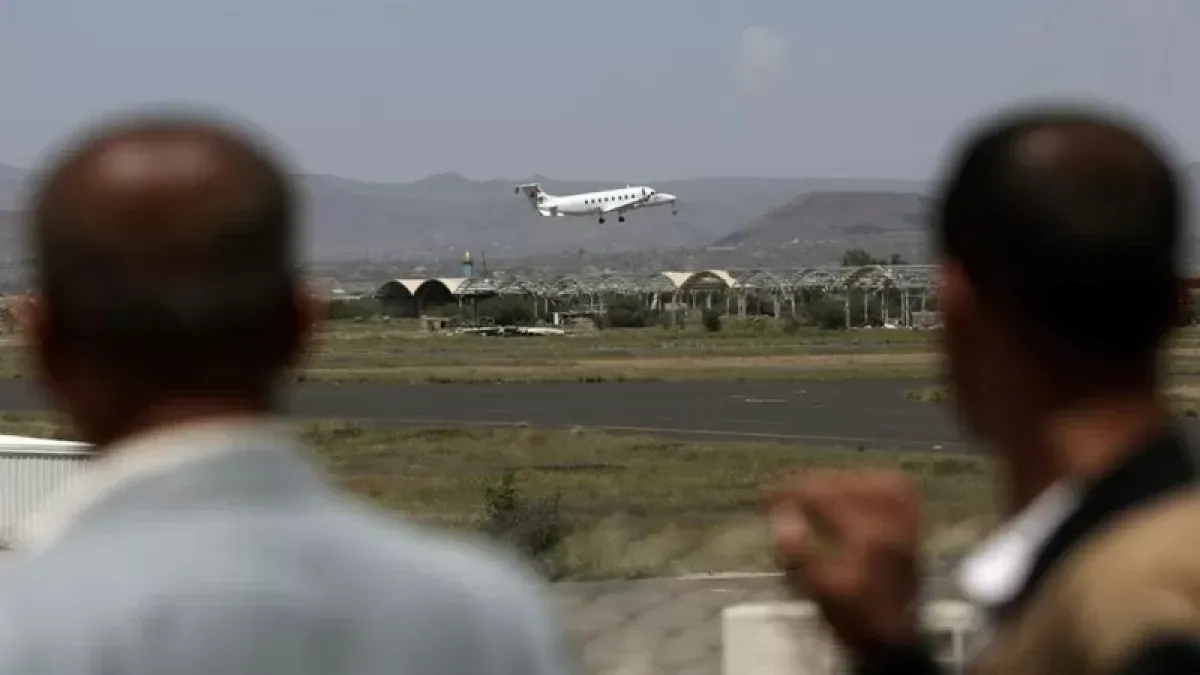
Royal Jordanian Airlines has completed the necessary technical and logistical procedures to resume its flights to Sanaa International Airport, signaling a potential return to official channels for civilian air travel. This move contrasts with attempts to establish unauthorized flight paths, which previously triggered diplomatic tensions.
According to Jordanian state media, the airline is finalizing operational requirements and coordinating with relevant authorities to reopen the Amman-Sanaa air route, though an official start date for flights has not yet been announced.
The announcement follows a recent incident where an Mahan Air flight, reportedly bound for Sanaa, was unable to land and was rerouted after the runway was targeted. This event was seen as a violation of Yemeni sovereignty and air navigation protocols, occurring without the approval of the Yemeni government.
Analysts suggest the Jordanian initiative represents an alternative pathway for resuming civilian flights through accredited carriers and in accordance with international regulations. This approach stands in contrast to perceived Iranian and Houthi efforts to unilaterally establish a Tehran-Sanaa route, which has complicated the airport's operational status and heightened political and security concerns.
The Yemeni government has previously affirmed its readiness to facilitate civilian flights to and from Sanaa via Yemenia Airways and other authorized carriers. It had also offered to arrange the return of a Houthi delegation from Tehran using a Yemenia Airways charter. However, the Houthi movement and Iran insisted on utilizing Mahan Air, leading to the escalation of the crisis.
In response to the Royal Jordanian announcement, the Houthi movement has swiftly called for expanded flights to Iran and other nations, asserting that all flight operations should proceed "unconditionally." They have reiterated their stance against perceived foreign "guardianship" over Yemen and have linked the airport's operational status to other demands, including salary payments and humanitarian issues.
Observers interpret this position as a continuation of the Houthi strategy to leverage humanitarian issues for political pressure and negotiation. They argue that the movement is attempting to tie the airport's functionality to demands that extend beyond technical and regulatory matters. The Yemeni government, meanwhile, maintains that civilian flights can be resumed through approved procedures and licensed carriers, free from attempts to exploit the situation for regional agendas.