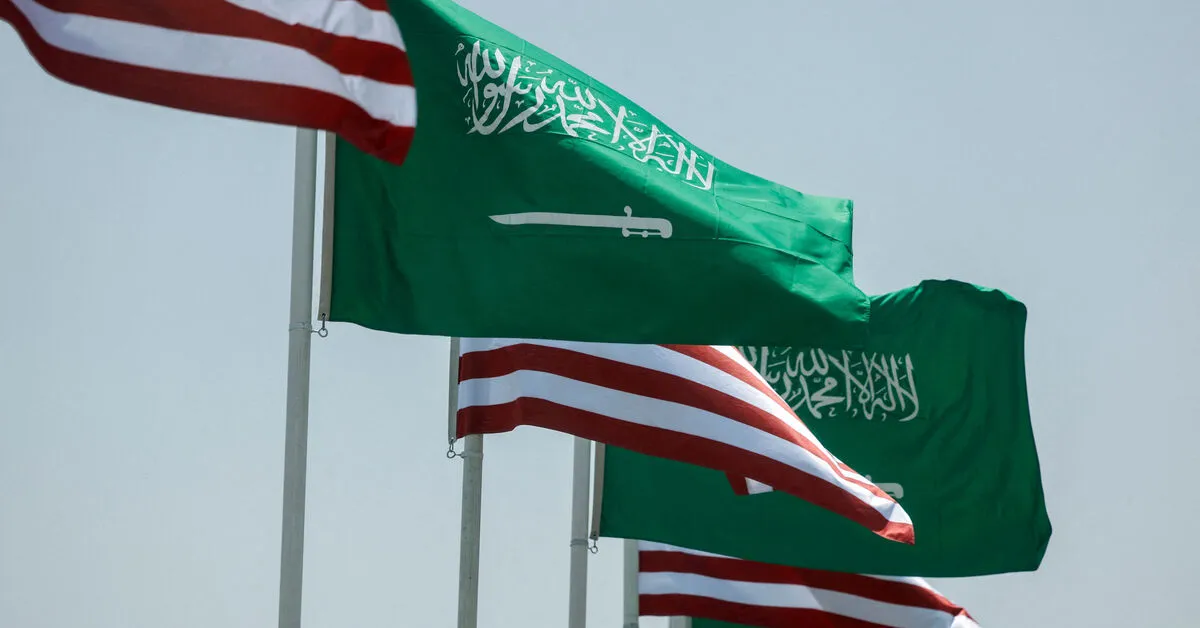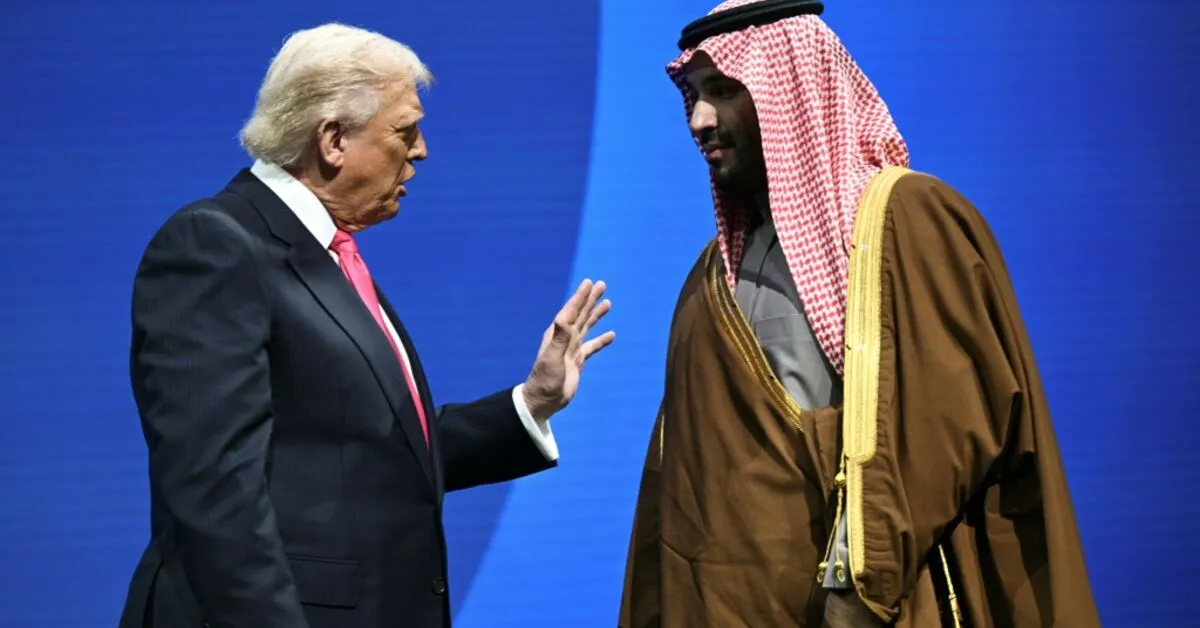
The United States has announced a significant agreement with Saudi Arabia to establish a civilian nuclear program, emphasizing the inclusion of non-proliferation safeguards.
The accord, signed by U.S. Energy Secretary Chris Wright and Saudi counterpart Prince Abdulaziz bin Salman, involves two key agreements: one on "peaceful nuclear cooperation" and another on "bilateral safeguards." The U.S. Energy Department stated that these agreements form the legal basis for a long-term partnership valued at billions of dollars, advancing economic and strategic objectives, including nuclear non-proliferation.
While the specific terms were not immediately released, reports suggest a provision may allow U.S. companies to construct a uranium enrichment facility in Saudi Arabia. The Energy Department did not confirm this detail when questioned. The deal requires congressional review, though its approval by the Republican-controlled legislature is anticipated. Concerns have been previously raised by U.S. lawmakers and Israeli officials regarding Saudi Arabia's potential to develop nuclear weapons.
Saudi Arabia has consistently asserted its right to a civilian nuclear program, having previously signed a mutual defense pact with nuclear-armed Pakistan. Washington has sought to leverage such nuclear agreements as part of a broader strategy to encourage Saudi Arabia's normalization of ties with Israel and the signing of a U.S.-Saudi defense pact.
This development follows a 2009 nuclear agreement between the U.S. and the United Arab Emirates, which operates the Arab world's sole nuclear facility. U.S. Energy Secretary Wright addressed non-proliferation concerns, asserting that the agreement aligns with U.S. economic and strategic interests and upholds the highest standards of nuclear safety and non-proliferation, utilizing American technology and expertise.
Experts have indicated that such an agreement has been under discussion for some time. While some analysts, such as Matthew Kroenig of the Atlantic Council, have expressed reservations about granting enrichment capabilities, others, like Jennifer T. Gordon of the Atlantic Council's Nuclear Energy Policy Initiative, view it as a strategic win for the U.S. in competing with Russia and China for influence in Saudi Arabia's burgeoning nuclear sector.