U.S. President Donald Trump has pledged "major military punishment" for Iran and its Houthi allies following attacks on two Saudi oil tankers in the Red Sea, a move that has heightened concerns over potential disruptions to global energy supplies. The incident marks an escalation of the regional conflict, extending its impact to another critical shipping chokepoint.
Global oil prices surged significantly, with Brent crude surpassing $100 a barrel for the first time since May, reflecting anxieties about wider trade route blockades. This development comes two weeks after the collapse of an interim truce aimed at ending the conflict in Yemen.
The U.S. military has conducted nightly air strikes against Iran for the past thirteen nights. In response, Iranian state media reported that missiles struck Qeshm Island on the Strait of Hormuz on Thursday and Friday nights. The Ahvaz strike reportedly resulted in four fatalities and five injuries, according to state broadcaster IRIB.
Following the Houthis' claim of responsibility for the tanker attacks, President Trump stated his intention to hold Iran accountable, characterizing the Houthis as an Iranian proxy. He indicated consideration of re-launching major combat operations in Iran, telling Axios, "They haven't received enough pain yet." Trump also suggested that any damages to cargo ships would be compensated by frozen Iranian assets, a proposal met with a warning from Iranian Foreign Minister Abbas Arachi about "incendiary precedent" and the potential for "ensuing chaos."
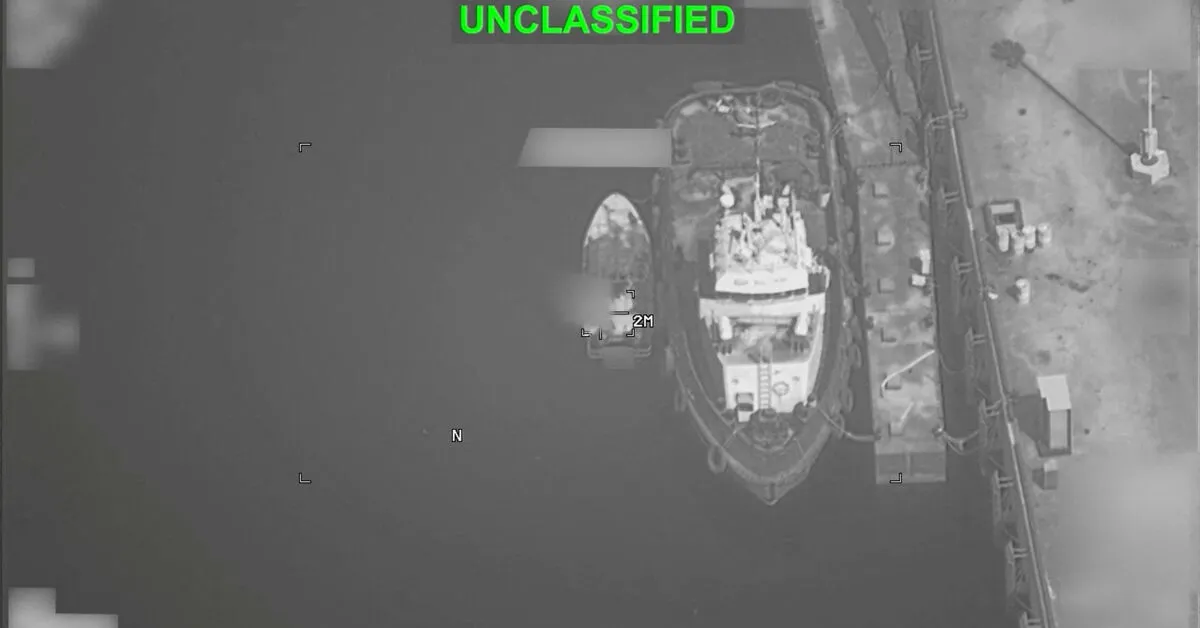
Sources suggest Iran had recently deployed Revolutionary Guard commanders and military equipment to Yemen prior to the Houthi announcement of a naval blockade against Saudi Arabia. The Houthis claim their forces executed missile and drone strikes on the Saudi oil tankers Encelia and Layla. The Encelia reportedly issued a distress call after being hit near the Saudi port of Jizan. Shipping insurance costs in the southern Red Sea have doubled for some companies following these reported attacks.
The Houthi actions threaten the Bab el-Mandeb strait, a vital waterway connecting the Red Sea to the Indian Ocean, second only to the Strait of Hormuz in importance for energy shipments. Tanker traffic has already begun rerouting to avoid the strait, opting for longer and more costly routes. Data shows a significant decrease in tankers crossing the Strait of Hormuz.
In parallel, Iran reported striking U.S. missile systems, weapons, and fuel storage sites in Jordan, as well as U.S. military posts in Kuwait. Jordan's army confirmed engaging multiple Iranian missiles and drones, intercepting most. Iran's Revolutionary Guards claimed to have hit a U.S. electronic warfare unit in Kuwait. These actions are framed by Iran as retaliation for U.S. strikes on its infrastructure.