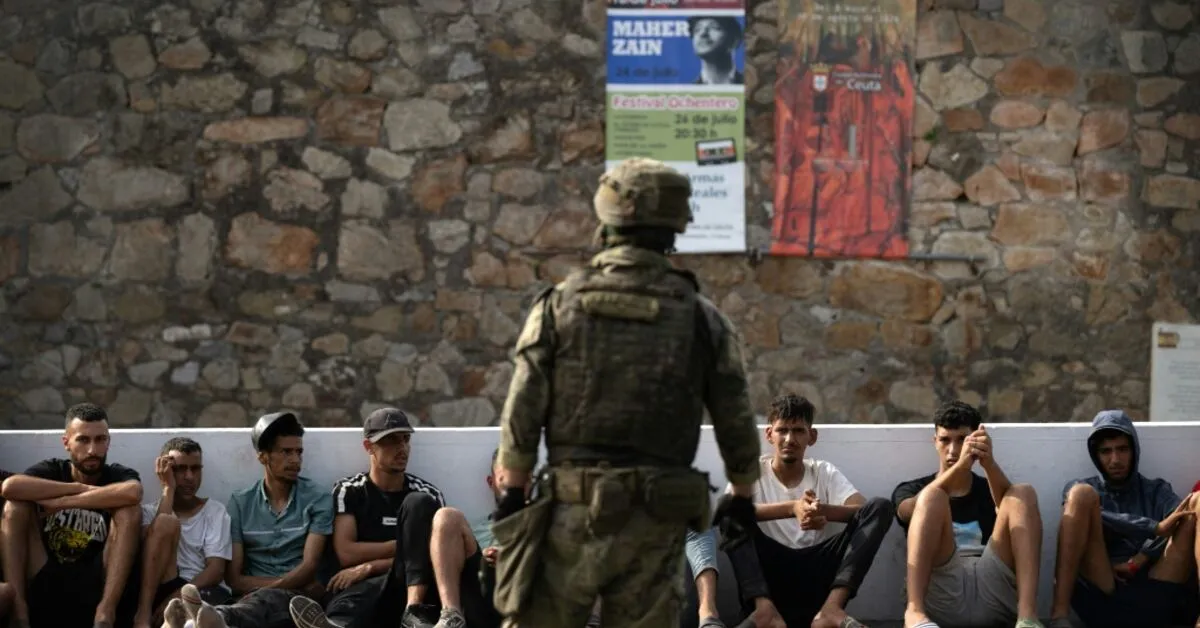
Thousands of Moroccans who entered Spain's Ceuta enclave this week are returning home disillusioned, reporting experiences of suffering and racism and questioning the value of the risks taken. Many expressed a profound sense of broken dreams and a grim warning to others contemplating similar journeys.
Mohamed Nias, a 23-year-old from Tangier, described his second attempt to reach Spain as an ordeal filled with hardship and discrimination. After swimming to Ceuta in search of a better life, he stated he found "nothing but suffering and racism" and was unable to obtain food for two days. He cautioned potential migrants against undertaking the perilous journey.
Moroccan authorities began repatriating hundreds of individuals by coach on Saturday evening, following initial efforts the previous night. Many migrants, including Nias, reportedly left their jobs on Thursday after social media rumors and shared images suggested the border to Ceuta was open. The Spanish government has also cited misinformation regarding a recent supreme court ruling on migration as a contributing factor.
Witnesses reported that large crowds approaching the border town of Fnideq were not significantly deterred by authorities, with limited visible security presence. Experts expressed surprise at the apparent lack of reinforcements from Moroccan police or military forces. Upon reaching Spanish territory, some migrants, like Nias and his companion, were intercepted by Spanish Guardia Civil but managed to evade capture.
However, their reception in Ceuta fell far short of expectations. Migrants described closed shops and hostile reactions from locals, with some reporting being chased and mistreated. Sadi Tribak, an artisan from Tangier, recounted being deceived by the rumors of an open border and returned home to his children before attempting the crossing alone, only to find no sustenance available.
Despite Morocco's economic growth, significant inequalities persist, and the perceived economic disparity with Spain fuels migration desires. Young individuals like 16-year-old Ayoub El Abied saw Spain as a path to "freedom" and escape from high unemployment. Others, like 27-year-old lifeguard Youssef, returned home with a changed perspective, concluding "there's nowhere better than Morocco" after their negative experiences and alleged mistreatment, including prolonged periods without food.
The Confederation of Businesses of Ceuta had advised businesses to remain closed until security could be assured. Many individuals, like aluminium joiner Abdelouahed Fetachi and unemployed Rachid Aouchari, expressed relief at returning to their families and jobs, their dreams of a better life in Spain shattered.