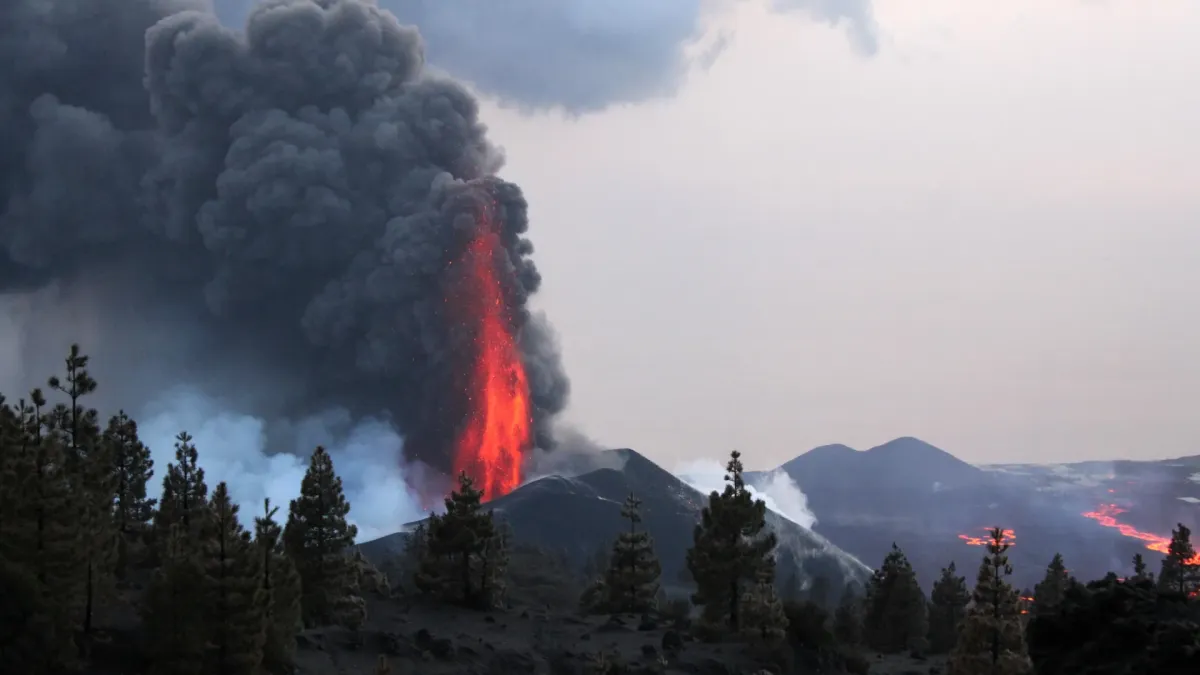
Scientists have uncovered a key heat-driven process within magma that could explain why volcanoes with similar traits sometimes put on wildly different shows. An international research team studied magma from the 2021 Tajogaite eruption in La Palma, Spain, and found that "superheating" – when magma gets hotter than its stable crystal temperature – can actually pause crystal formation as it heads to the surface.
This intense heat can zap the tiny crystals that normally act as building blocks for new ones, effectively wiping the slate clean. It also smooths out the magma's microscopic structure, making it harder for crystals to take root. These shifts can mess with how fast magma rises and how easily volcanic gases escape, directly impacting whether you get a spectacular lava fountain or a more chill lava flow.
The study, published in Nature Communications, delves into a long-standing puzzle: how a magma's temperature history shapes its crystallization before and during an eruption. Dr. Barbara Bonechi, the lead author from The University of Manchester, explained, "The history of crystal and bubble growth can dramatically control how a magma erupts... Until now, we did not fully understand the dynamics of crystal growth for magmas that received an injection of superheat just before ascent." Using cutting-edge tech, they could actually watch these processes happen live.
To get to the bottom of it, researchers mimicked volcanic conditions in the lab using magma from the Tajogaite eruption. At Diamond Light Source, they used advanced X-ray microtomography to observe crystal formation in real-time. They found that magma that hadn't been superheated started crystallizing within about 20 minutes. In stark contrast, superheated magma held off crystal formation for over eight hours.
These findings were plugged into computer models simulating magma's journey upwards. The results showed that a long delay in crystallization keeps magma fluid and allows it to shoot to the surface quickly, potentially fueling those dramatic lava fountains. Conversely, earlier crystallization thickens the magma, slowing its ascent and giving gases more time to escape, leading to a gentler eruption.
This newly identified role of superheating could be a game-changer for volcanologists. Dr. Margherita Polacci, a co-author, noted, "Current volcanic hazard models typically focus on magma chemistry, gas content and pressure changes. This work suggests that pre-eruptive thermal history and crystallization kinetics may also play an important role in controlling magma ascent and eruptive behavior." Understanding this thermal history could lead to better eruption forecasts.