Despite repeated interventions by Mayor Karen Bass's "Inside Safe" program, homeless encampments continue to repopulate areas in Los Angeles, frustrating residents and posing a significant challenge to the city's housing efforts. Records indicate that outreach teams have revisited some locations dozens of times, yet the issue persists.
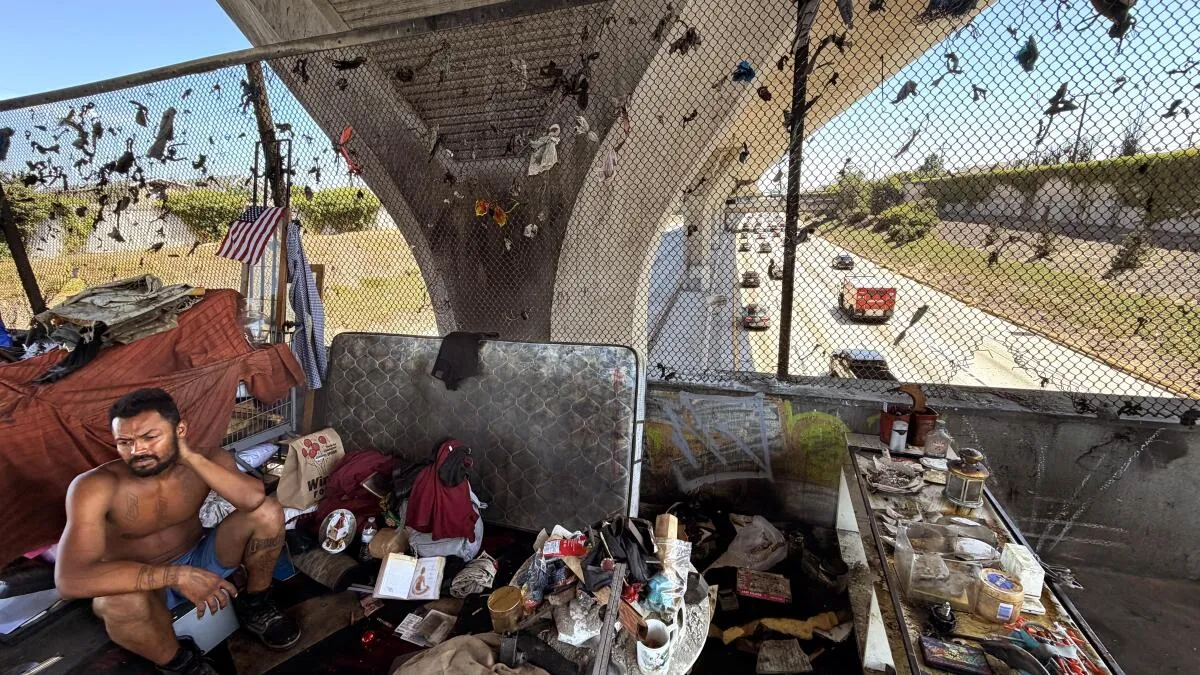
Residents living near the 110 Freeway in South Los Angeles, for instance, have expressed ongoing distress due to noise and activity from encampments, which often encroach on their quality of life. Abigail Aguirre, a local resident, described nights disturbed by parties, loud music, and drug use from individuals in a nearby homeless encampment. Her husband's early work schedule is frequently impacted by the lack of sleep.
The "Inside Safe" program, launched three years ago, has aimed to move individuals from encampments into temporary housing, such as hotels and motels, and has conducted numerous operations. Records obtained by The Times reveal that on a one-mile stretch of the 110 Freeway in South Los Angeles, outreach workers performed "Inside Safe" operations 25 times within the mayor's first three years. Similar patterns of repeated interventions have been observed in other areas, including Hollywood and near MacArthur Park.
Mayor Bass acknowledged the frustration of residents and the scale of the challenge. She stated that while "Inside Safe" has successfully moved over 6,200 people into interim housing, approximately 43% were back on the streets by June 30. The mayor plans to overhaul the city's approach by securing greater control over essential services like medical care and addiction treatment. Bass contends that her administration has made progress, with about 80% of visited locations remaining clear of tents in recent weeks, but conceded that the program needs to expand significantly.
Critics, such as City Councilmember Nithya Raman, argue that "Inside Safe" is ineffective and costly, likening it to "shuffling people around rather than get them housed for good." Concerns are also raised about the lack of enforcement following encampment clearings, with some suggesting that more robust policing is needed to maintain cleared areas. The availability of critical support services, such as psychiatric beds, is also cited as a factor affecting long-term success.
Despite these persistent issues, the mayor's team highlights successes in areas where encampments have not returned after interventions, often due to physical barriers or changes in the area. Councilmember Tim McOsker pointed to a location in Harbor City that has remained clear for 17 months after repeated outreach, attributing this to persistent efforts and a request for a service provider to relocate, as it was attracting new arrivals. However, the fundamental challenge of repopulation, even in areas previously cleared, underscores the complexity of addressing homelessness in Los Angeles.