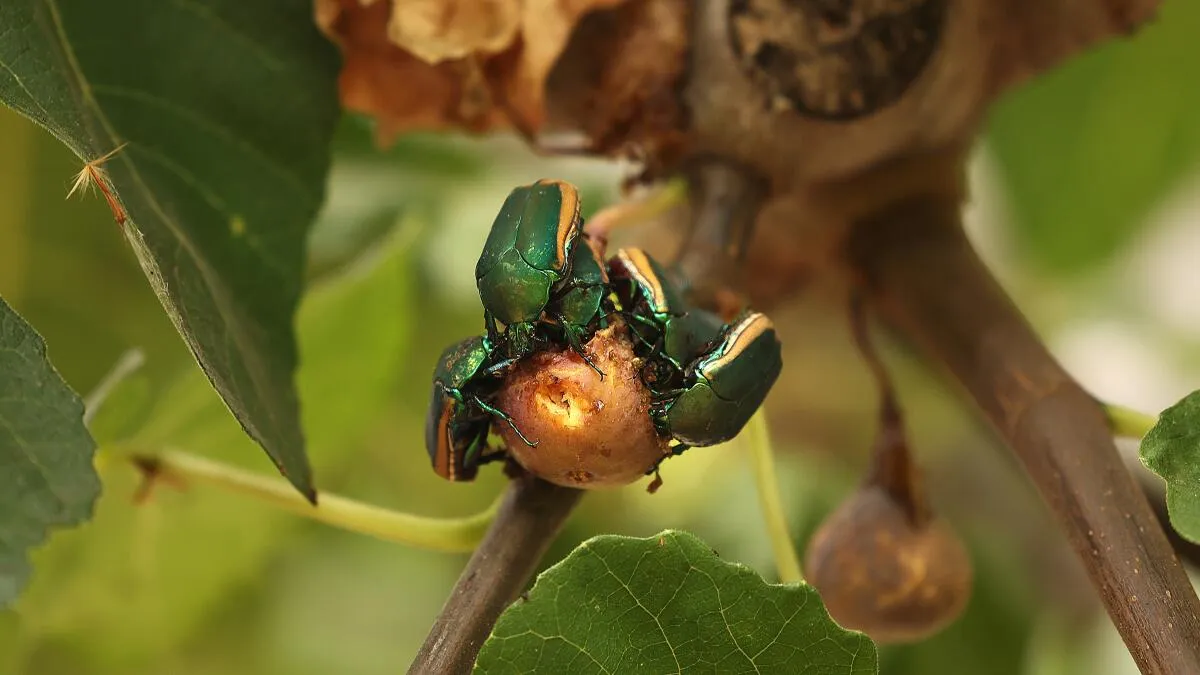
Large, metallic-green figeater beetles are currently swarming parts of Los Angeles, characterized by their distinctive, often clumsy flight patterns that can lead them to collide with people.
These beetles, scientifically known as Cotinis mutabilis, are approximately one inch in length and are difficult to overlook. Their erratic flight is attributed to their size relative to their wings, making precise aerial control challenging, according to entomology experts.
August marks the peak season for these beetles in the Los Angeles area, with sightings beginning in June and extending through the fall. As members of the scarab family, they are named for their diet, which primarily consists of soft-skinned fruits like figs and grapes.
Recent years have seen an expansion of the figeater beetle's range, with new populations noted in Utah and Colorado. While Southern California is within their native habitat, experts believe their numbers have likely increased locally. This proliferation is thought to be influenced by human activities such as the creation of compost piles, lawn irrigation, fruit tree cultivation, and potentially climate change, which collectively create more hospitable environments for the beetles and their larvae.
Despite their abundance and occasional nuisance behavior, figeater beetles are generally not considered pests. They tend to consume decaying fruit and their larval stage, known as grubs, feeds on organic matter in compost, playing a role in decomposition within the ecosystem. It is important to distinguish them from Japanese beetles, which are a significant agricultural pest and are actively managed by authorities.
Entomologists advise against using pesticides to manage figeater beetles. If one enters a home, the recommended approach is to gently guide it back outdoors. Professionals suggest that while their appearance can be startling, they do not bite and pose no significant threat.