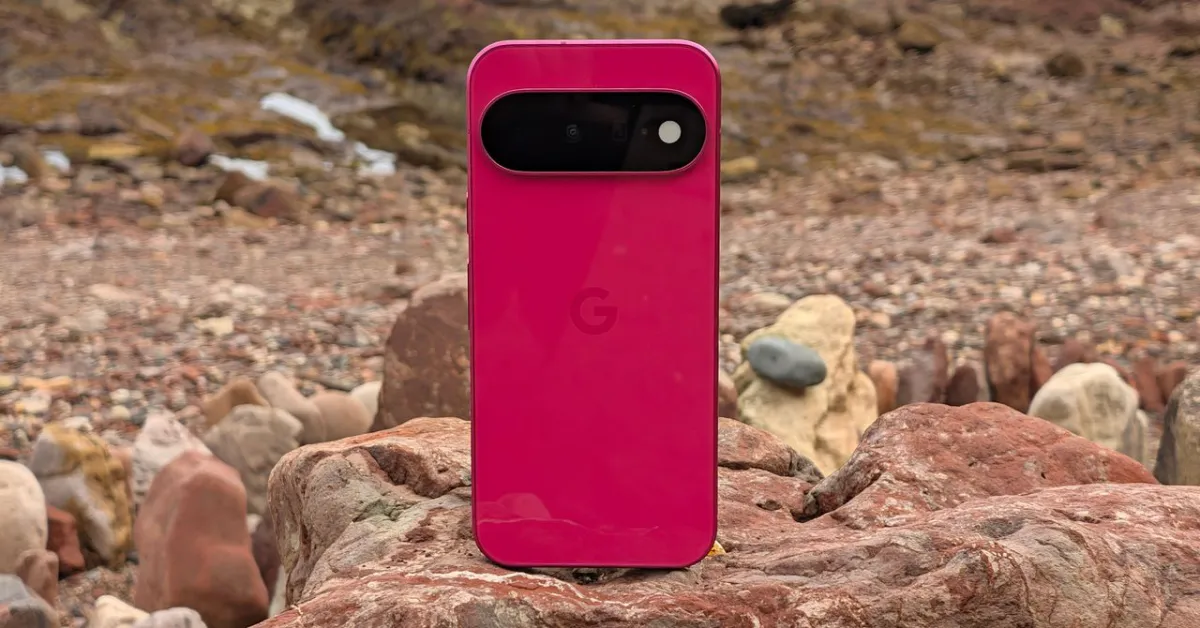
Google's Pixel 11 arrives with a familiar, yet refined, design, boasting new color options like a vibrant Hibiscus (hot pink) alongside subtle Pistachio (warm green), Frost (white), and Obsidian (black). While the absence of last year's Indigo is noted, the Pixel 11 offers a more compact feel despite its 6.3-inch screen, making one-handed use a breeze.
The device's form factor is comfortable and nearly identical to its predecessor, allowing for case compatibility. However, the paintwork is susceptible to scuffs, making a case a wise investment. The screen remains an excellent 6.3-inch OLED display with a 1080 x 2424 resolution and 60/120 Hz refresh rates. A missed opportunity is the lack of a variable refresh rate for better battery conservation, and users must manually enable the smoother 120 Hz in settings. While the display is bright with a 3,000-nit peak brightness, it's not quite as sharp or bright as the Pro model, featuring slightly larger bezels.
Biometric security offers reliable fingerprint unlocking, but Google's Face Unlock struggles in low light, potentially frustrating former iPhone users. US buyers will also find the Pixel 11 exclusively eSIM-compatible, a shift that, while streamlined by carriers, removes the simplicity of physical SIM swaps, especially for international travel.
Under the hood, the new Tensor G6 chip promises significant performance boosts, including 20% better power efficiency, 25% faster browsing, and 15% quicker app loading. With 12 GB of RAM and up to 512 GB of storage, the Pixel 11 feels snappy for everyday tasks, from app navigation to faster Nest video doorbell notifications.
However, for graphically intensive gaming, the Pixel 11 shows its limits. While playable, demanding titles like Wuthering Waves experienced stuttering and frame drops during combat, leading to noticeable warmth and battery drain after an hour. Less demanding games perform adequately, but serious mobile gamers might need to consider other options.