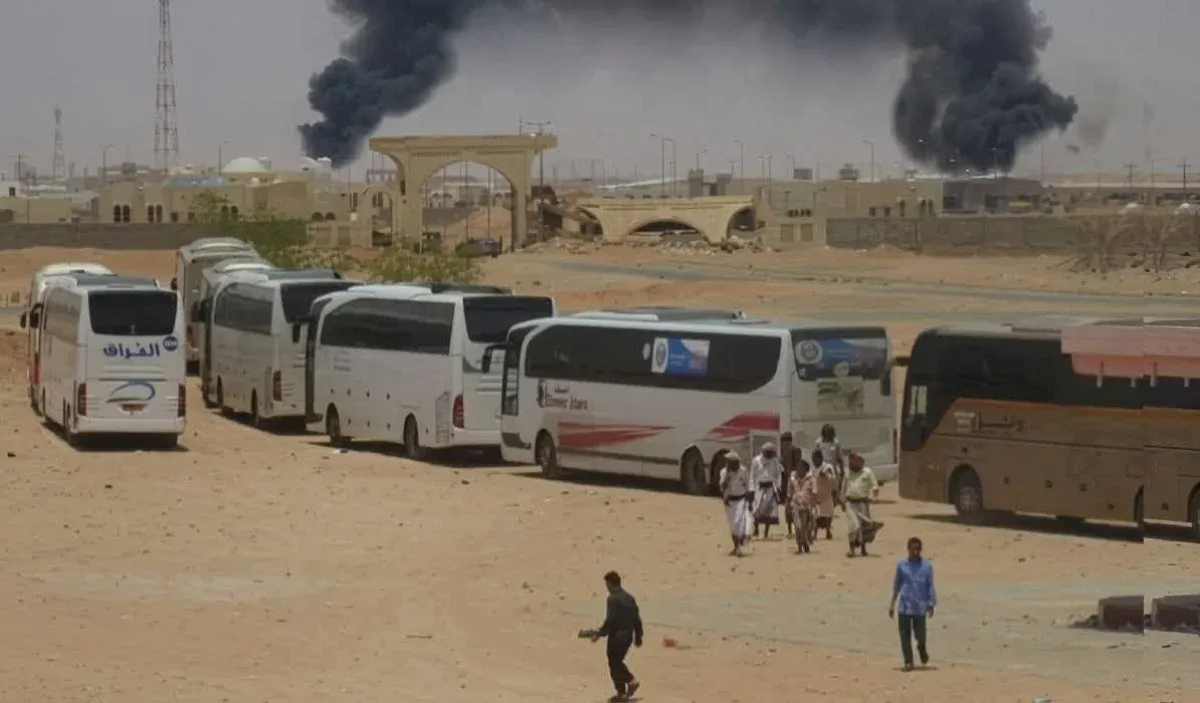
The Houthi militia, reportedly backed by Iran, has targeted the vicinity of the Al-Wadea land port on the Yemeni-Saudi border, raising concerns about potential attempts to blockade liberated areas following previous failures against Saudi Arabia.
The attack, which involved missiles and drones, struck fuel tankers and cargo trucks near the port and on the international road leading to it. The incident resulted in fires and casualties among civilians. The Houthi militia claimed responsibility for the assault, alleging it targeted Saudi troop build-ups in the Al-Abr and Al-Wadea regions. In their statement, the group falsely claimed the attack destroyed over ten trucks carrying weapons from Saudi territory.
These justifications echo previous Houthi attacks on the port of Mokha on the western coast, which caused significant damage and rendered the facility inoperable. The militia used similar pretexts, citing the targeting of Saudi military concentrations, to justify their actions against Mokha and several vessels owned by Yemeni citizens docked there.
These escalating attacks are fueling apprehension that the Iran-aligned militia intends to launch further assaults on land, sea, and air ports within the internationally recognized government's liberated territories. Observers suggest the Houthi militia might be attempting to impose a blockade on these areas, particularly after their efforts to do so against Saudi Arabia proved unsuccessful. This strategy appears to be a primary objective of the recent escalation initiated by the militia.
The militia's intensified actions commenced after Riyadh and the Yemeni government thwarted a plan by the Houthis and Iran to establish a direct air bridge between Iranian airports and Sana'a Airport, which is under Houthi control. On July 20th, the militia declared military escalation against Riyadh, aiming to enforce what they termed a "blockade for blockade" policy, viewing the prevention of direct flights with Iran as a siege imposed by Riyadh and the legitimate government.
However, recognizing the difficulties and repercussions of attempting a naval or air blockade against Saudi Arabia, the Houthi militia may be shifting its focus to a seemingly more attainable objective: pressuring Riyadh and the Yemeni government by targeting the economic lifelines of the liberated areas. This strategy involves assaulting land, sea, and air ports under the guise of targeting Saudi military build-ups. The Houthi militia had previously hinted at such intentions, warning civilians in liberated areas to stay away from what they described as "Saudi enemy concentration areas and weapons depots."
Analysts believe that a resolute response from the legitimate Yemeni government is imperative to counter the Houthi militia's targeting of civilian infrastructure, especially vital ports serving liberated regions. They caution that the previous attacks on Mokha port may have served as a test of the reaction from the legitimate government and Saudi Arabia, potentially paving the way for further assaults on other ports, such as Al-Wadea, if a deterrent is not established.