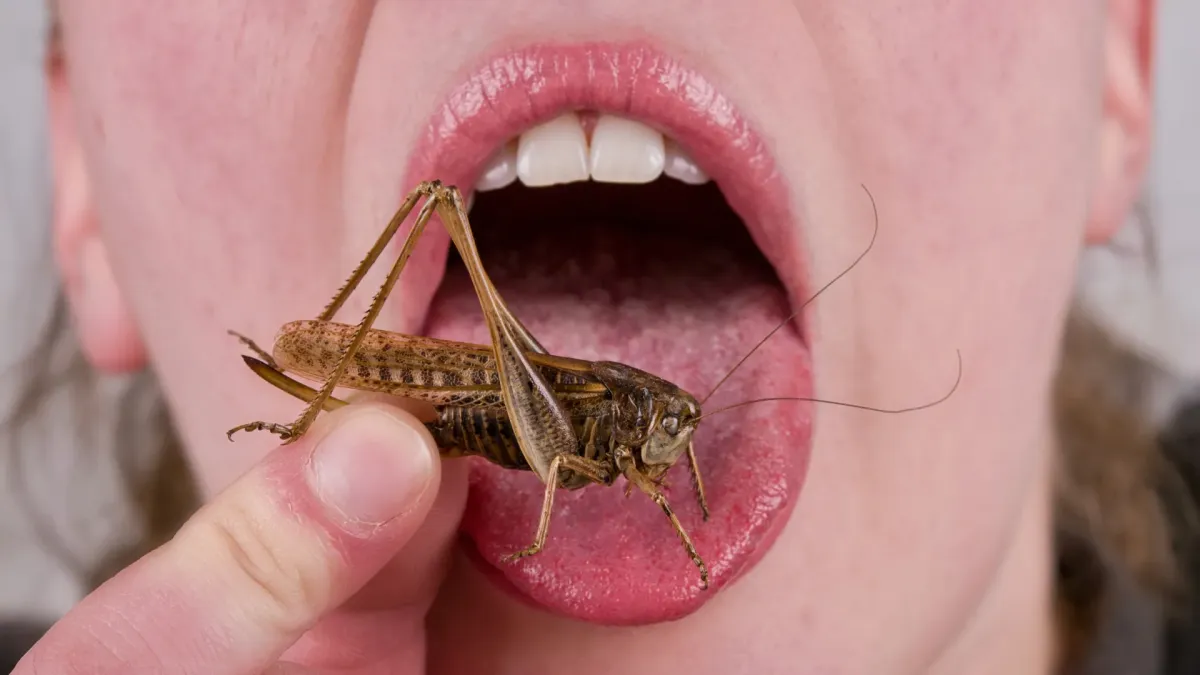
New research using ancient DNA suggests that a widespread aversion to eating insects in some parts of the world might be thousands of years old, potentially linked to evolutionary and ecological factors rather than just modern cultural taboos.
While insects are a sustainable food source and already a dietary staple for hundreds of millions globally, many Western societies remain resistant to entomophagy. Scientists have long wondered how far back this reluctance goes. Now, a study from the Institute of Evolutionary Biology (IBE) has analyzed dental calculus (tartar) from ancient humans and Neanderthals, revealing patterns of insect consumption stretching back millennia.
The findings indicate that while insect consumption was likely occasional and accidental in Europe and parts of Asia, it was more common in tropical regions and among Neanderthals. Researchers examined dental tartar from over 700 ancient human samples dating back 33,000 years. They discovered that modern humans in northern Eurasia didn't regularly eat insects. Furthermore, genetic analysis showed that populations in this region developed mutations around 9,000 years ago, linked to a reduced ability to digest insect exoskeletons, a pattern that has persisted.
Interestingly, Neanderthal dental calculus showed significantly more insect DNA, comparable to levels found in modern chimpanzees that supplement their diets with insects. Traces of flies and mosquitoes were particularly abundant, supporting theories that Neanderthals may have consumed animal carcasses with fly larvae or stored prey in marshy areas.
The study also found that populations living closer to tropical regions historically maintained genetic variants enabling more efficient digestion of chitin, the main component of insect exoskeletons. As human populations migrated towards cooler, non-tropical latitudes, the expression of these digestive enzymes declined. This suggests that the reduced availability and increased difficulty of collecting insects in these regions may have led to a gradual abandonment of entomophagy, shaping both dietary habits and human biology over thousands of years.
This ancient ecological and evolutionary history could be a key reason behind modern reluctance towards insect consumption, potentially predating recent cultural or religious influences. As the world explores alternative food sources, modern processing techniques are making insect consumption more feasible without requiring direct digestion of exoskeletons, potentially bringing insects back to the menu.