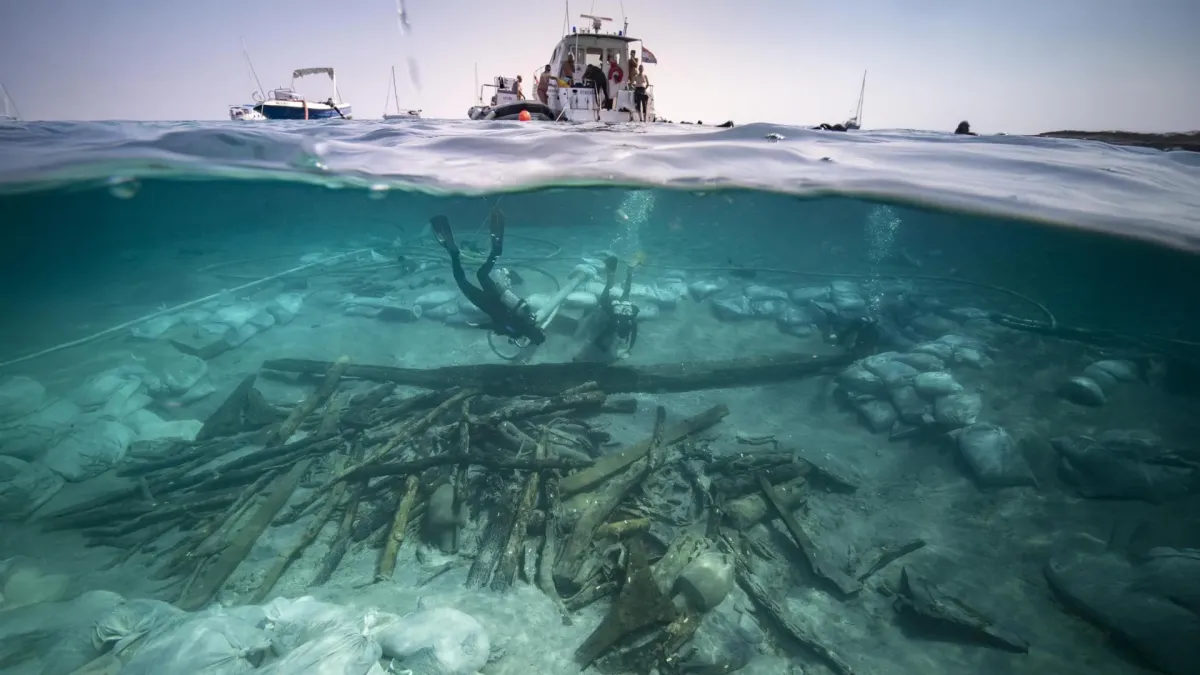
A 2,200-year-old Roman shipwreck discovered off Croatia's coast is shedding light on ancient seafaring technology, specifically the sophisticated waterproofing techniques used to protect wooden hulls. Researchers have analyzed the ship's protective coatings, revealing a blend of natural materials and offering clues about its construction and repair history.
For centuries, sailors have battled the elements, but the materials used to shield ships from water, salt, and marine life have historically been overlooked by archaeologists. This new study, published in Frontiers in Materials, dives deep into the organic waterproofing agents employed by Roman shipbuilders. Dr. Armelle Charrié, the study's lead author and an archaeometrist, highlighted the importance of these materials, stating, "In archaeology, little attention is paid to organic waterproofing materials. Yet they are essential for navigation at sea or on rivers and are true witnesses of past naval technologies."
The shipwreck, named Ilovik-Paržine 1, was found in 2016 and has been the subject of several investigations. This latest research is the first to combine molecular and pollen analysis to identify the ship's coatings and reconstruct the surrounding vegetation during its construction or repairs. The team discovered two main types of coatings: one made from pine tar (also known as pitch) and another a mix of pine tar and beeswax. The pollen found within these coatings acted like tiny time capsules, revealing the plant life present in the ship's immediate environment.
Using advanced techniques like mass spectrometry, the researchers analyzed ten coating samples. Their molecular fingerprinting confirmed the presence of compounds from pine trees in all samples, indicating a heavy reliance on heated coniferous resin. Notably, one sample featured a blend of beeswax and tar, a mixture known to ancient Greek shipbuilders as *zopissa*. This combination would have enhanced the adhesive's flexibility and made application easier when heated.
The sticky nature of pitch proved invaluable for preserving pollen, allowing scientists to pinpoint potential locations where the ship was built or repaired. The pollen analysis pointed to a diverse range of environments, including coastal Mediterranean landscapes with holly oak and pine forests, shrublands with olive and hazel trees, and riverbanks or seashores supporting alder and ash. The presence of fir and beech pollen suggested proximity to mountainous areas characteristic of the northeastern Adriatic coast.
Further analysis indicated that the vessel likely underwent four to five separate coating applications over its operational life, suggesting repeated repairs. The pattern of different coating batches found on the bow, compared to the stern and central sections, implies that the ship may have been repaired in various locations. While previous research hinted that the ship was built in Brundisium (modern-day Brindisi, Italy), the new evidence suggests some coatings might have been applied in that region, while others were added along the northeastern Adriatic coast, closer to where the wreck was ultimately discovered. "Pollen has been very useful in identifying different coatings where the molecular profiles were identical," Charrié concluded, emphasizing how this ancient pollen helped trace the ship's journey and maintenance history.