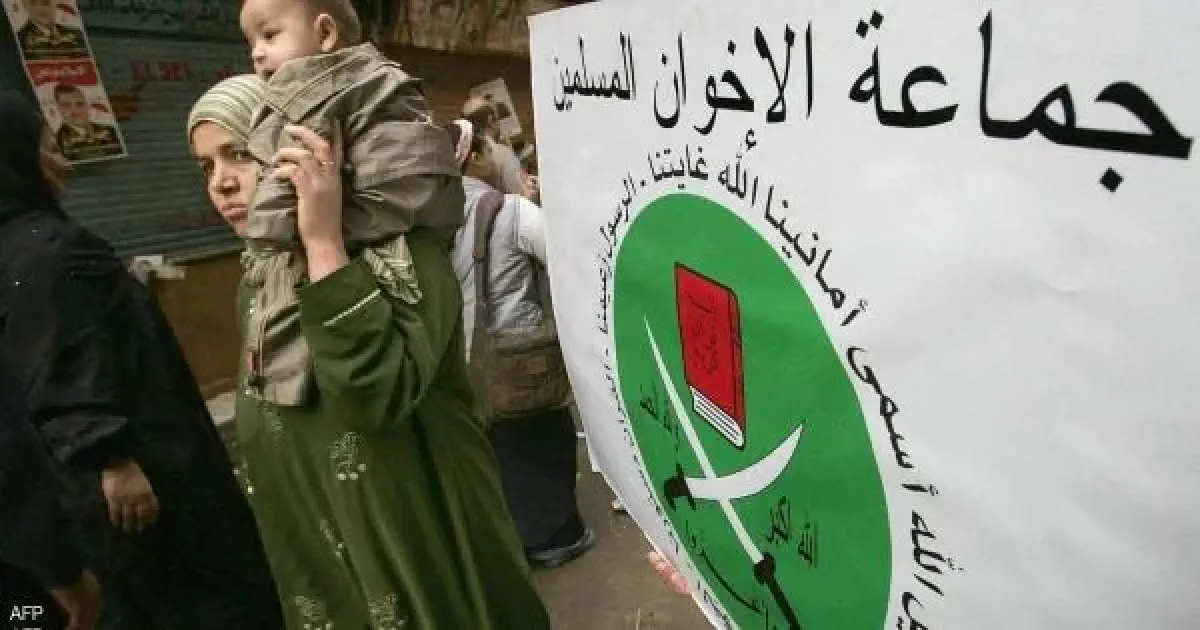
A new research report warns of growing influence by networks allegedly linked to the Muslim Brotherhood within various Canadian institutions, suggesting these activities extend beyond traditional civic engagement to a long-term strategy of establishing institutional presence in politics, civil society, and higher education.
The report, titled "The Attack on Democratic Values and Principles: How Islamism's Penetration Weakens Civil Society and Higher Education in Canada," was published by the Institute for Global Jewish Affairs and Policy Studies (ISGAP). It asserts that these alleged Brotherhood-linked networks operate within a transnational strategy aimed at consolidating ideological and institutional influence, shaping public discourse, and mobilizing political action.
The report identifies four primary areas of focus: federal institutions and electoral mobilization; civil society and regulatory oversight; universities and higher education; and intellectual underpinnings, which ISGAP claims are based on historical documents such as "The Project" and the "Explanatory Memorandum" of 1991. Politically, the report examines the activities of organizations like the Canadian Muslim Vote and the Canadian Council of Muslim Affairs, citing the "Vote Palestine" campaign during the 2025 federal election, which allegedly garnered support from 344 candidates across four parties and targeted numerous competitive electoral districts.
Furthermore, the report addresses perceived gaps in the oversight of non-profit associations and institutions. It references an audit by the Canada Revenue Agency of the Canadian Muslim Association, whose preliminary findings in 2021 concluded with a decision in 2023. The report also points to other cases where financial irregularities or organizational links were allegedly identified, yet did not necessarily result in the loss of charitable status.
Canadian universities are presented as a central concern, with the report suggesting that external funding, academic activities, and student mobilization can converge to foster long-term institutional influence. A prior ISGAP study in 2025 examined Canadian universities, including McGill, Concordia, Toronto, and York, linking alleged Brotherhood networks to political, academic, and community activities. ISGAP contends that the issue is not merely the presence of individuals with extremist leanings, but the capacity of interconnected networks to gain legitimacy, access institutional and public funding, exert political influence, and avoid scrutiny.
The report calls for Canadian-American coordination, investigations by Public Safety Canada and the Canadian Security Intelligence Service, and enhanced oversight of foreign funding for associations, universities, and civil society organizations. Its significance lies in drawing attention to a model of influence that transcends direct political action, positing that ideological groups can gradually build influence through civil, educational, and electoral institutions, leveraging the openness of Western democracies.
However, these conclusions should be considered as claims and analyses from a research institute with a stated position on the Muslim Brotherhood and Islamism, rather than findings from an independent Canadian government investigation. The presence of Muslim individuals or organizations within state or civil society institutions does not inherently prove activity linked to the Brotherhood, a crucial point when evaluating the report without generalization. The study attempts to broaden the issue from specific groups to the broader question of democratic institutions' capacity to prevent any ideological network or external entity from exploiting funding, political influence, and academic spaces for long-term impact.
The implications of this discussion extend beyond Canada, as the report frames the activities of alleged Brotherhood networks within a transnational model previously examined by ISGAP in the United States and Europe. The danger of foreign influence is not solely measured by financial scale or the number of accessible institutions, but by the ability to build networks for lobbying, media engagement, and political and academic relationships that can later be used to shape policies on Middle Eastern issues. This raises questions about how Western governments engage with groups pursuing transnational ideological agendas, balancing the fight against extremism and foreign influence with the protection of citizens' rights to political, religious, and civic participation.
While the report advocates for increased oversight and transparency, the challenge for the Canadian government is to independently verify its claims and hold accountable any entities found to be in violation of the law, without generalizing to entire communities or legitimate civic activities. The report revisits the broader issue of how ideological groups can transform democratic openness from a space for participation into a means of accumulating institutional influence. If some of the report's concerns are substantiated through independent official investigations, the issue could transcend Canadian borders, becoming part of a wider discussion on transnational influence networks and their connection to political projects in the Middle East.