Nepal is grappling with a devastating disaster, as the death toll from recent floods and landslides has climbed to 626, with an estimated 2,426 individuals still missing. Rescue and relief operations are underway amidst extremely challenging weather and terrain conditions, marking one of the region's most severe catastrophes in recent years.
Authorities in Nepal released the updated figures on Saturday, an increase from the previously reported 579 fatalities and 1,924 missing persons. Search teams are continuing their efforts in the border areas between Nepal and China, where the disaster has destroyed towns, roads, bridges, and power infrastructure.
The catastrophe has also impacted China's Tibetan region, with seven reported deaths and 554 missing, bringing the total number of missing individuals across both borders to approximately 3,000. The floods were not solely caused by heavy rainfall; data suggests the disaster began Wednesday with the collapse of a portion of a glacial lake in the Himalayas. This event triggered a massive surge of rocks, ice, mud, and debris into the Lhende Khola river, subsequently causing widespread flash floods that inundated areas on both sides of the border.
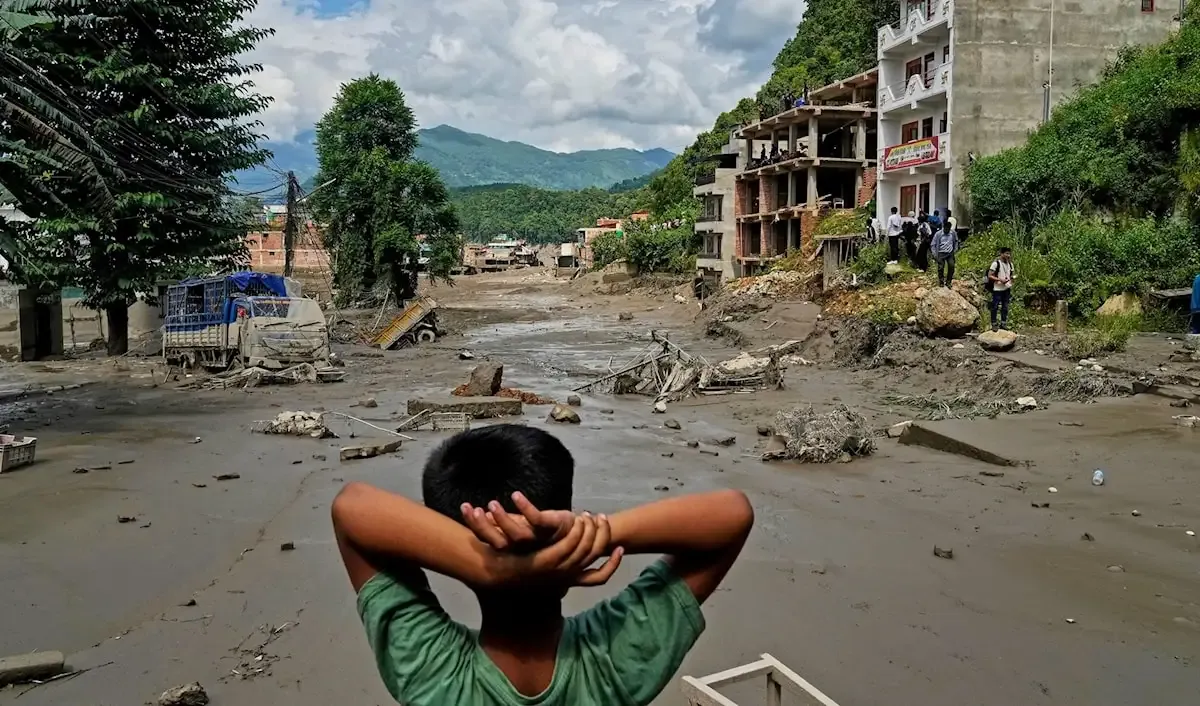
The resultant floods and landslides have devastated vital infrastructure, including roads, bridges, and energy facilities, while also sweeping away villages and populated areas. Satellite imagery has revealed the significant transformation of some towns, which are now submerged under water, mud, and debris, having previously housed residential and tourist facilities.
Rescue teams face formidable challenges due to the collapse of essential infrastructure, severed communication lines, and ongoing rain, fog, and the persistent threat of further landslides. These conditions have forced Nepalese authorities to temporarily suspend search and rescue operations in certain regions, prioritizing the evacuation of stranded individuals and the transfer of survivors.
The difficulty in identifying victims has been exacerbated by the passage of several days since the floods occurred. Authorities have begun collecting DNA samples from unidentified bodies before proceeding with burials. On the Chinese side, rescue efforts were complicated by the formation of a glacial lake, raising fears of further flooding, although its size has reportedly decreased.
The economic repercussions of this disaster are substantial. Nepal's Finance Minister, Swarnim Wagle, has provided an initial estimate of $4 to $5 billion required for reconstruction, acknowledging that this figure is preliminary and assessments are ongoing. This amount represents nearly a tenth of Nepal's economy, impacting critical sectors such as tourism, hydropower, and transportation. Hydropower facilities accounting for over 12% of the country's generation capacity have been damaged.
According to the International Federation of Red Cross and Red Crescent Societies, over 90,000 people have been directly affected and require immediate humanitarian assistance. The World Health Organization reported damage to six health facilities and loss of contact with eight health workers, warning of increased disease transmission risks due to displacement, overcrowding, and compromised water and sanitation systems.
While the immediate threat from the glacial lake appears to have receded, authorities are monitoring the situation due to the presence of another, larger lake near the collapse site and the unpredictable weather patterns. This catastrophe underscores the vulnerability of mountainous regions to glacial collapses and flash floods, as well as the challenges in responding to large-scale disasters in remote areas where infrastructure is often compromised early on.
As search operations for the missing continue, further increases in the death toll are anticipated. Nepal now faces the arduous task of assessing the full extent of the damage, providing essential aid to survivors, and securing billions of dollars for the reconstruction of its heavily impacted infrastructure.