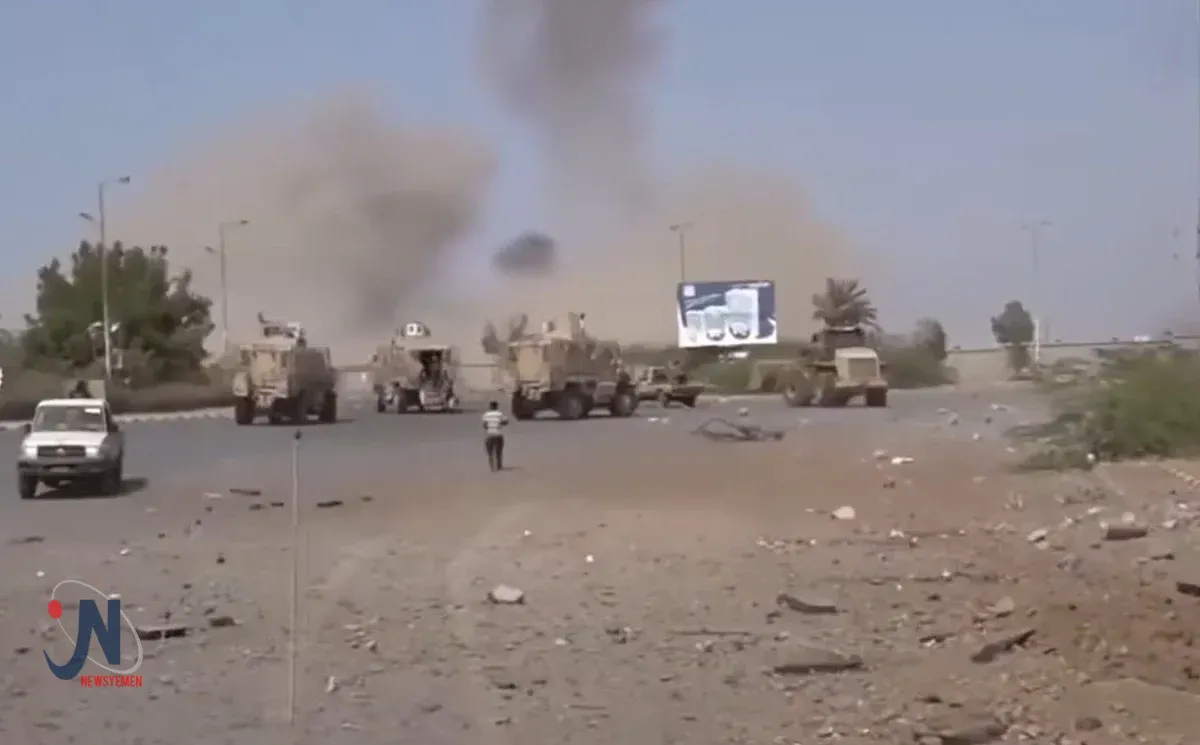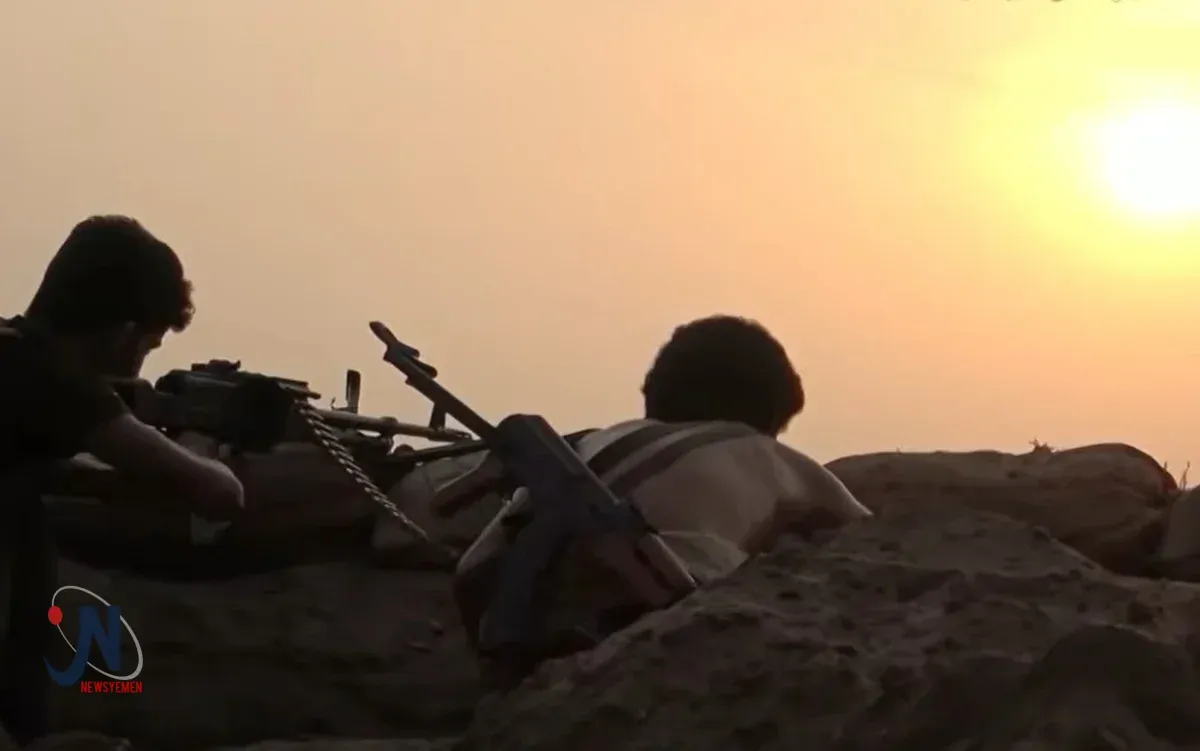
Recent intense fighting on Yemen's western coast, particularly in western Taiz and southern Hodeidah provinces, signifies a strategic shift from defensive maneuvers to offensive operations by government and allied forces, potentially altering the war's trajectory.
The escalating confrontations have expanded from areas like Muqbanah, Al-Kadha, and Al-Barihah in western Taiz to include Hays and southern Hodeidah. This coordinated push, supported by government reinforcements and airstrikes targeting Houthi positions, raises critical questions about the future of the western coast. Once a static defensive front, it may now become a launchpad for a significant shift in the balance of power.
A key development is the change in engagement strategy. For years, Houthi forces maintained control over large portions of the western coast, leveraging fortifications and terrain. However, the current multi-front offensive has repositioned this theatre at the forefront of military operations. In western Taiz, fierce clashes are concentrated in Muqbanah, Al-Kadha, and the vicinity of Al-Barihah, with strategic implications for the vital road to Mokha, a crucial link between Taiz's western highlands and the coast.
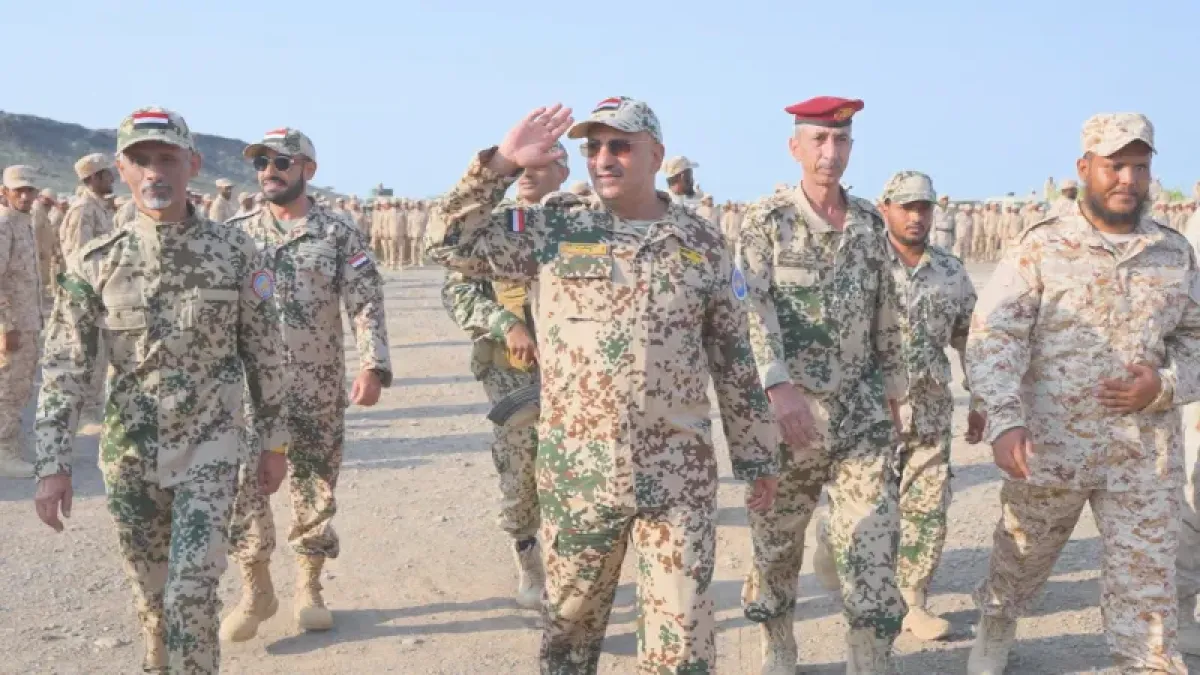
The National Resistance, led by Major General Tareq Saleh, is a prominent force along the western coast. Its units have engaged in direct combat with Houthi forces in southern Hodeidah, conducting counter-operations against infiltration attempts. This area is vital for pressuring Houthi supply lines toward Hodeidah city. The National Resistance's cumulative combat experience against the Houthis on the coast makes it a critical player in any potential shift in the conflict's nature. Advances in southern Hodeidah aim to reshape the deployment patterns around the city, threaten movement and supply lines, and compel the Houthis to disperse their forces over a wider area.
The involvement of the Giants Brigades and the Shield of the Nation forces further amplifies pressure on the Houthis. These southern forces, particularly the Giants Brigades, possess extensive combat experience against the group and have participated in significant military operations. Effective coordination among government forces, the National Resistance, and southern contingents could present the Houthis with a more challenging scenario: a broad, multi-axis front rather than isolated engagements. Crucially, military coordination will be paramount for converting battlefield gains into strategic advancements, necessitating the consolidation of captured positions and the securing of supply routes.
The western coast holds significant strategic, economic, and regional importance for the Houthis, particularly Hodeidah and its ports, as well as the coastal stretch leading to Mokha and Bab el-Mandeb. Any sustained pressure on southern Hodeidah or its access routes could force the group to reallocate forces from other fronts. The current battle's core objective appears to be generating continuous pressure to deplete Houthi capabilities and force them to fight on multiple fronts, rather than achieving a rapid breakthrough into Hodeidah city.
Mokha serves as a key anchor for anti-Houthi forces and has been a target of Houthi pressure. While the Houthis aim to increase the cost of military movements around Mokha, continuous attacks could prove counterproductive, potentially leading to reinforced defenses and expanded operations by opposing forces. Mokha's proximity to shipping lanes and Bab el-Mandeb makes it a crucial forward base supporting coastal operations. Therefore, the battles around Mokha are intrinsically linked to the broader struggle for control of the coast and its vital corridors.
The current developments could herald a new phase if operations persist. Coordinated pressure in western Taiz and southern Hodeidah can achieve multiple objectives: dispersing Houthi forces, disrupting supply lines, curtailing their offensive initiative, and reshaping frontlines. Recurrent losses could undermine the Houthi narrative of invincibility. The psychological impact, coupled with sustained military gains and the ability to consolidate captured territory, could gradually shift the balance of power. The confluence of escalation in western Taiz and southern Hodeidah forms a broad front extending from Taiz's western highlands to the Red Sea, with interconnected goals including securing Mokha, alleviating pressure on Taiz, and controlling the coast. Achieving these objectives requires more than tactical victories; it demands unified leadership, consistent supply lines, effective inter-force coordination, and the capacity to secure advanced areas.
The current campaign is a critical test for government forces, the National Resistance, and the southern brigades. If they maintain momentum, secure their gains, and open simultaneous axes of advance, the western coast could evolve into a sustained pressure front against the Houthis, moving beyond intermittent engagements. Failure to sustain operations may revert the front to its previous pattern. The pivotal question is whether opposing forces can translate tactical gains into a continuous military trajectory that redefines the conflict's dynamics, potentially transforming the western coast into a gateway for broader military changes emanating from Taiz and Hodeidah, extending to the Red Sea.