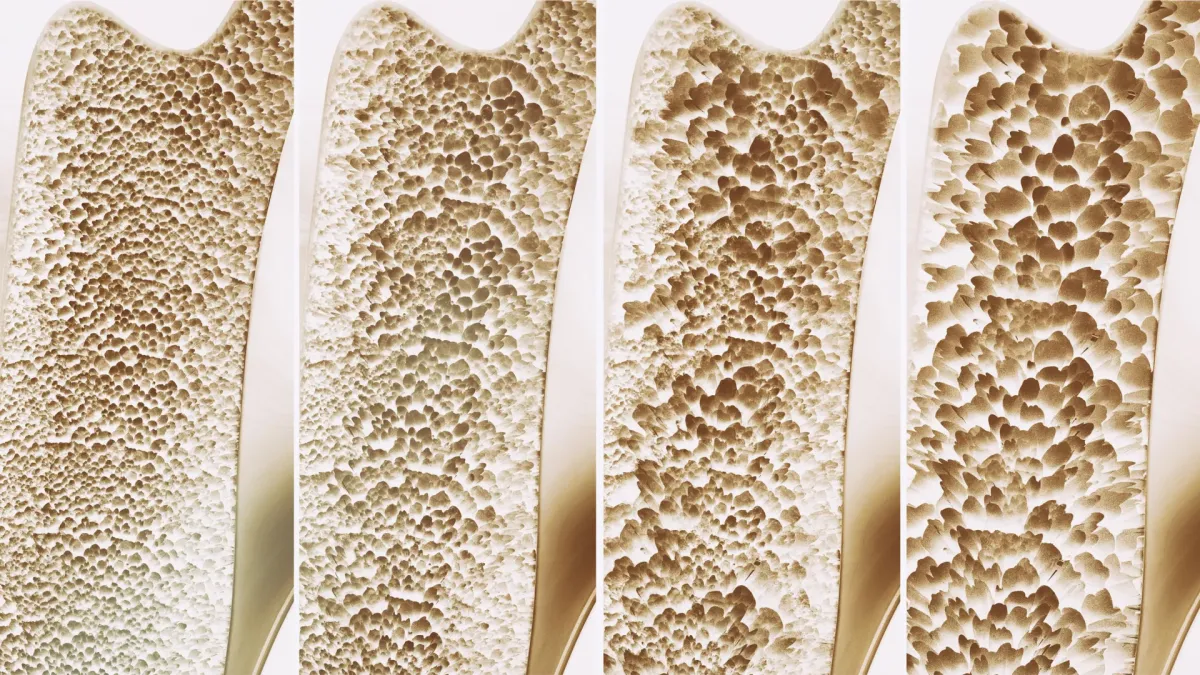
Scientists have pinpointed a receptor called GPR133 as a key player in bone health, potentially unlocking a new avenue for treating osteoporosis, a condition that weakens bones and raises fracture risk for millions worldwide.
Osteoporosis affects about six million people in Germany alone, predominantly women. Current treatments often come with limitations and side effects, prompting researchers to search for novel biological targets. A study from Leipzig University has identified GPR133, a receptor on cell surfaces, as crucial for maintaining bone strength.
In experiments, mice with impaired GPR133 showed early signs of bone density loss, mirroring human osteoporosis. Excitingly, a compound called AP503, identified as a GPR133 stimulator, significantly boosted bone strength in both healthy and osteoporotic mice. "If this receptor is impaired by genetic changes, mice show signs of loss of bone density at an early age - similar to osteoporosis in humans," explained Professor Ines Liebscher, the study's lead investigator.
The research suggests that activating GPR133 influences the balance between bone-forming cells (osteoblasts) and bone-resorbing cells (osteoclasts). AP503 appears to mimic natural processes that activate GPR133, potentially offering a way to increase bone strength or restore weakened bone, especially relevant for post-menopausal women experiencing hormone-related bone loss.
Intriguingly, AP503 has also shown promise in strengthening skeletal muscle, according to earlier research by the same team. This dual effect on bone and muscle could be a game-changer for older adults, who often face declines in both tissues simultaneously. "The newly demonstrated parallel strengthening of bone once again highlights the great potential this receptor holds for medical applications in an aging population," stated Dr. Juliane Lehmann, the study's lead author.
The Leipzig team is continuing to explore GPR133's functions and AP503's potential applications in other diseases, building on Leipzig University's decade-long focus on adhesion G protein-coupled receptors.