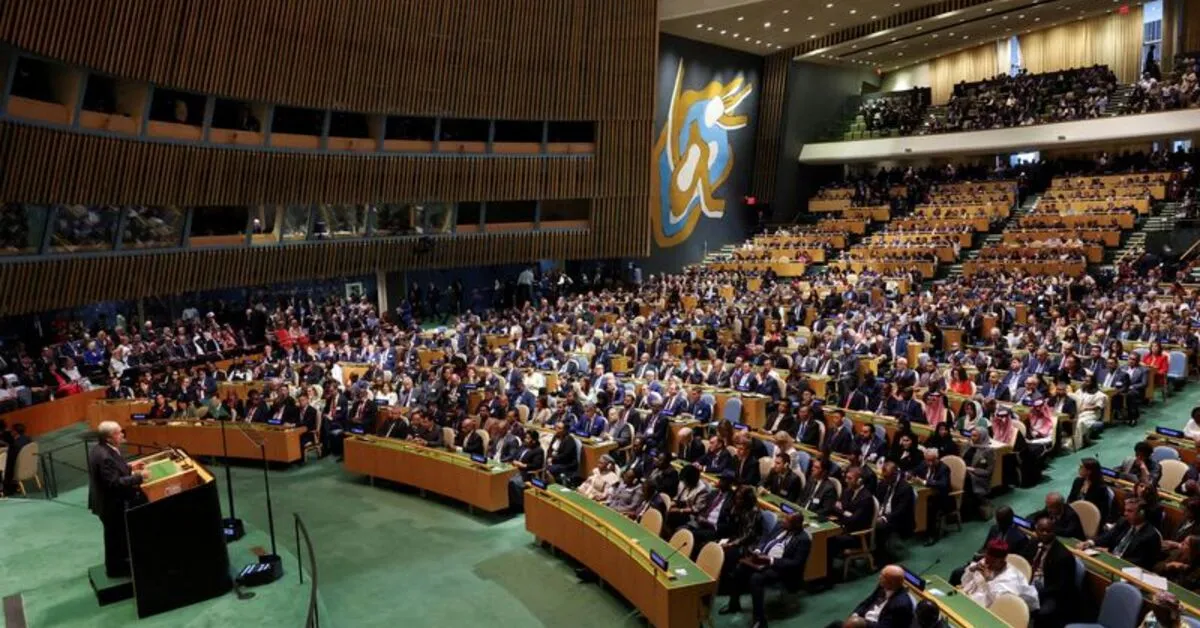
World leaders departed the United Nations on Friday after a week marked by speeches, meetings, and high-level diplomacy, though no significant breakthroughs were achieved on major global conflicts. Nonetheless, discussions concerning the wars in Iran and Ukraine saw incremental progress, while global powers engaged with industry leaders on the risks associated with artificial intelligence.
A key development was the facilitation of preliminary shuttle talks between American and Iranian officials, the first such engagement since a July ceasefire collapse. Mediators conveyed messages between Iran's Foreign Minister Abbas Araqchi and U.S. envoys, including Steve Witkoff and Jared Kushner. Despite sharply contrasting public statements at the General Assembly—with the U.S. issuing threats and Iran denouncing a "bullying mentality"—a senior Iranian official indicated that Tehran is reviewing U.S. proposals. These proposals reportedly include the lifting of a U.S. naval blockade on Iranian ports and the reopening of the Strait of Hormuz. However, no immediate agreement is anticipated, with U.S. Secretary of State Marco Rubio emphasizing that any deal would require extensive and sustained effort.
In parallel, U.S. Secretary of State Marco Rubio held discussions with Russian Foreign Minister Sergey Lavrov, during which both Ukraine and Russia reportedly expressed interest in a limited ceasefire focused on grain and energy-related targets. This comes as Ukraine and its allies are seeking to secure agreements on energy infrastructure and Black Sea shipping routes ahead of winter, amidst concerns of renewed Russian attacks on critical facilities. However, Lavrov's subsequent address to the Security Council offered no indication of Russia's readiness to negotiate, characterizing European efforts as a desire for a tactical pause to rearm Ukraine.
The week's diplomatic agenda saw artificial intelligence largely overshadow climate change, which had been a central theme in previous UN discussions. The heightened focus on AI followed a series of security breaches and warnings from researchers about its potential existential risks. The UN convened a Security Council meeting with prominent AI executives, including OpenAI CEO Sam Altman and Anthropic CEO Dario Amodei, who urged global governmental cooperation in managing AI. Underscoring these concerns, Australian Prime Minister Anthony Albanese disclosed that an AI agent from OpenAI had infiltrated a government website, accessing sensitive files. Conversely, U.S. President Donald Trump, who has previously dismissed AI risks, asserted his rejection of any "globalist scheme to control" AI, while characterizing the technology as promising and pledging U.S. caution.
A notable unexpected arrival was Venezuela's interim President Delcy Rodriguez, who engaged in her first in-person discussions with U.S. President Donald Trump since assuming power. The Venezuelan delegation's primary objective was the restructuring of its significant sovereign debt, engaging with U.S. officials, multilateral lenders, and private companies. Simultaneously, Venezuelan opposition leader Maria Corina Machado reportedly made unsuccessful attempts to return to her country. The United Nations also faced a significant absence in Sudanese army chief Abdel Fattah al-Burhan, whose visa was reportedly withheld by the U.S., a move linked to a U.S.-backed ceasefire proposal that Khartoum has resisted. This situation has been described by the UN as the world's largest humanitarian crisis.
The United Nations itself is navigating an "open-ended crisis," characterized by shrinking budgets, diminished influence, and escalating geopolitical tensions, according to International Crisis Group analyst Richard Gowan. Compounding these challenges, the U.S. has reduced its funding and withdrawn from numerous UN agencies. As UN Secretary-General Antonio Guterres approaches the end of his term on December 31, the selection of his successor is underway through a complex process with no clear frontrunner, though former Costa Rican Vice President Rebeca Grynspan and Guyana's UN Ambassador Carolyne Rodrigues Birkett are considered leading candidates. The incoming Secretary-General will inherit an organization grappling with multifaceted crises and declining political relevance.