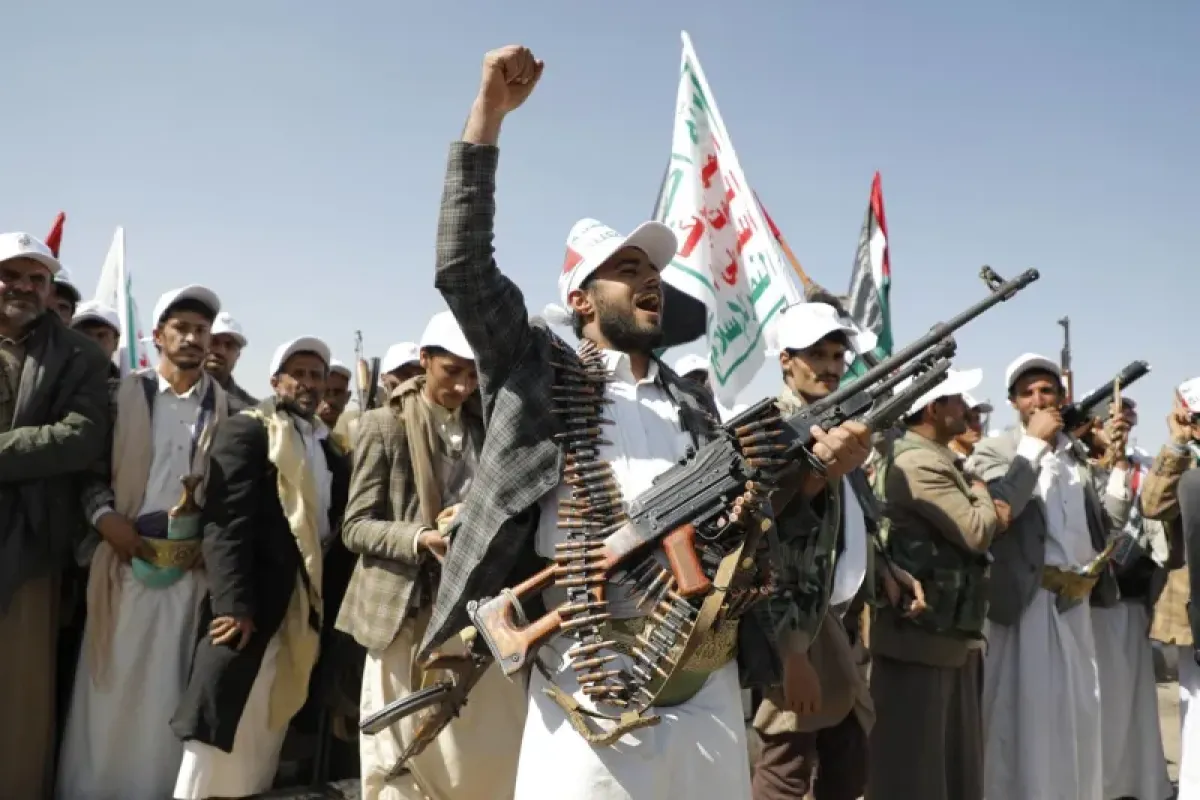
A senior Houthi official has issued a stark warning, framing the strategic Bab al-Mandab strait as a potential flashpoint in a wider regional conflict, particularly in the context of escalating tensions between Iran and the United States. The Houthi leadership appears intent on positioning Yemen and its vital waterways as leverage in broader geopolitical contests.
Houthi leader Abdulmalik al-Ejri cautioned that any resumption of what he termed "American aggression against Iran" would not be a limited strike but a "spark in a powder keg," asserting that the entire region would bear the consequences, impacting oil, security, stability, and infrastructure. He further suggested that those anticipating a swift conflict had misread history.
The significance of this rhetoric extends beyond mere threat, encompassing the potential targets: oil, infrastructure, security, and stability. These sectors transcend the Yemeni arena, affecting regional nations and the global economy. The Houthi discourse revives longstanding questions about the nature of the relationship between the group and Tehran, and the extent to which Yemeni territory and surrounding maritime routes are being utilized as instruments in regional conflicts.
This implicit threat suggests that any confrontation between Tehran and Washington could extend to the Yemeni theater, even if Yemen is not a direct party to the conflict's origins. This presents a paradox for Yemen, a nation already devastated by years of war, economic division, and humanitarian crisis, now facing the prospect of becoming a battleground for regional power struggles beyond its control.
Political analyst Samir Al-Yousifi interprets al-Ejri's statement as revealing the Houthis' function within Iran's strategy. He posits that the group is positioning itself as a tool to impose an extensive regional cost—encompassing oil, navigation, security, and infrastructure—on any confrontation involving Tehran. This rhetoric gains gravity amidst recent military developments on the western coast and reports of the Houthis securing strategic positions along the Red Sea, near the Bab al-Mandab strait.
Furthermore, reports suggest Iran has urged the Houthis to prepare to close the Bab al-Mandab if the United States targets Iranian energy infrastructure, with indications of missile and drone deployments near the strait. These developments, coupled with Houthi political threats, transform the Bab al-Mandab from a mere geographical location into a potential leverage point in a conflict that extends far beyond Yemen's borders. The strait's criticality lies in its role as a vital artery for global trade, connecting the Indian Ocean to the Red Sea, the Suez Canal, and European markets.
Al-Ejri's statement broadens the scope of the threat beyond naval targets. By mentioning oil, infrastructure, security, and stability, the message extends to regional economies and critical facilities. This aligns with previous warnings from the Yemeni government to the UN Security Council, which described Houthi threats to maritime routes as part of an Iranian agenda to militarize waterways and leverage global energy and trade security.
The Houthis' pronouncements can be seen as an attempt to project themselves as actors capable of influencing the regional equation, signaling that an attack on Iran would not remain contained within its borders and that Tehran can open additional conflict fronts through its regional allies. However, this strategy carries significant risks, directly linking the Yemeni situation to potential Iranian-American confrontations and exposing the country to the repercussions of a conflict that may exceed the calculations of Yemeni factions themselves. Using the Bab al-Mandab as a pressure tool also places the group under greater responsibility towards the Yemeni population and the region, as disruptions to navigation impact not only targeted nations but also the flow of food, energy, trade, insurance, and supply chains.
While political interpretations of the Houthi-Iran relationship and the group's decision-making autonomy may vary, recent events underscore the intertwining of Houthi rhetoric with regional conflict dynamics. Tehran benefits from having multiple leverage points, and the Houthis possess a strategic geographical location and the missile and drone capabilities to threaten one of the world's most crucial maritime passages.